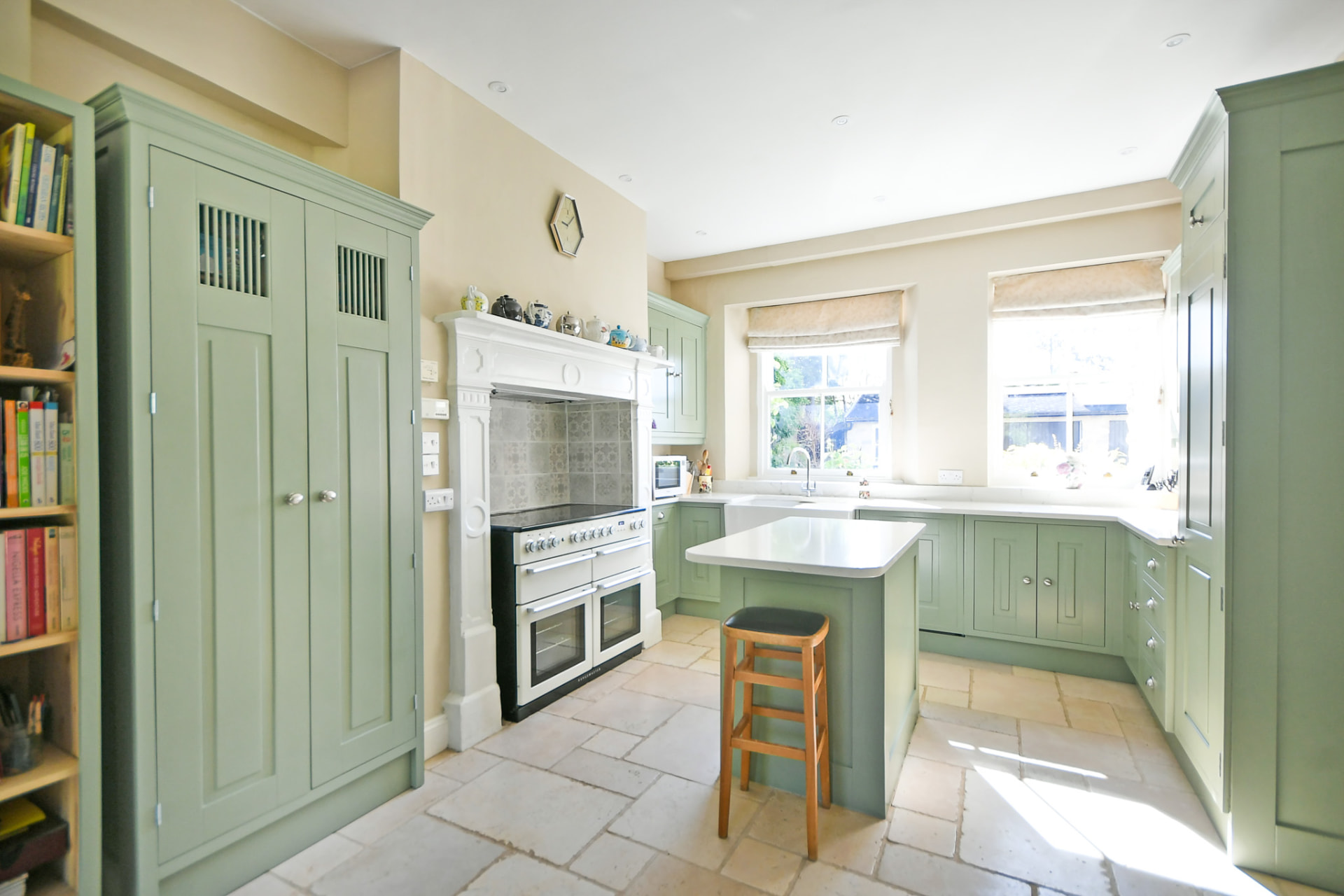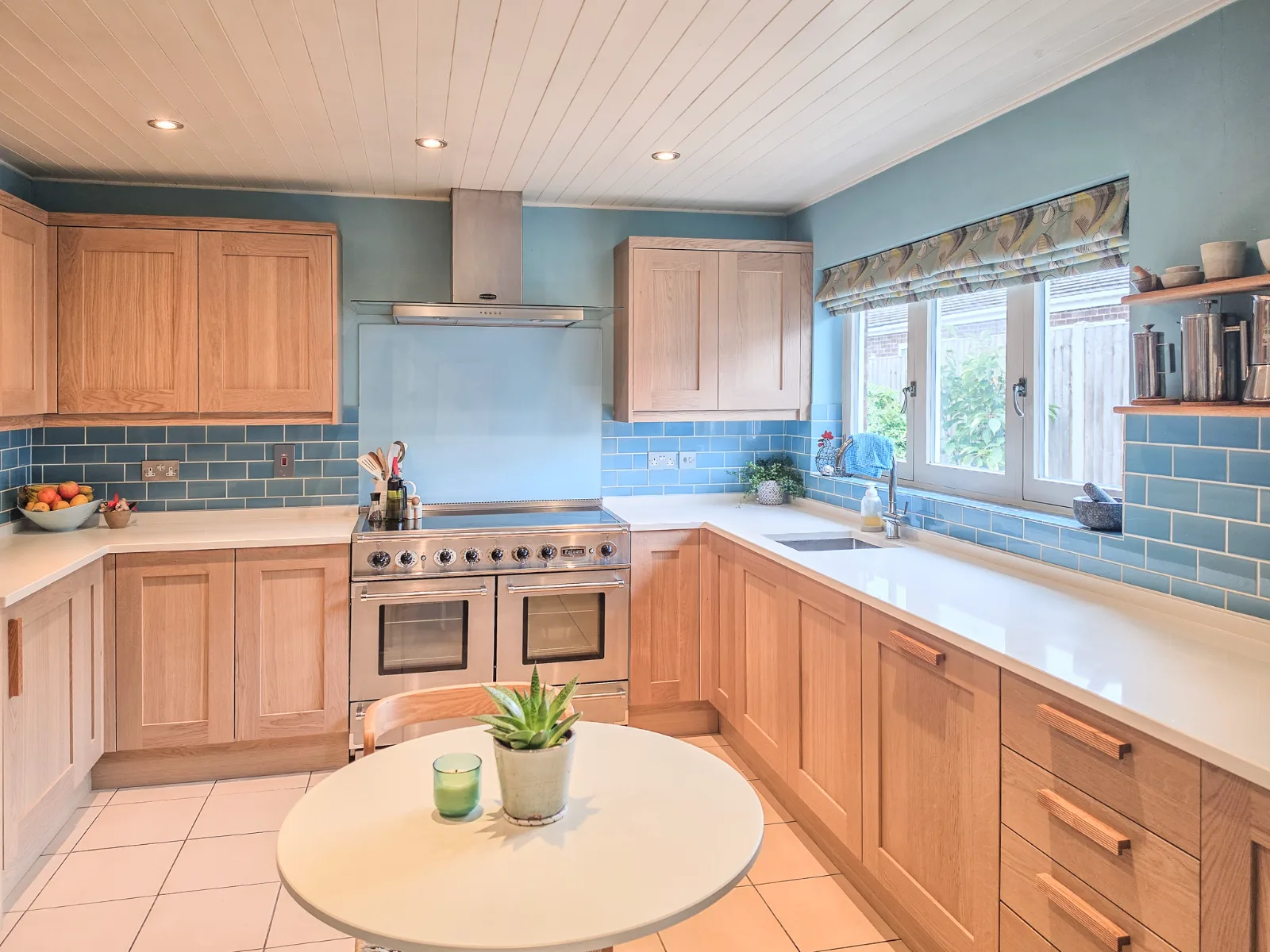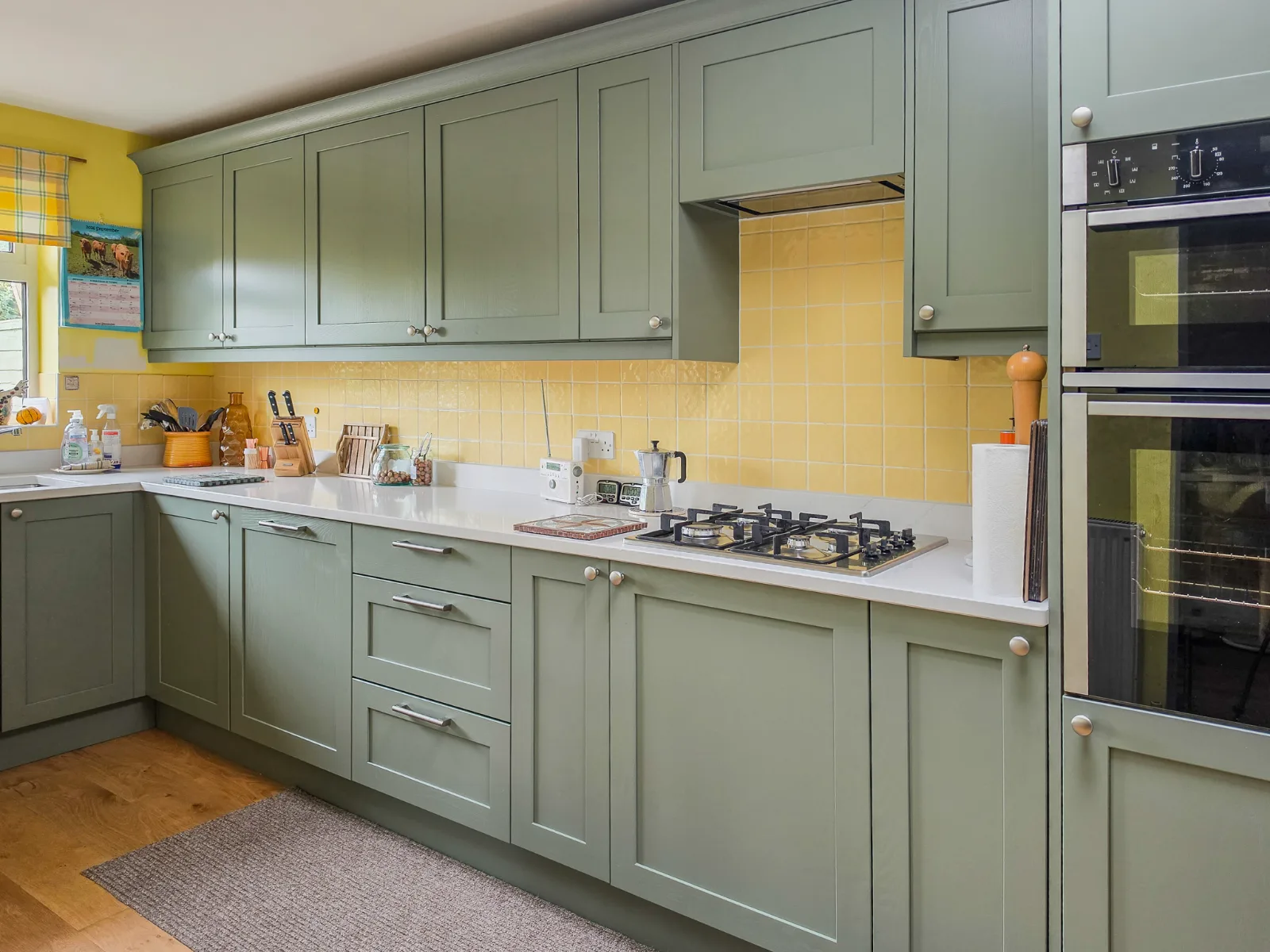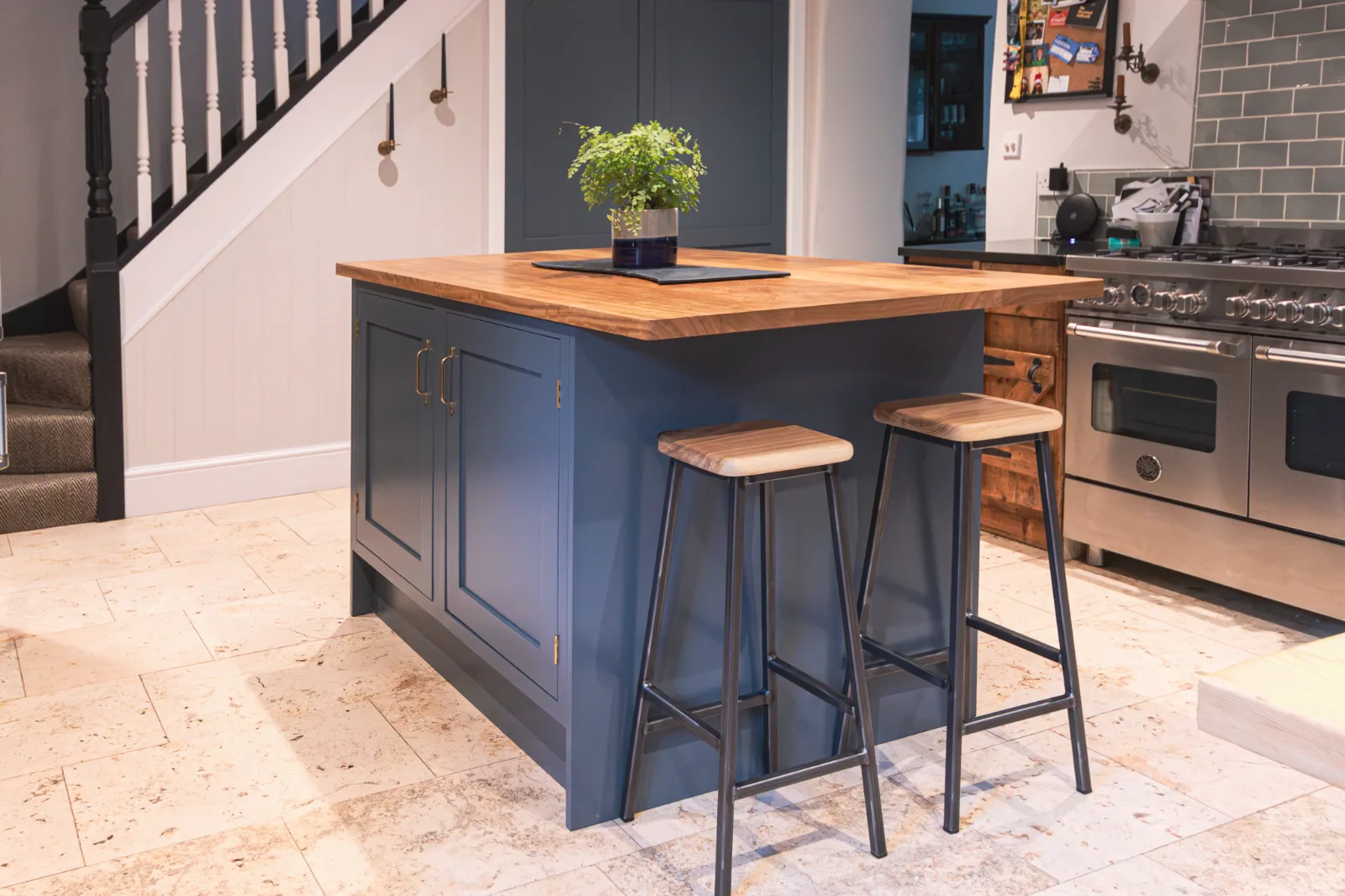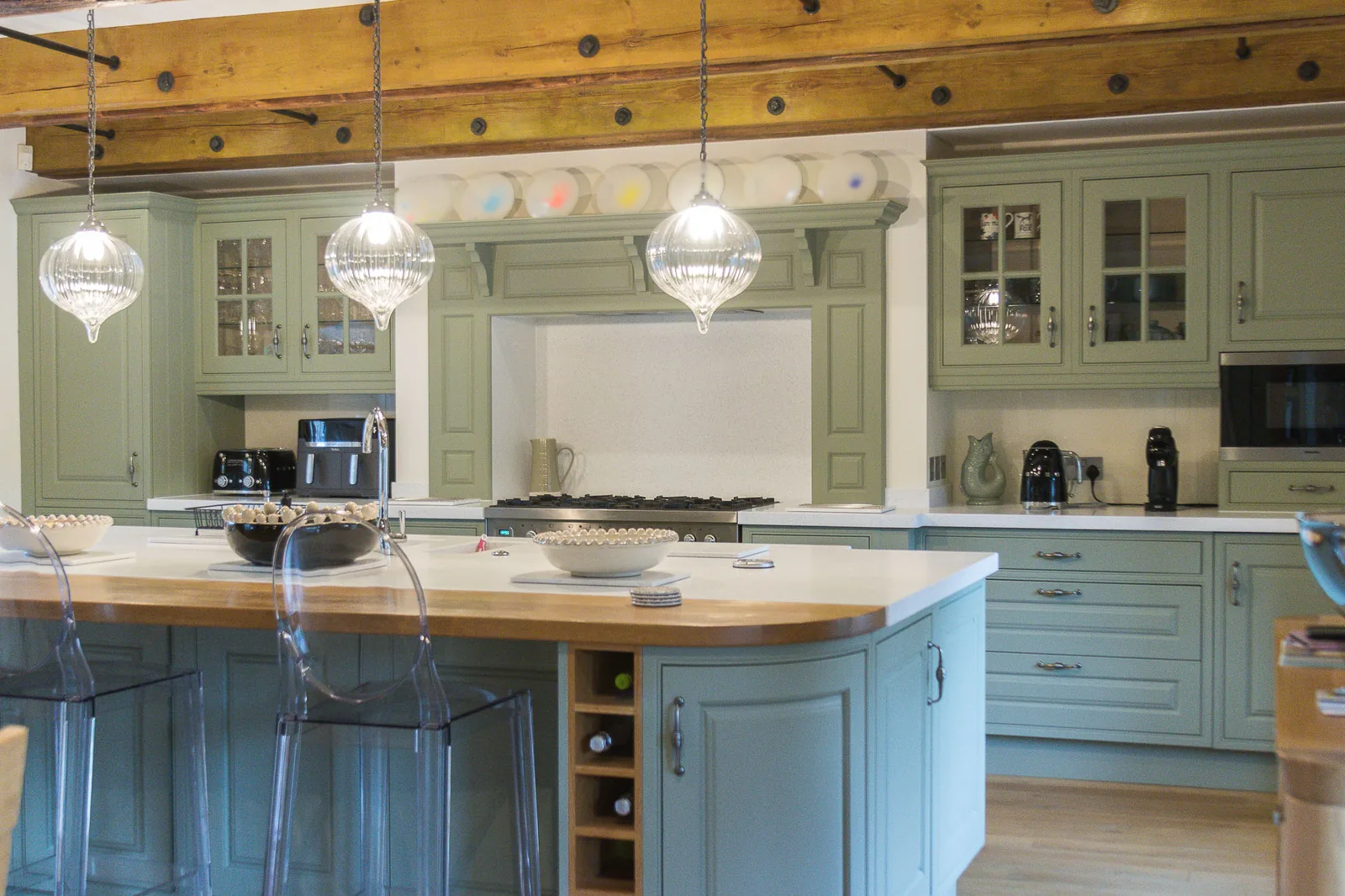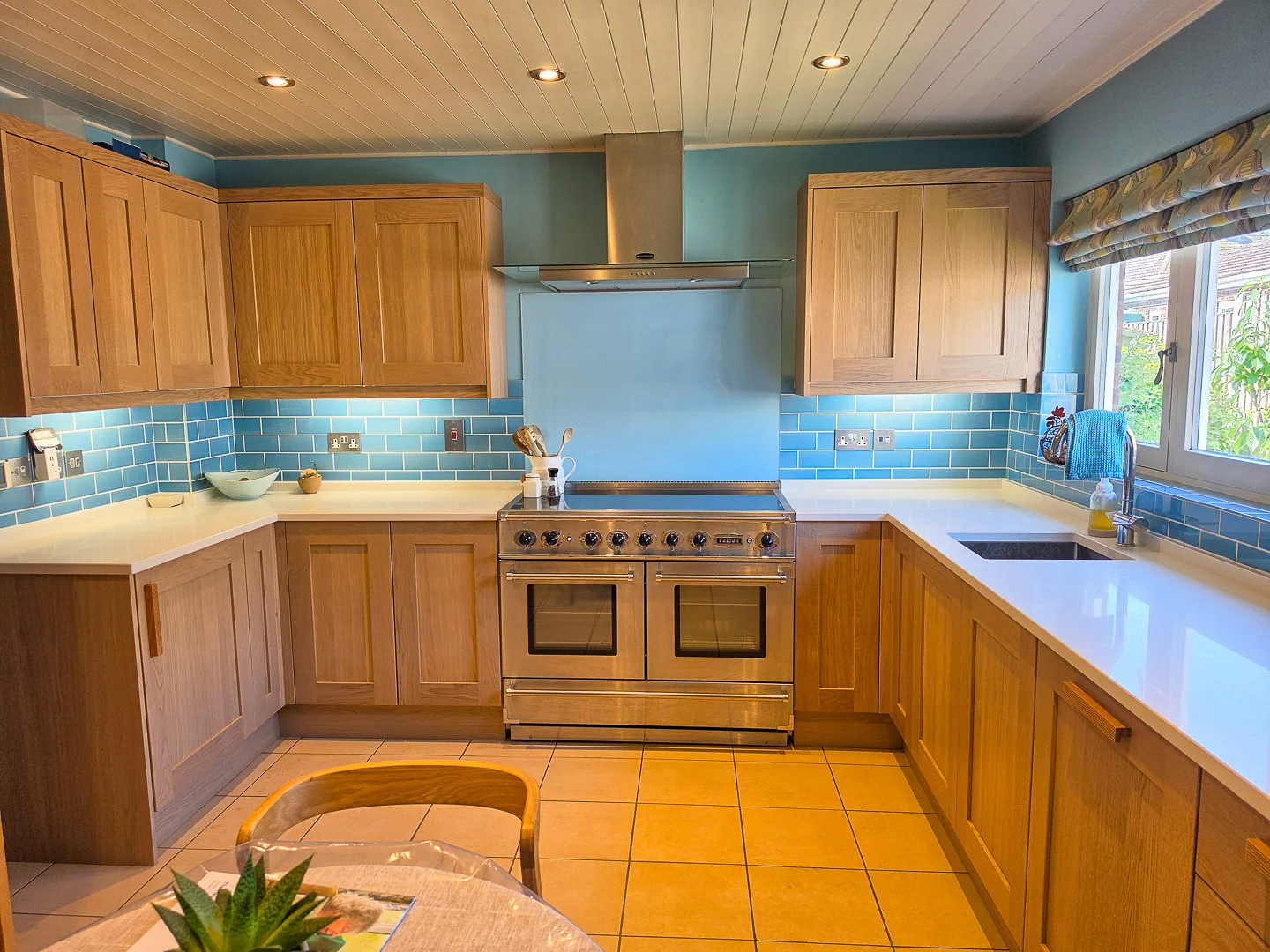
A custom kitchen uses pre-made cabinetry, doors and components from a long-standing UK manufacturer. A bespoke kitchen starts with raw materials, planks and sheets, which I turn into cabinetry in my workshop using cabinetmaking and furniture-making techniques.
People often use the two words interchangeably. I use them very differently, because the differences can really matter. They affect what we can design, how it is made and where the freedom lies. Two kitchens, one custom in Corsham and one bespoke in Melksham, show the distinction particularly clearly.
What do I mean by a custom kitchen?
Custom begins with manufactured cabinetry and components, but the design is still planned around your home. I design the layout, specify the units, doors and fittings, and install the kitchen myself. Standard sizes are used where they work, with made-to-measure sizes available from the manufacturer where needed.
That is different from accepting a showroom layout and trying to make your room fit it. We can consider where you cook, where you sit, what you need to store and how the working areas connect. Door styles, finishes, worktops and storage fittings all contribute to the finished kitchen.
The important distinction is that the main cabinetry comes from a manufacturer. It is not made from raw timber in my workshop. You still have one person taking responsibility for the design, specification and installation.
What does the Corsham custom kitchen show?
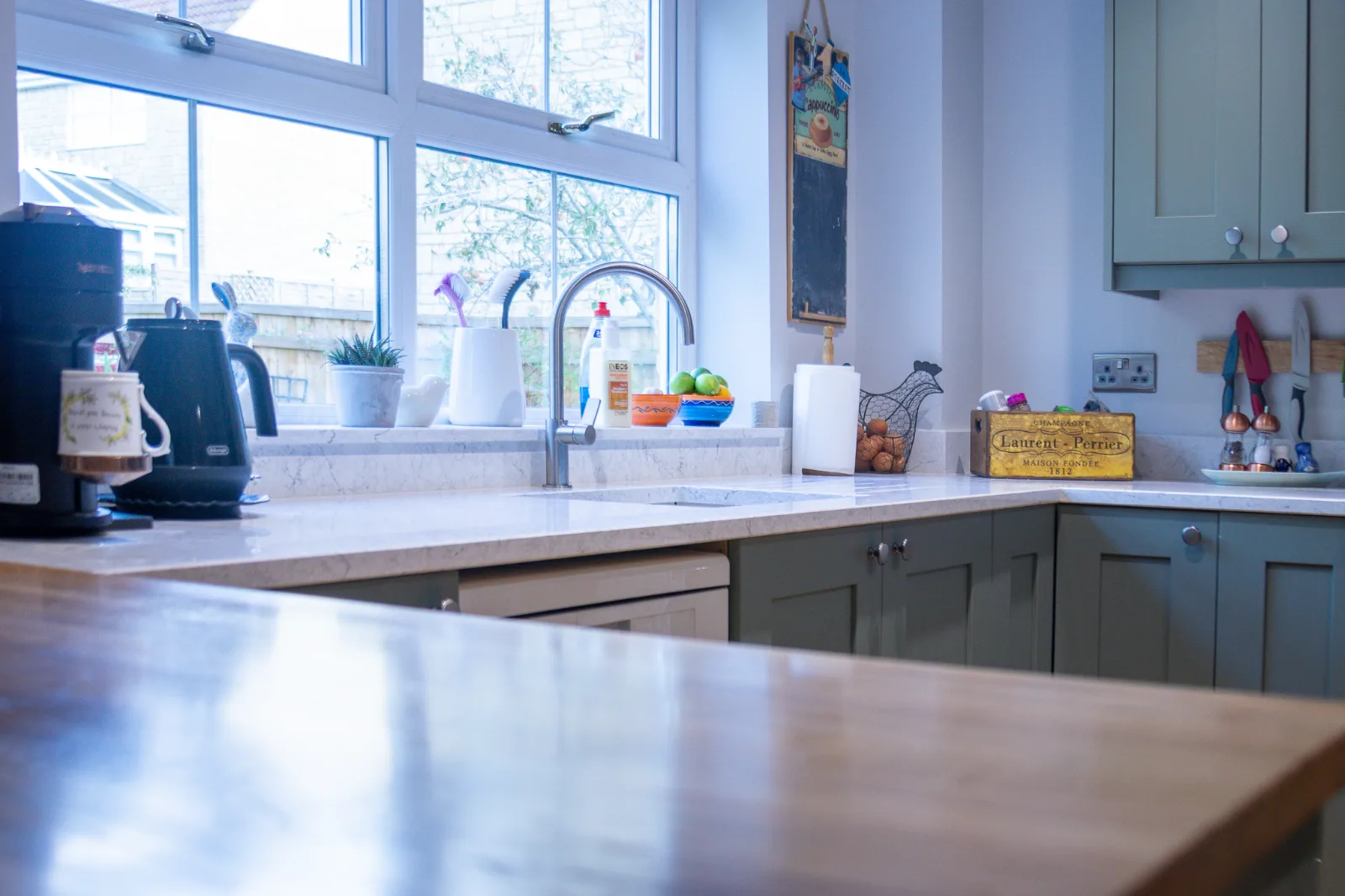
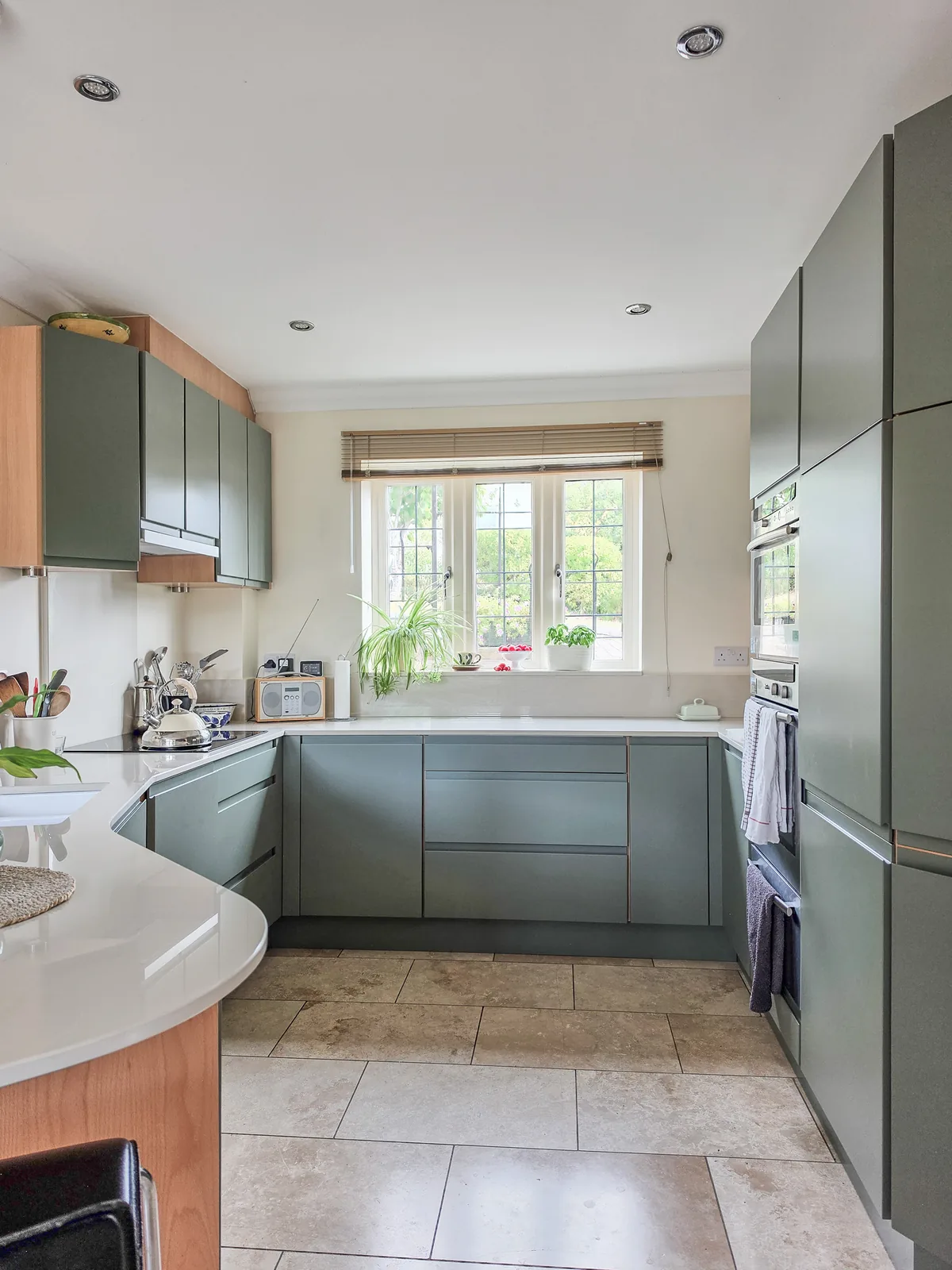
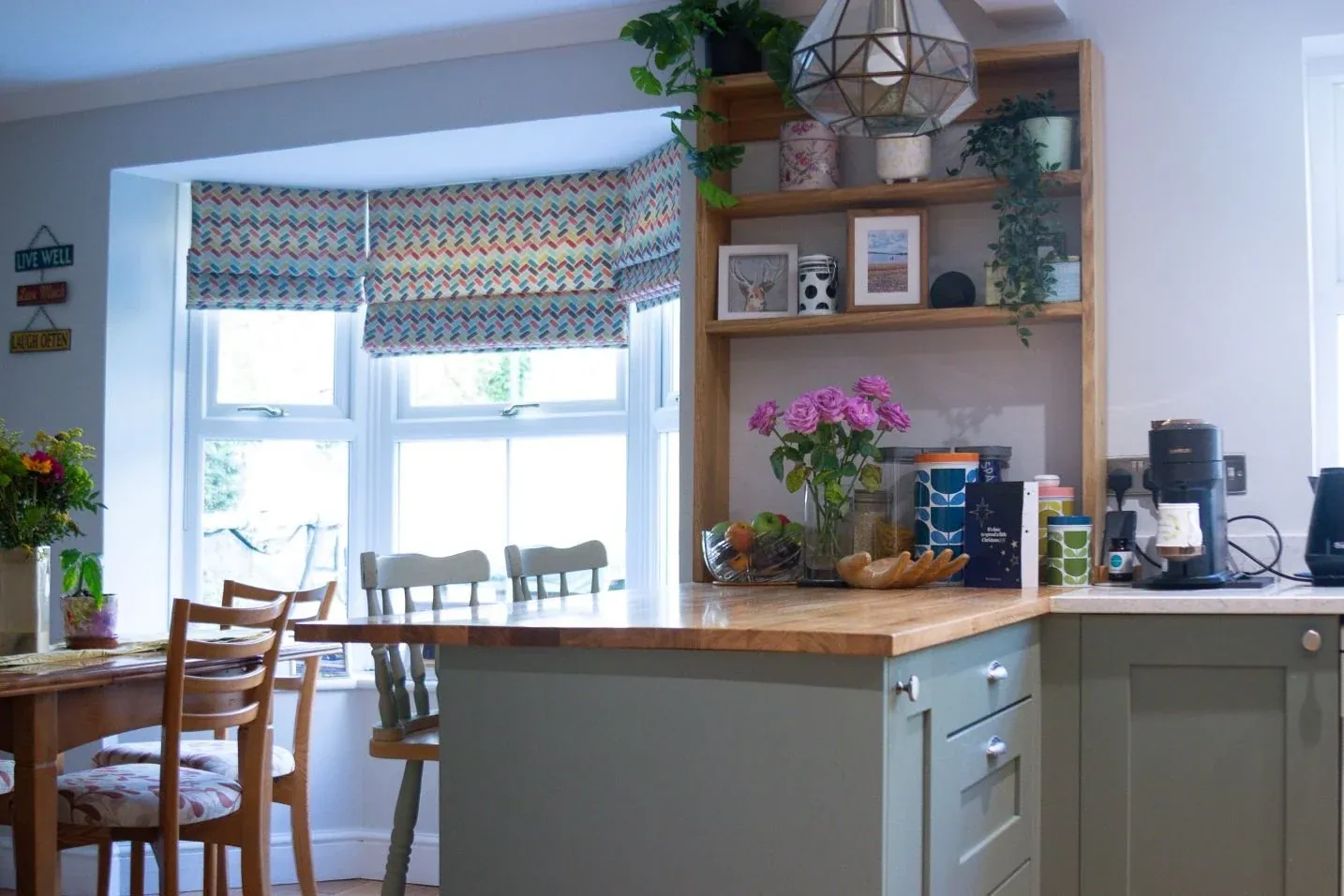
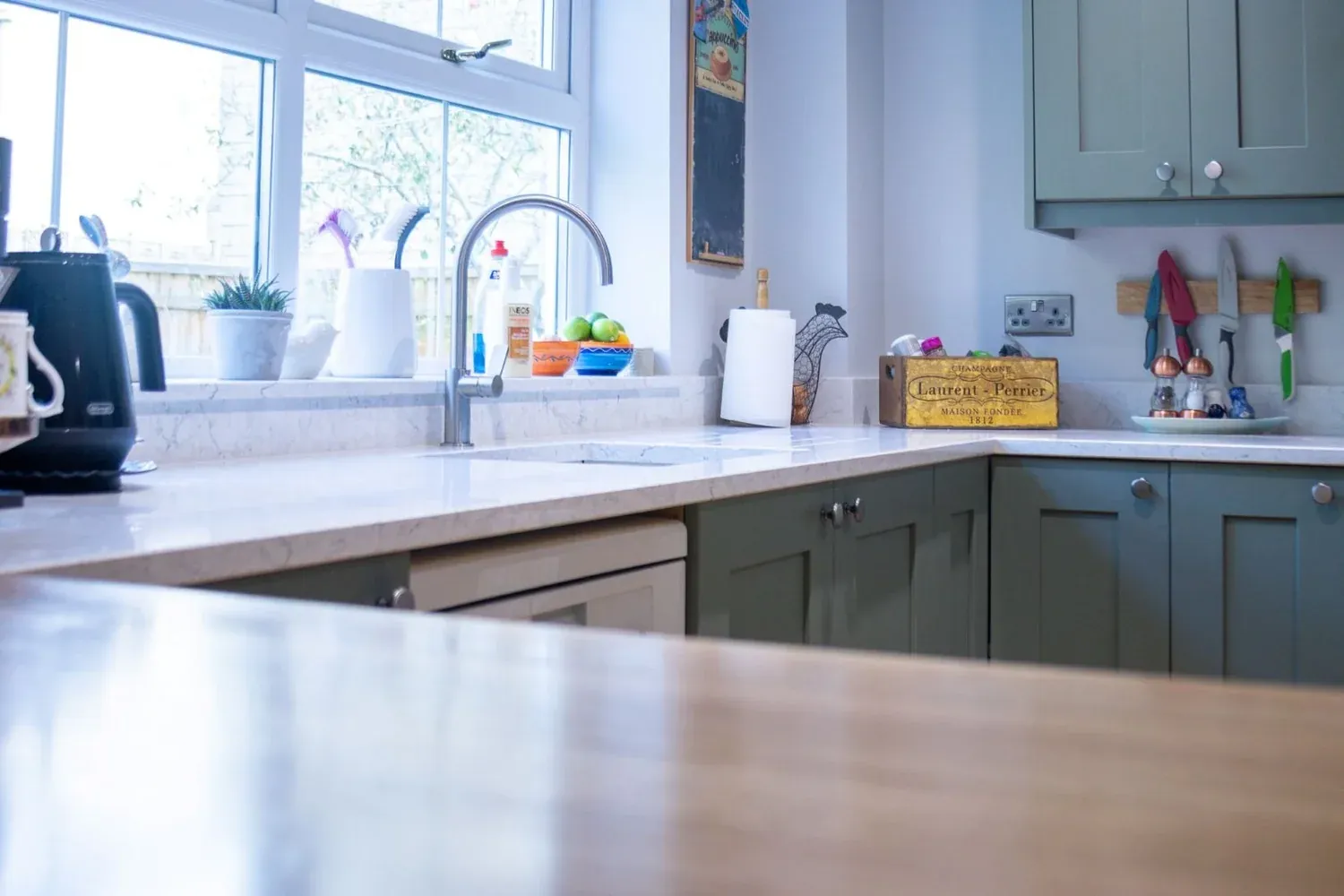
The Corsham custom kitchen was planned around family life, rather than a standard showroom arrangement. It has Regiment Green shaker cabinetry, factory-painted solid timber doors and factory-built cabinet boxes made to size.
White-veined quartz was used around the sink and cooking areas. Solid oak was used on the peninsula, where the family sits. Those materials were chosen for the different ways the surfaces would be used, not simply to make everything match.
There is also a solid oak open shelving unit that I made in the workshop for the end of the peninsula. That is a bespoke addition within a custom kitchen. It does not mean the main cabinetry was workshop-made, and it does not turn the whole project into a fully bespoke kitchen.
This is a useful distinction when looking at photographs. A personally designed kitchen can contain a workshop-made feature while remaining, in my terms, a custom kitchen.
What do I mean by a bespoke kitchen?
Bespoke starts before there is a cabinet to choose. I work from raw materials and build the furniture in my own workshop, rather than specifying cabinetry from a manufacturer's range.
That lets the design determine the proportions, construction and arrangement. The decisions are not limited to selecting a door style or a colour. They can reach into the structure of the furniture itself: what is open, what is enclosed, how the timber is joined and how one unit relates to the next.
It is not simply another word for expensive, or for made to measure. A manufacturer can supply made-to-measure cabinetry for a custom kitchen. The distinction is the way the kitchen is designed and made, not just whether a cabinet has an unusual width.
What does the Melksham bespoke kitchen show?
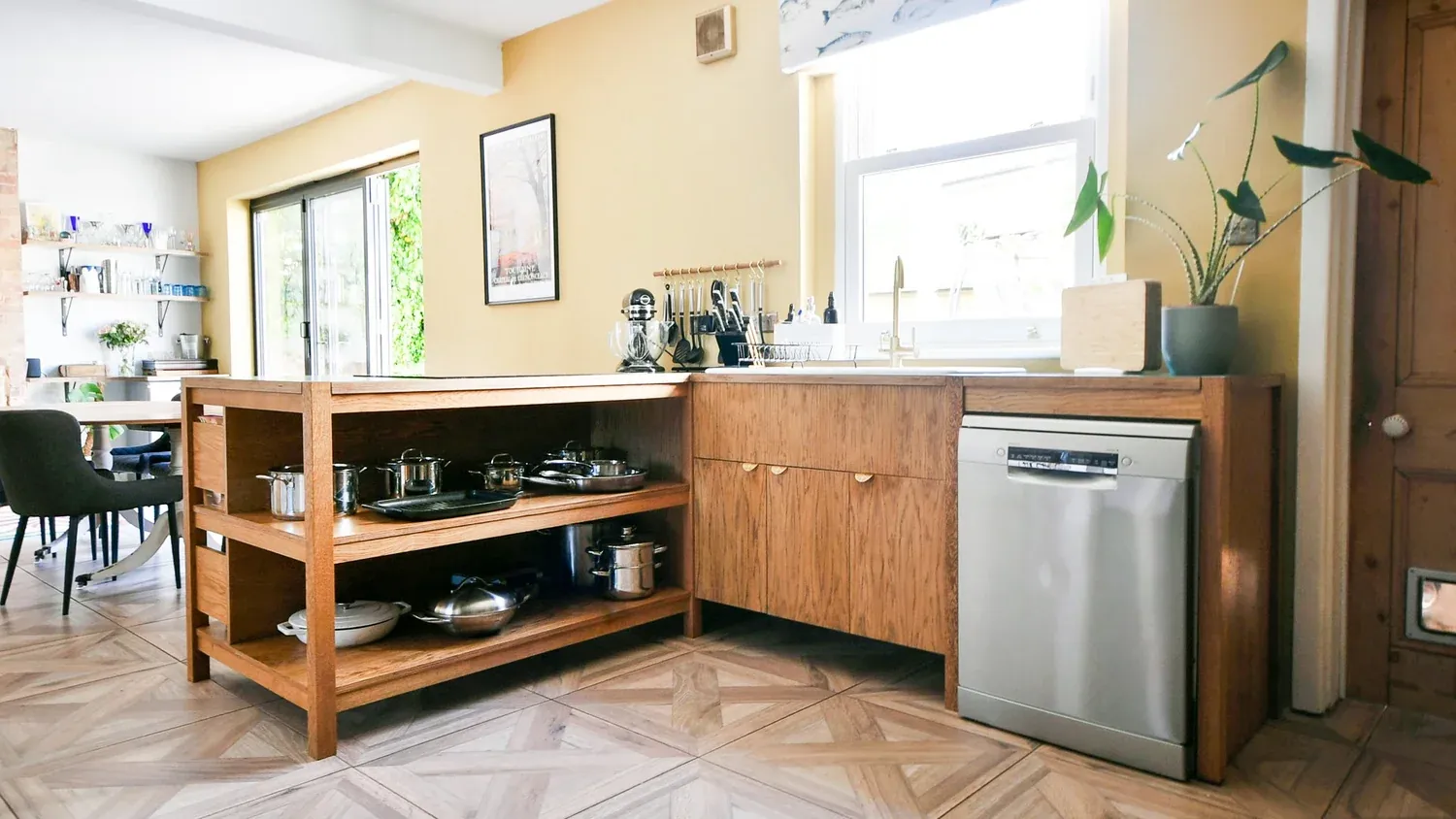
The Melksham bespoke kitchen was made for a Victorian detached villa with well-proportioned rooms. Four main units link together seamlessly, with solid European oak frames, oak-veneered panels where appropriate, and mostly open storage.
The oak was machined and jointed in my workshop. The design shows the furniture and its construction rather than concealing everything behind a continuous run of conventional fitted doors. Traditional paste wax keeps the grain visible and can be renewed in place.
This is where the gap between custom and bespoke becomes clearest. Corsham uses a manufacturer's cabinetry to create a carefully planned kitchen. Melksham begins with materials and cabinetmaking, allowing a kitchen unlike a showroom range.
The workshop work for Melksham took six weeks, including milling the oak and allowing it to acclimatise between processes. Fitting took two days, including cutting the worktops. Those are the timings for that project, not a promise for every bespoke kitchen.
Does bespoke always cost more than custom?
My published guide is £20,000 to £30,000 for a custom kitchen, and £30,000 to £50,000 and above for bespoke cabinetry. These are guide bands, not fixed prices for the two kitchens described here.
Prices checked October 2026.
Scale and scope matter. The Melksham kitchen cost less than a typical £30,000-plus bespoke kitchen because it was smaller, with four main units. A smaller bespoke project should not be compared with a larger custom kitchen as though the amount of work were identical.
For the wider figures and what they cover, see the Kitchen Cost Guide. The useful first question is what your room needs, rather than which label sounds more impressive.
Which route should you consider?
Custom is worth considering when a manufacturer's cabinetry and components can give you the layout, storage and finish you want. Bespoke is worth considering when the design calls for furniture that cannot be achieved by specifying those components.
Neither term should be accepted without an explanation. Ask who makes the main cabinetry, what is manufactured to order and what is built from raw materials. That will tell you more than the word on a brochure.
If you are deciding which approach suits your home, request a free home visit. We can look at the room together and discuss what a custom design could achieve, and where making something from scratch would genuinely change the result.
If this sounds like your kitchen, request your free Home Design Visit.