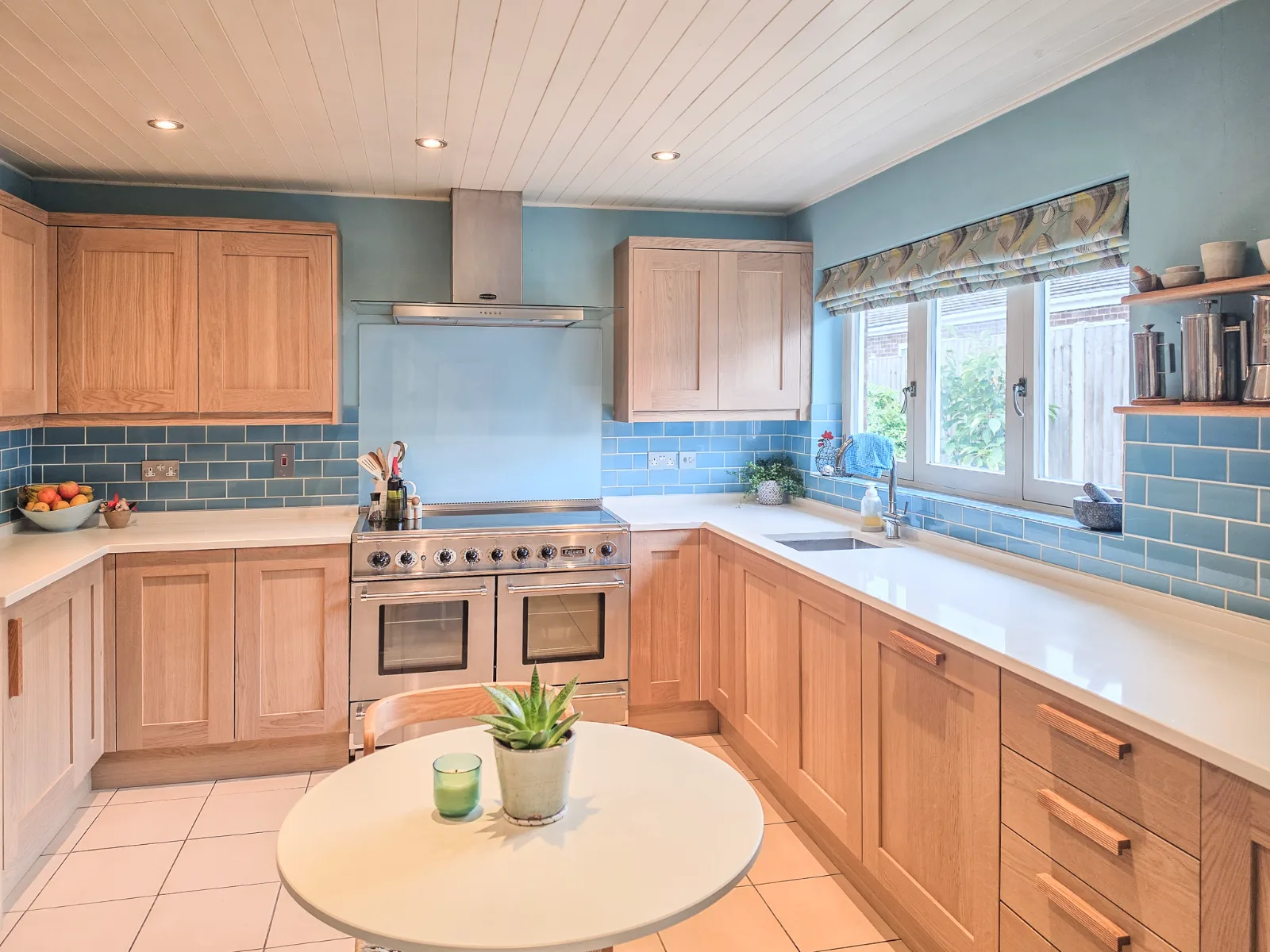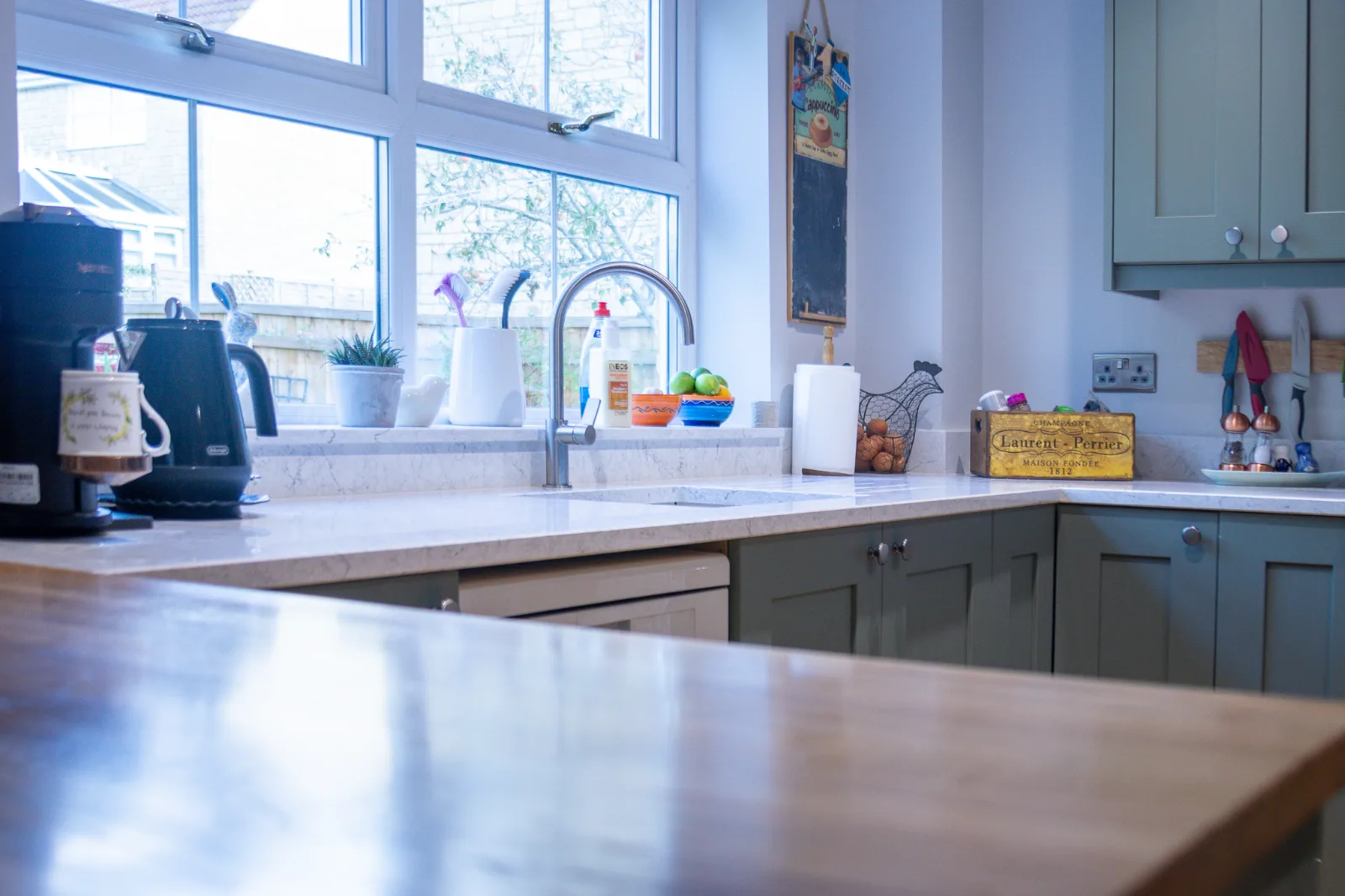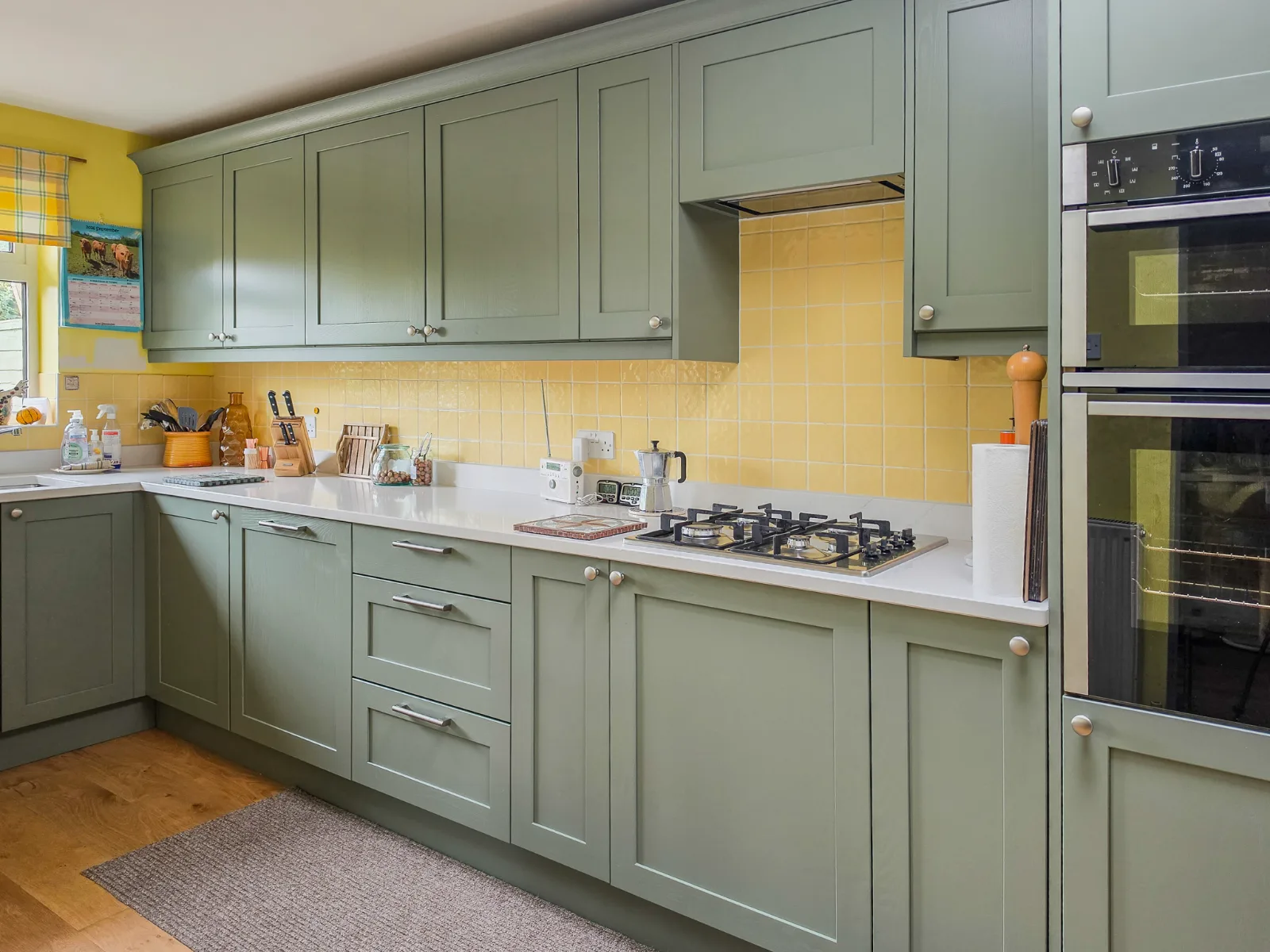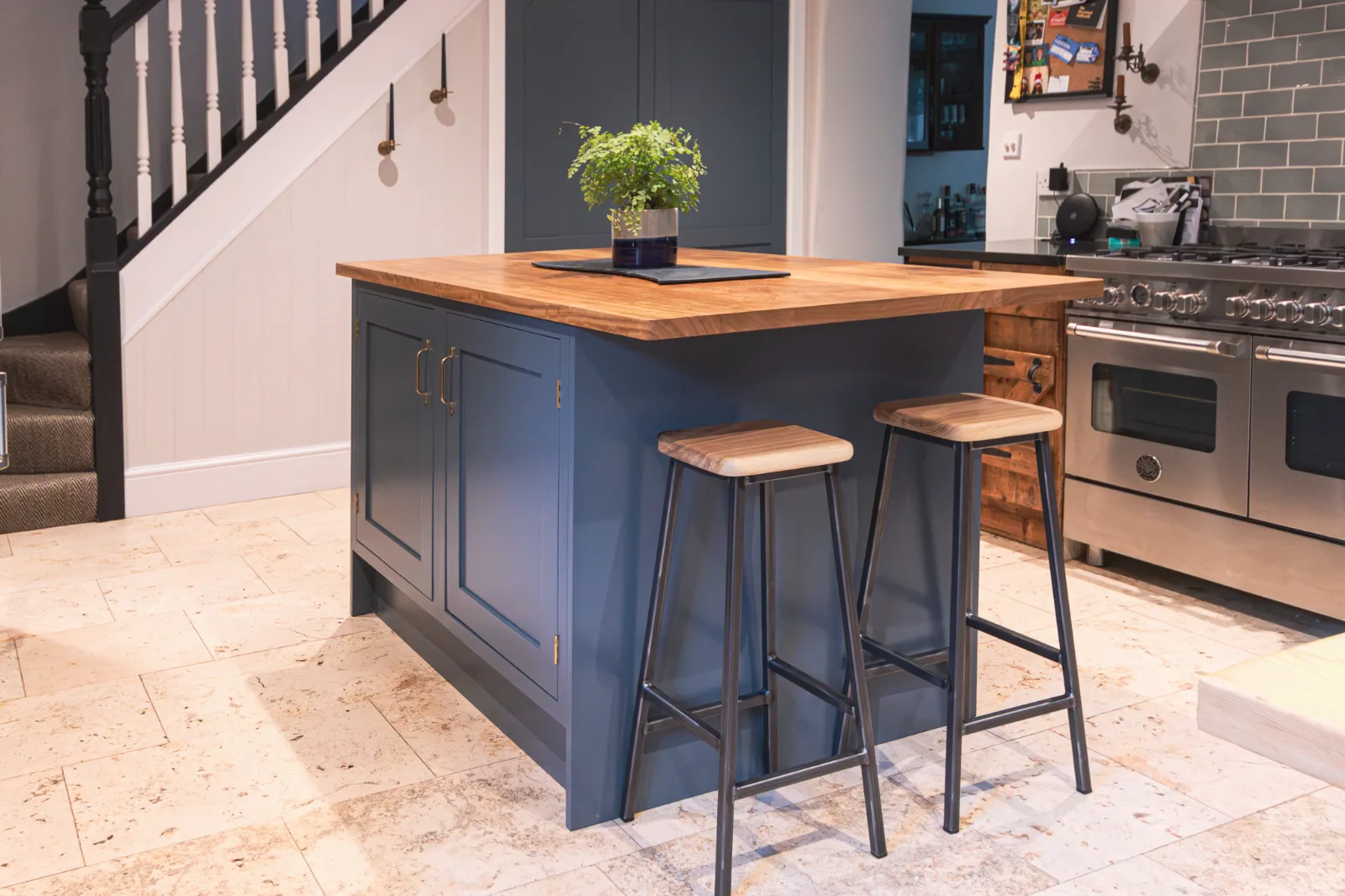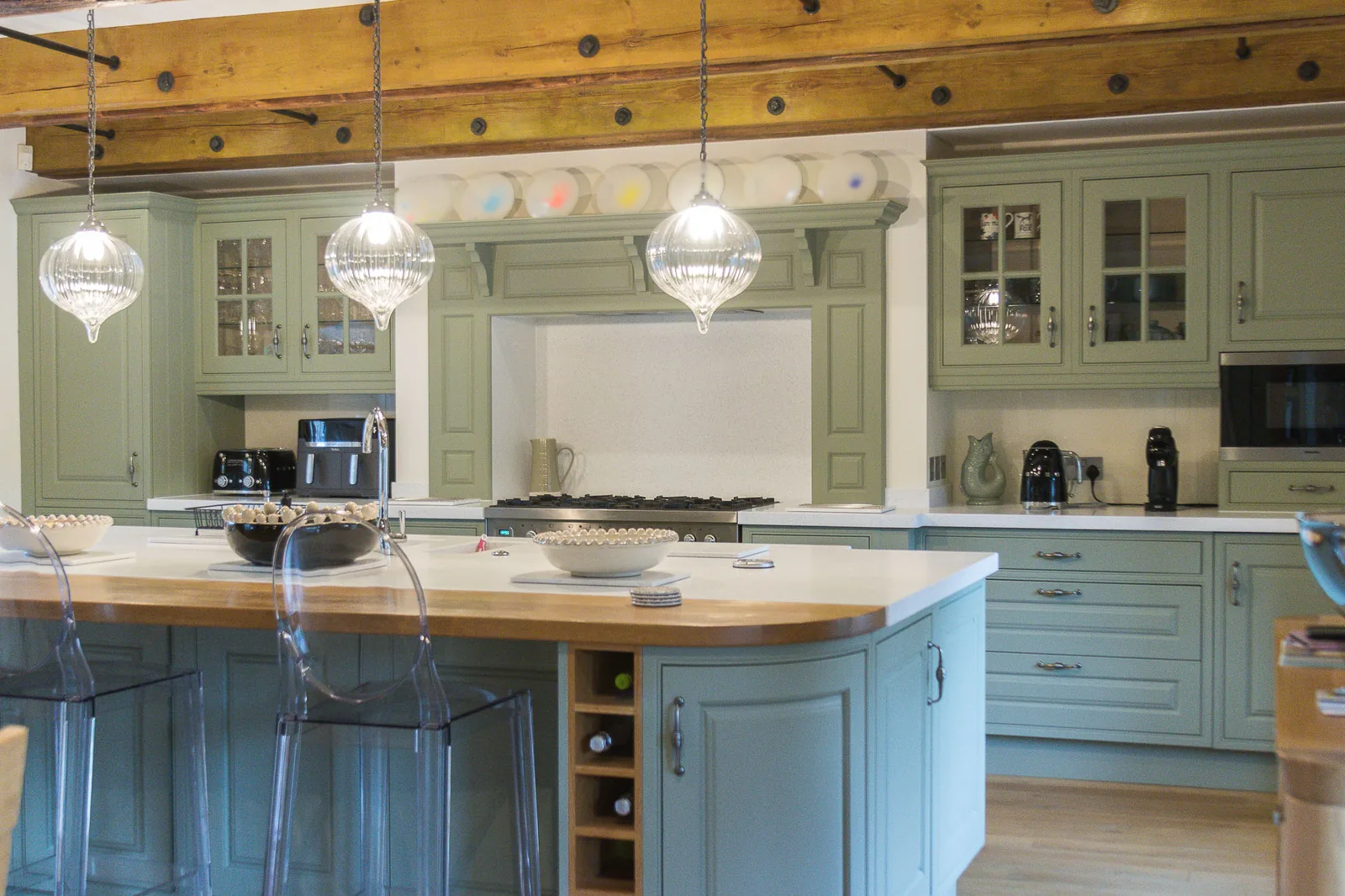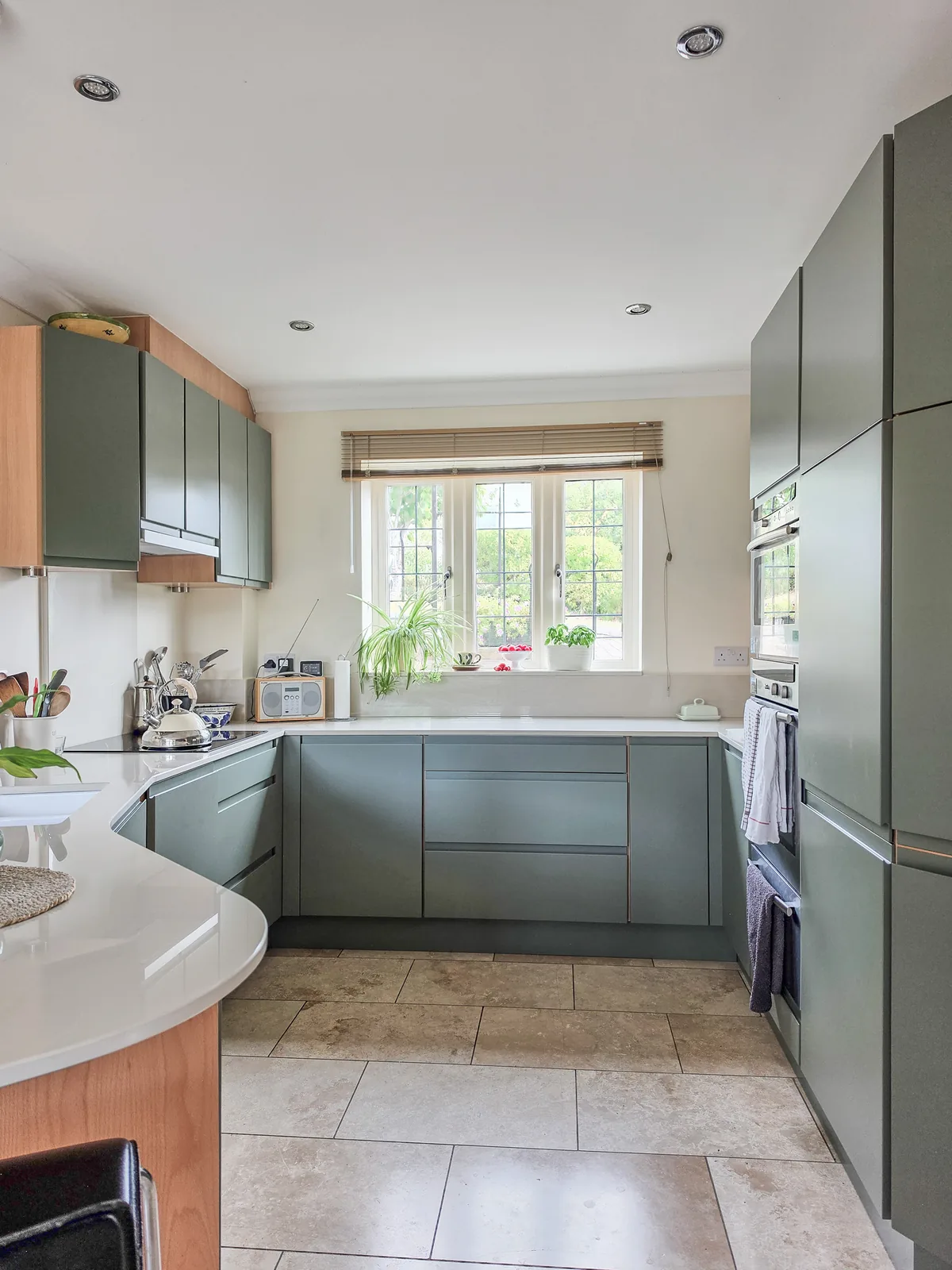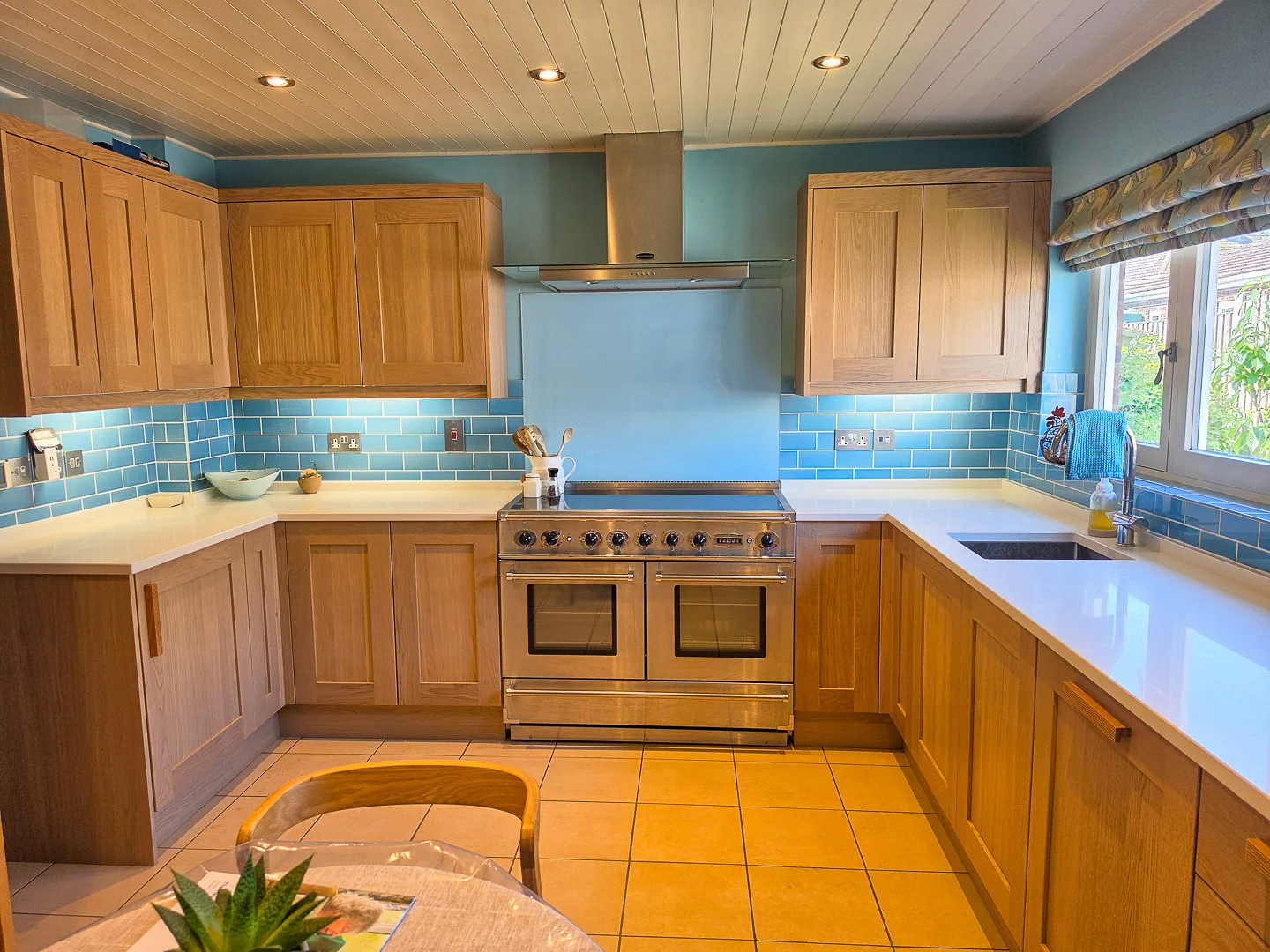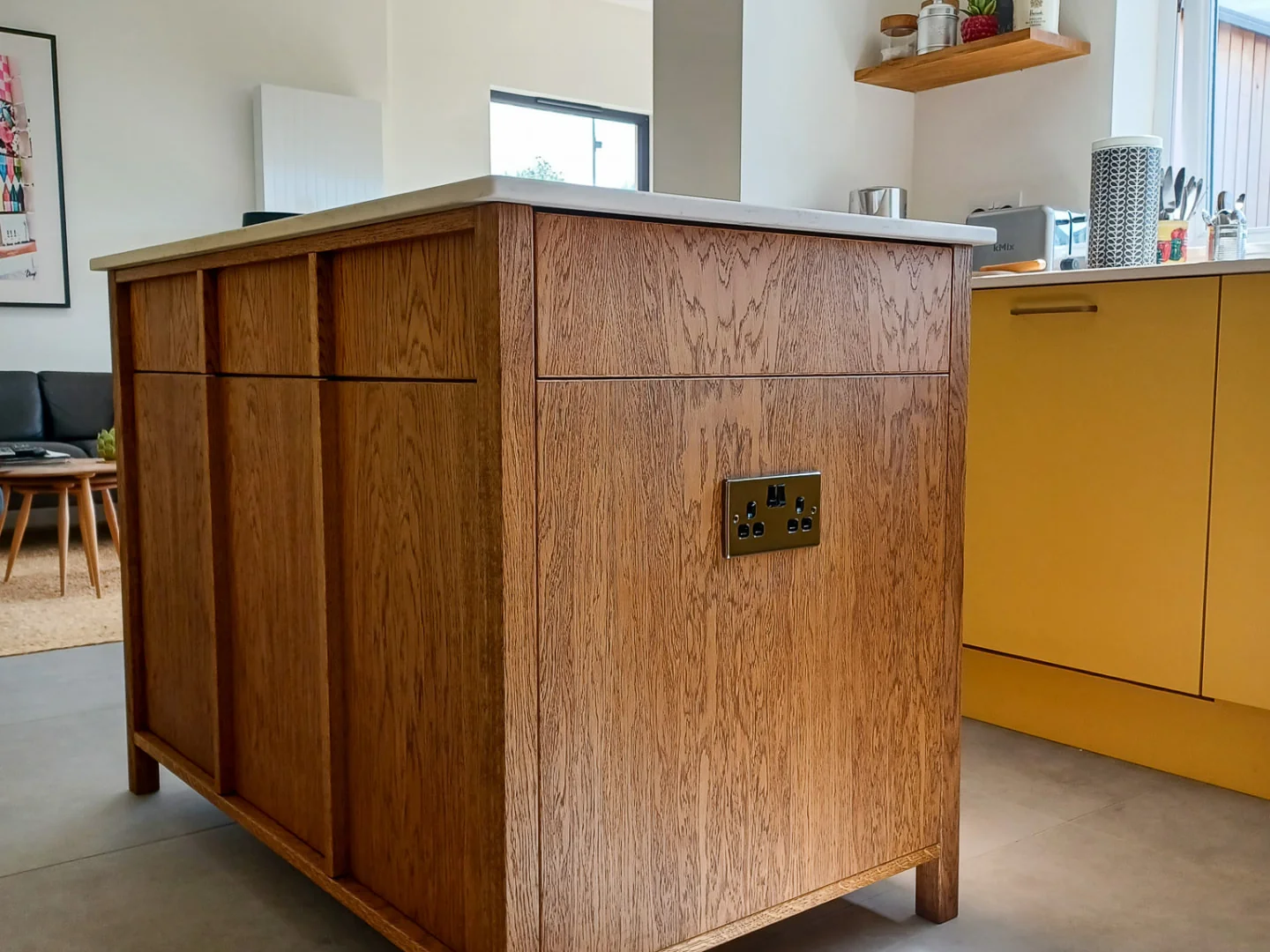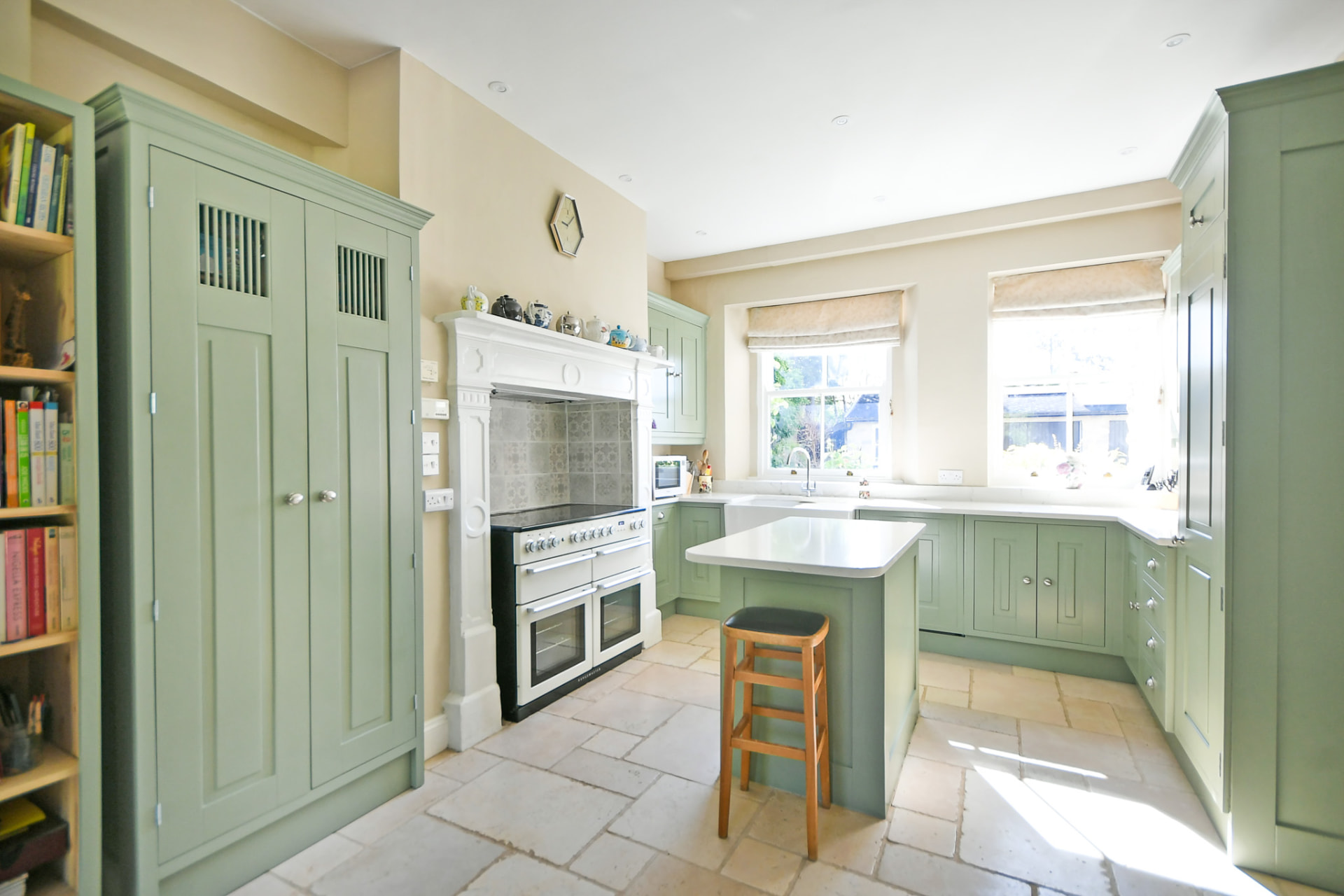
Both a hand-painted kitchen and a professionally sprayed one can last for many years, so which one lasts longer matters less than the preparation behind it.
A useful question to ask yourself is not only which finish wears better, but which one suits your kitchen, your doors and how much disruption you are willing to live with. Sometimes that points to spraying. Sometimes it points to hand-painting. And sometimes the homeowner simply makes that decision as a personal choice - which is entirely reasonable, because both routes are legitimate.
I know this well because a recent large refresh, a Victorian villa in Malmesbury, used both: the kitchen doors were professionally sprayed, while other elements in the room were hand-painted. Each did the job it was best suited to.
What actually makes a painted finish last
Durability comes from preparation, not from the brush or the gun. Doors and panels need cleaning, filling where needed, keying back and degreasing before the first coat goes anywhere near them. Skip that, and no finish - sprayed or brushed - will survive daily kitchen use for long.
With the right preparation, both approaches give a tough, cleanable finish. Where they differ is in the surface they leave and the work involved in getting there.
Where spraying wins
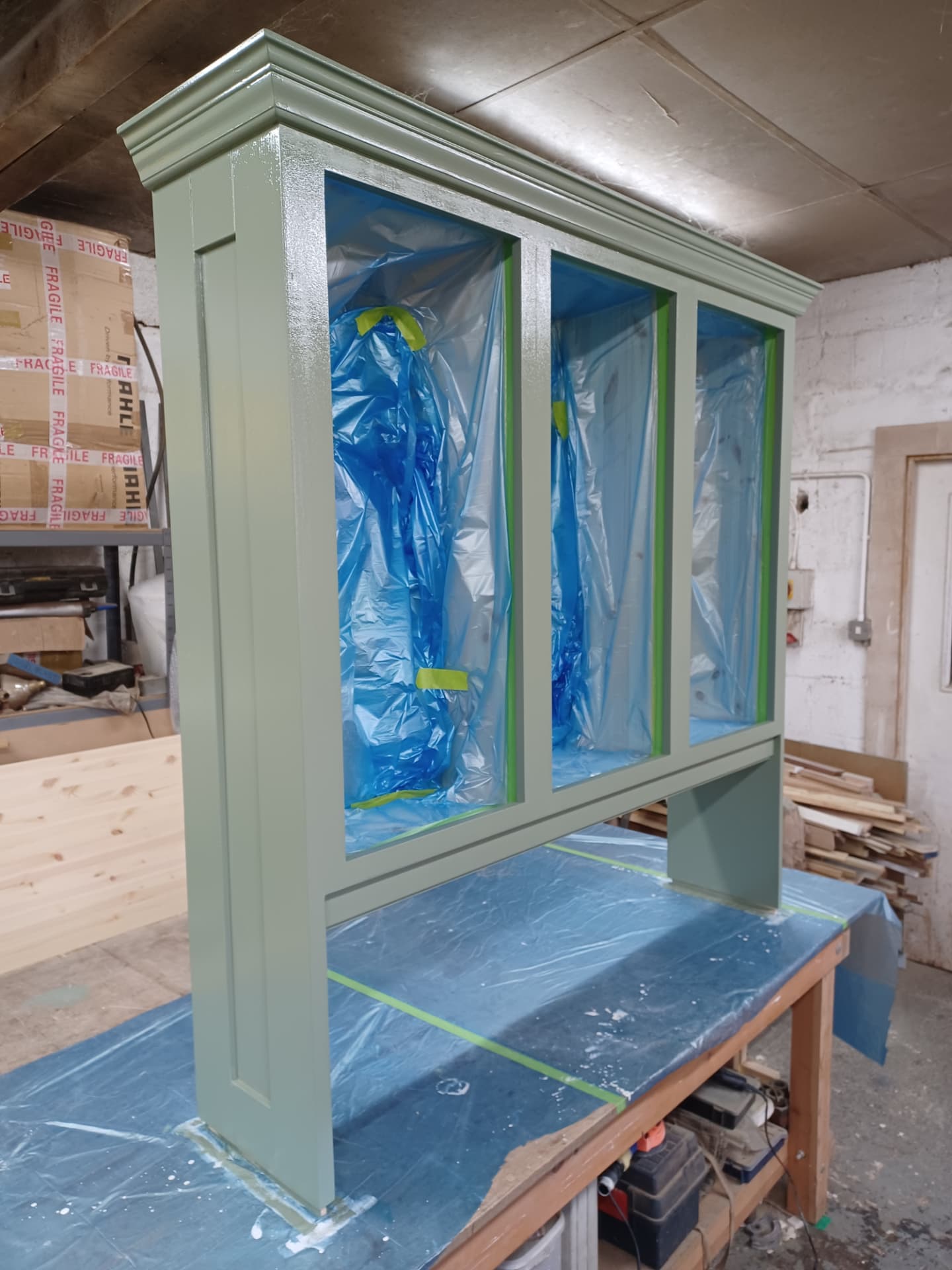
A professional spray system applies paint in fine, controlled coats, so the result is a smooth, even, factory-style finish with no brush marks. On flat shaker-style doors and recessed panels it is very hard to replicate by hand. That is why most modern replacement doors and most high-end new kitchens are sprayed, not brushed.
Spraying is also the right choice when the whole kitchen needs to match: a batch of doors finished at the same time, from the same mix, will be consistent across every panel.
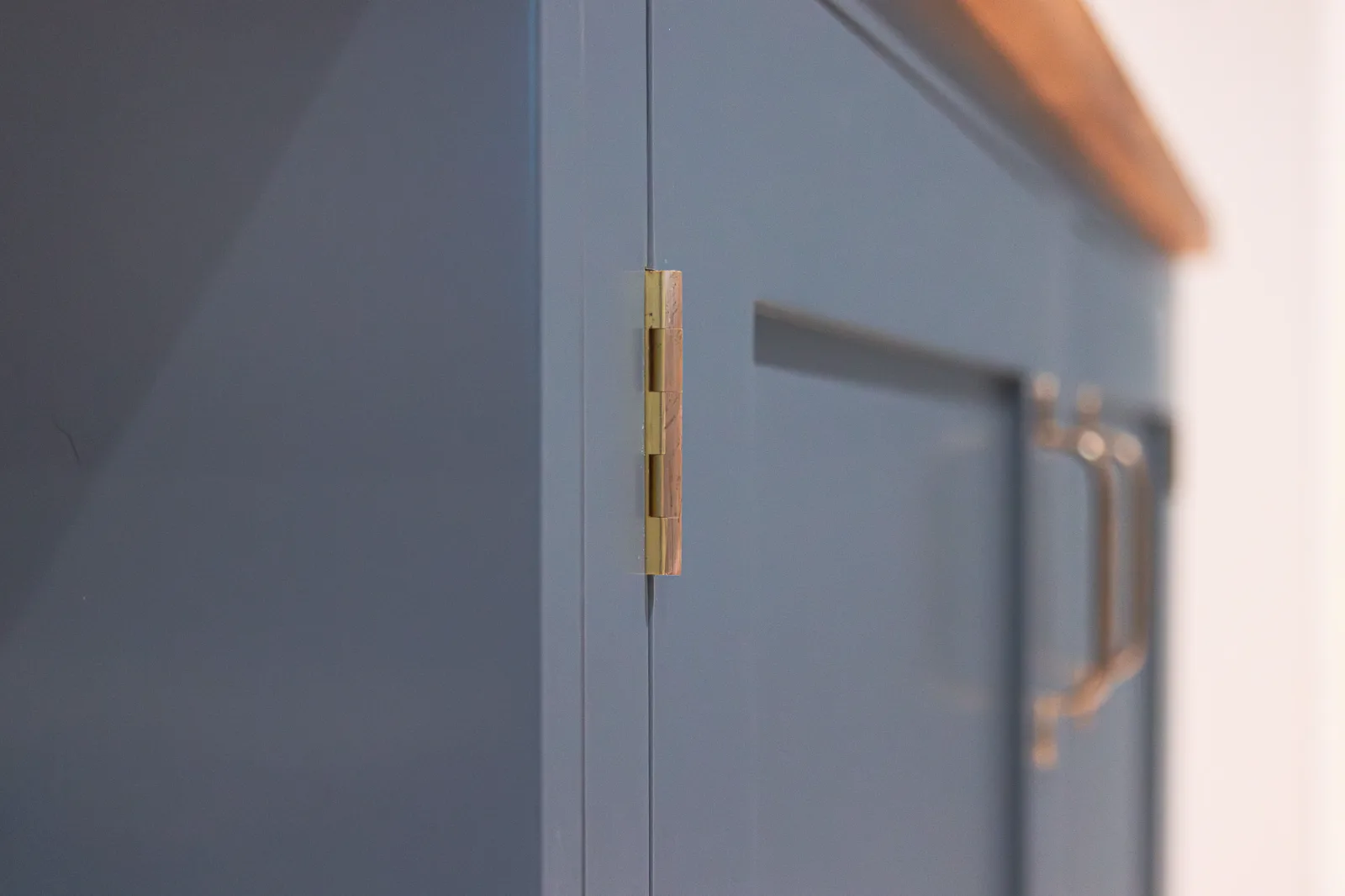
The trade-off is disruption. Spraying needs masking off - of floors, worktops, hinges, handles, glass and anything near the spray zone - and it means controlling overspray, which is why spraying is usually done with doors removed and sprayed in the workshop, then refitted. That is more organising than a brush, and more time off-site.
Where hand-painting wins
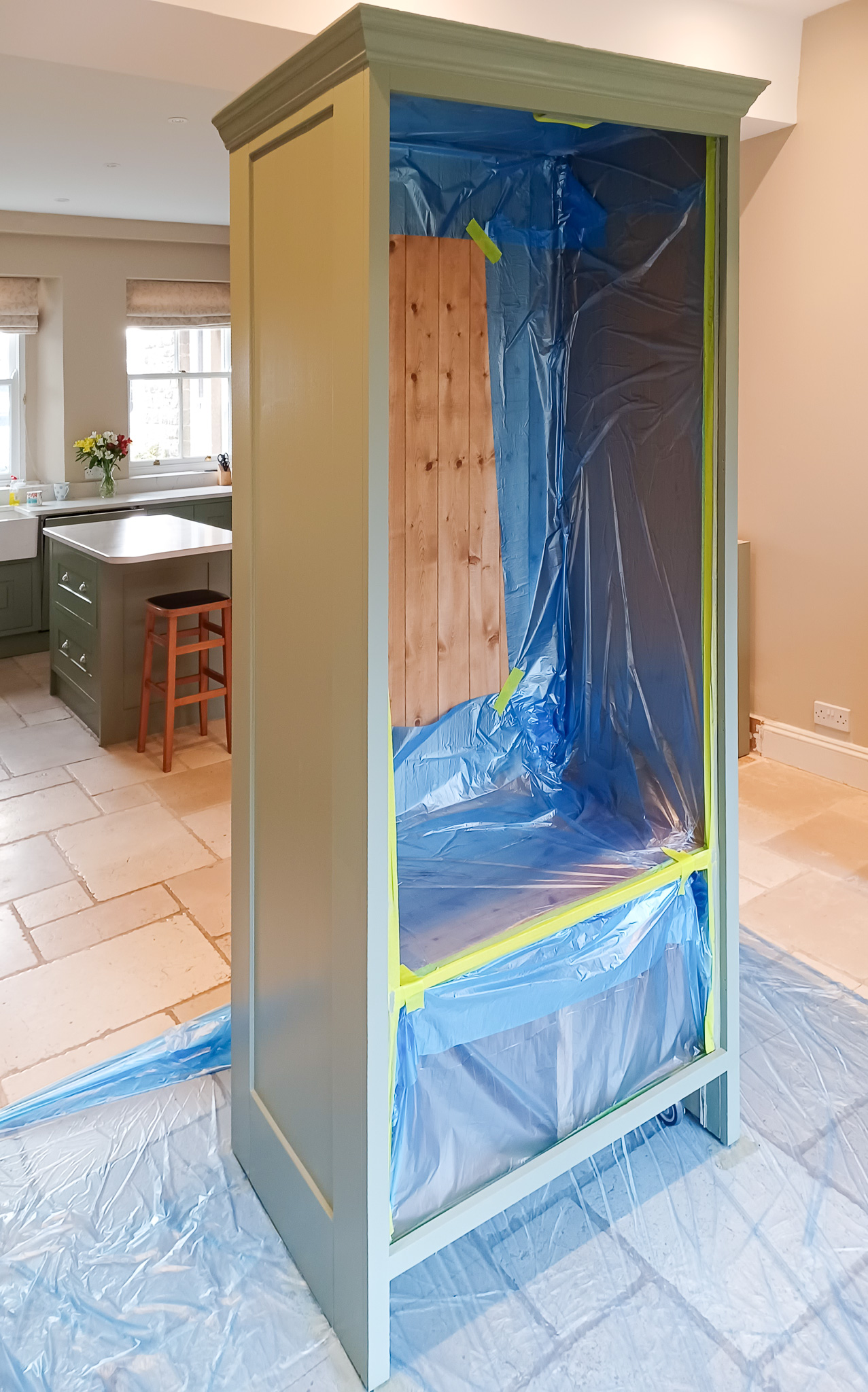
Hand-painting asks far less of the room. There is much less masking off and far less disruption, because there is no spray cloud to contain. For occupied homes, awkward spaces, or one or two elements that need finishing in situ, a brush is often the practical choice.
It also has a character some people prefer: a hand-painted surface carries subtle brush texture that reads as traditional and cottage-like, which can suit period properties beautifully.
The trade-off is the finish itself. Even a very good painter leaves brush marks that you will see up close and in raking light. On wide flat panels, sprayed wins on smoothness every time.
The decision, in practice
In my experience the choice is a question of practicality as much as quality of finish. Hand-painting requires much less masking off and disruption than spraying, and less control of overspray. Sometimes it is worth that extra effort and disruption to spray. Sometimes it isn't. And sometimes the homeowner makes that decision as their personal choice - a perfectly good way to decide.
A few pointers from real projects:
Many doors, one consistent colour - spray wins.
Flat, modern-style doors where smoothness matters - spray wins.
A few elements in an occupied kitchen, finished in place - hand-painting wins.
Period detail and visible brush texture preferred - hand-painting wins.
Doors that need to come out anyway - spraying in the workshop is usually easier.
The mistake to avoid: DIY spraying
Cheap DIY sprayers are easily available, and this is where most DIY spraying goes wrong. A domestic sprayer is a far cry from the professional systems used in a workshop: it applies heavier, less controlled coats that run, orange-peel or show every imperfection in the substrate. And the machine is the easy part - professional results also depend on hours of laborious preparation and curing between coats, which is where the durability actually comes from.
If a sprayed finish is what you want, it is worth having it sprayed properly, by someone with the right equipment and the patience to prepare and cure each coat.
Where a spray or paint finish fits a bigger refresh
Door painting rarely happens on its own. Doors are sprayed or painted as part of a wider refresh, alongside new worktops, lighting or hardware. If you are weighing up a respray against new doors altogether, I have written separately about choosing between a respray and replacement doors, and about what replacement kitchen doors cost. The kitchen spraying service page explains how the spraying process works in practice.
Start with a free home visit
If you are not sure which finish suits your kitchen, I offer a free Home Design Visit. I will look at your doors, your room and your plans in person, tell you plainly which route I would take - and why - and give you a clear price. There is no charge and no obligation. Request a free home visit.
If this sounds like your kitchen, request your free Home Design Visit.