To judge the quality of bespoke kitchen cabinets, look closely at how the carcase is assembled, the thickness of the back panel, and the joinery holding the drawer boxes together. High-quality bespoke cabinetry relies on rigid, glued-and-screwed or pocket-screwed joinery in 18mm birch plywood or solid hardwood, rather than the fragile cam-and-dowel fixings found in factory mass produced chipboard carcassing.
A truly bespoke kitchen typically costs from £30,000 to £50,000 and above, which is a guide only, confirmed at your Home Design Visit. When investing at this level, every cabinet should be engineered to last for decades, using heavy-duty drawer runners, serviceable hinges, and face frames that keep the entire run square.
Solid carcase construction and back panels
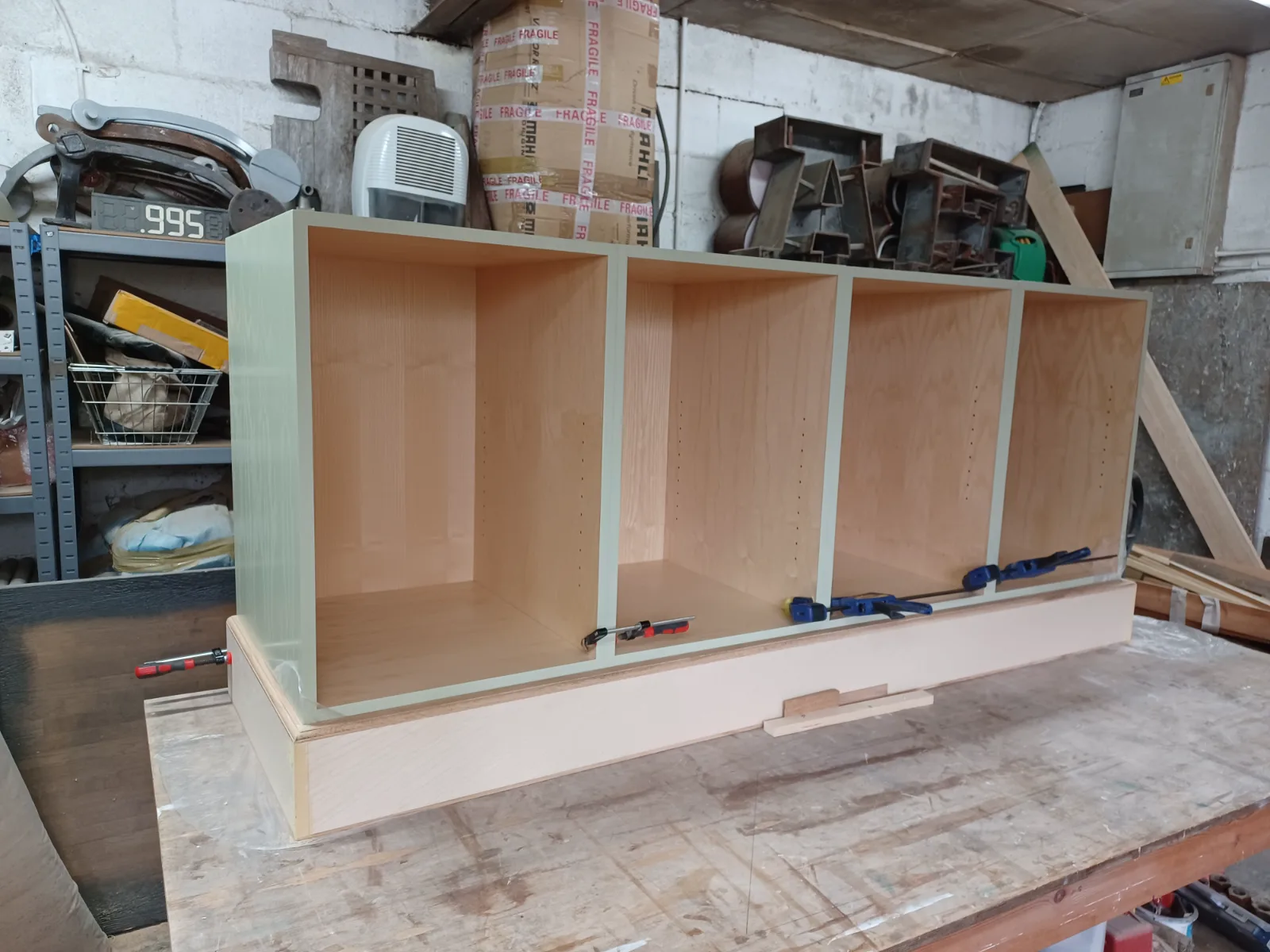
The carcase forms the backbone of any kitchen, bearing the weight of heavy stone worktops and cast iron cookware. In mass-market kitchens, manufacturers routinely use thin 3mm hardboard for back panels, held on with small staples. In well-made bespoke kitchen cabinets, you should expect solid furniture-grade 18mm birch plywood or timber for the entire carcase, including the back panel itself.
A rigid 18mm back panel ensures the cabinet remains perfectly square when screwed to uneven walls, preventing door alignment issues years down the line. You can explore how these individual pieces come together on our page detailing each full /bespoke-kitchen build.
When inspecting a carcase, run your hand along the exposed edges and joints. Quality timber carcasses are edged in solid hardwood rather than thin iron-on melamine or veneer tape, protecting vulnerable corners from chipping under everyday family use.
Traditional drawer joinery and hardwood boxes
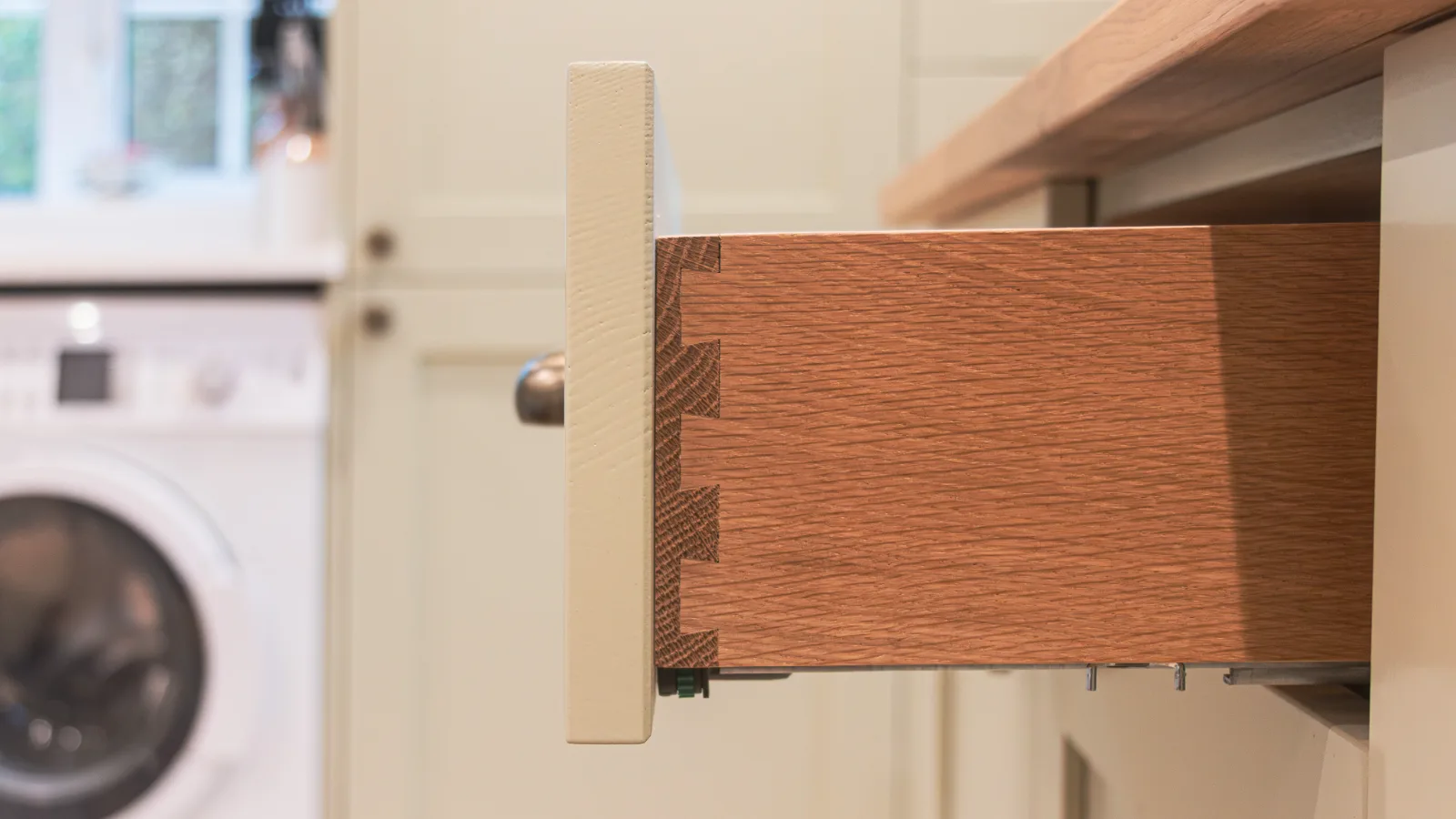
Drawers endure more daily punishment than any other moving part in a kitchen. For bespoke kitchen cabinets, drawers should always be constructed with solid timber sides, usually maple or oak, joined with traditional English or French dovetails. Dovetail joints mechanically resist the pulling force applied when you open a heavily laden pot drawer.
Cheaper cabinetry relies on thin chipboard drawer bottoms that are simply glued into shallow grooves and eventually sag under weight. Bespoke drawers use thick, solid plywood or hardwood bases that are fully grooved into the drawer sides and reinforced from beneath.
Before commissioning any maker, ask to see a bare drawer box removed from its runners. The timber should be smooth to the touch, cleanly lacquered or oiled, and finished with tight, gap-free joints at all four corners.
Heavy-duty drawer runners and mechanical hardware
Even the most beautiful timber drawer will frustrate you if it drags or wobbles on its tracks. Premium bespoke kitchen cabinets rely on concealed, undermounted runners such as Blum Movento or Tandem systems, which keep the mechanical parts hidden underneath the drawer rather than visible along the sides.
These runners should be rated to carry at least 30kg for standard cutlery drawers and 40kg to 60kg for wide pan drawers. High-grade runners offer multi-dimensional adjustment, allowing the maker to align drawer fronts to within half a millimetre during installation.
Soft-close dampening should feel smooth and silent, without requiring extra physical effort to pull the drawer open from a resting position.
Butt hinges versus concealed hinges for cabinet doors
Cabinet doors can be hung either on traditional butt hinges or modern concealed cup hinges. In classic in-frame bespoke kitchen cabinets, traditional drawn brass or stainless steel butt hinges are mortised cleanly into both the door and the solid timber face frame. This arrangement cannot sag because the weight is supported directly by the timber frame.
Concealed hinges, while less traditional in appearance, offer quick three-way screw adjustment and integrated soft-close dampers. Whichever style you prefer, look for components that can be unscrewed, cleaned, or replaced decades later without damaging the surrounding timber.
Avoid any build that relies on plastic mounting plates or non-standard proprietary fittings that will be obsolete in ten years. A good cabinetmaker chooses fittings that have been standard in the industry for generations.
Face frames and in-frame door construction
In-frame construction is widely considered the hallmark of bespoke cabinetry. This involves fitting a solid hardwood front frame, usually 25mm to 30mm thick, to the front of the carcase, with the door sitting flush inside that opening rather than resting on top of it.
The face frame provides immense rigidity to the carcase, preventing the cabinet from racking over time. To inspect the build, check the margin or gap around the closed door, which should be consistent and measure between 2mm and 2.5mm all the way around.
Doors should be made with traditional mortise and tenon joints at the corners, allowing the central panel to float within grooves to accommodate natural seasonal movement in the wood without cracking.
Practical measurements, timescales, and build costs
Understanding typical build specifications helps you evaluate the value of bespoke kitchen cabinets. Standard bespoke carcase sides are constructed from 18mm birch plywood, drawer boxes are made from 15mm or 18mm solid timber, and door frames measure between 22mm and 25mm in thickness for stability.
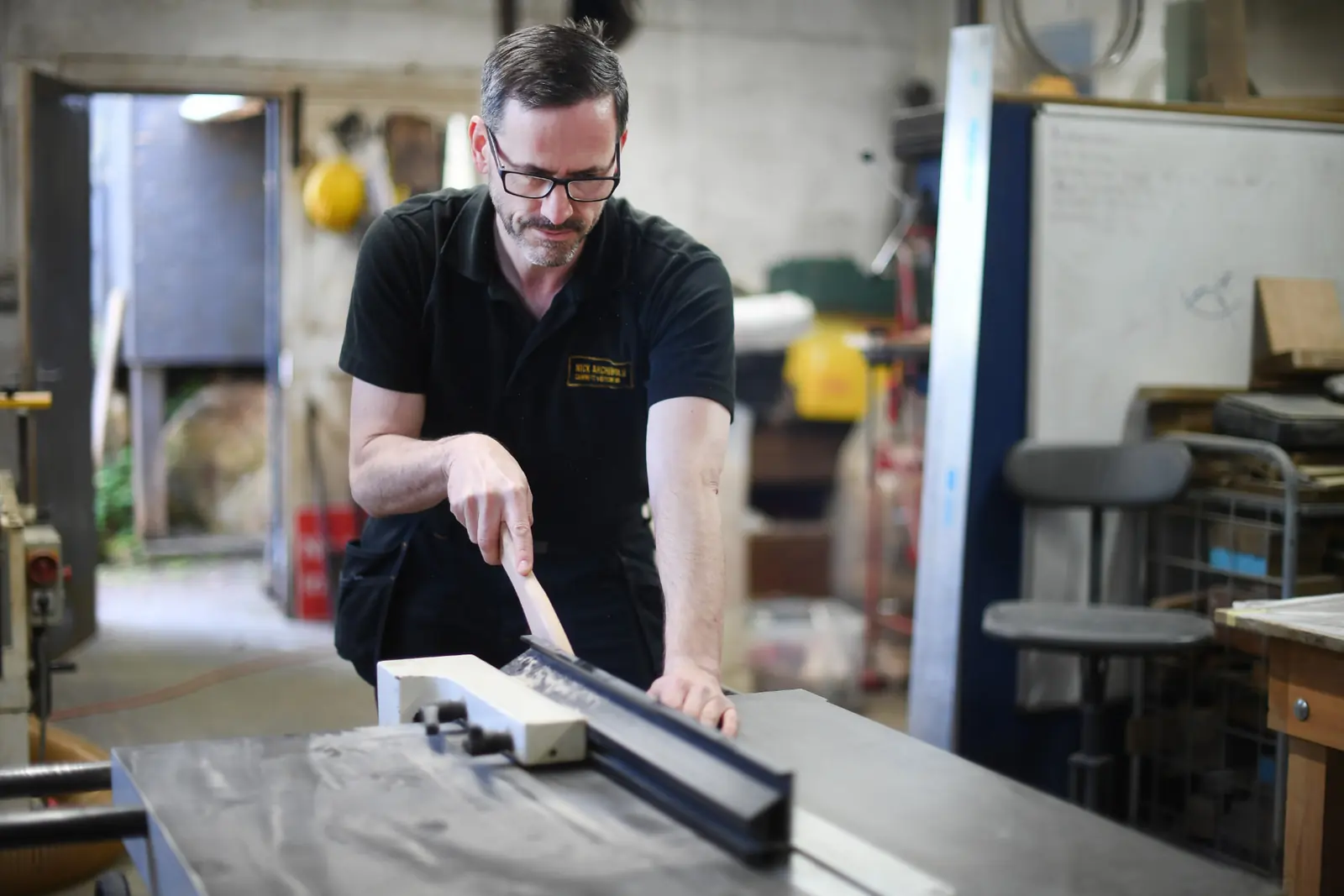
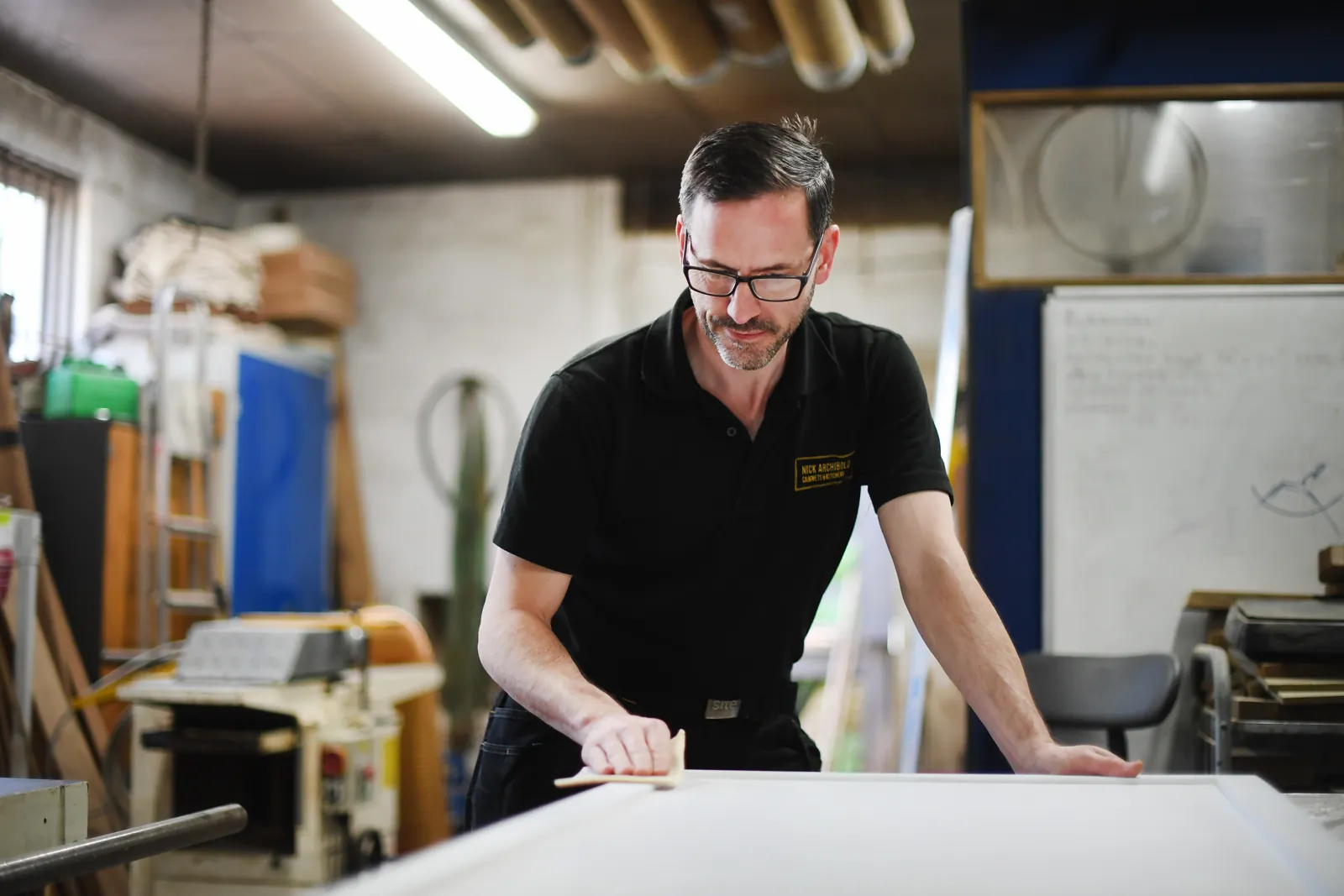
For a complete bespoke kitchen hand made to these standards, allow a guide price of £30,000 to £50,000 and above. From initial drawings and timber selection through to fitting, the process typically takes 10 to 12 weeks. I build every piece by hand in my Corsham, Wiltshire workshop, handling the timber from raw boards through to the final installation.
You can read more about the machinery and techniques used to craft these components by visiting the /workshop page.
How to inspect bespoke kitchen cabinets in person
When viewing sample cabinetry, start by applying downward pressure to an extended drawer. It should not tip, groan, or pull away from the carcase, even with moderate force applied.
Next, run your fingers underneath the shelving. Bespoke shelves should be at least 18mm to 22mm thick, supported by solid brass or stainless steel studs rather than loose plastic pins, ensuring they will not bow under stacks of dinner plates.
Finally, check how the internal fittings and carcase interiors are finished. Bespoke work features smooth, sealed internal surfaces, usually finished with durable hardwax oils or clear polyurethane lacquers that wipe clean easily and resist spills.
Frequently asked questions about cabinet construction
Why are 18mm carcase backs better than 3mm grooved backs? A solid 18mm carcase back is fully screwed and glued to the sides, base, and top, creating a solid structural box that keeps its shape permanently and can be anchored securely to any wall stud.
Can bespoke hardware be repaired if a soft-close damper fails? Yes, high-end mechanical runners and hinges from established manufacturers use modular dampers that can be unclipped and replaced in minutes without dismantling the cabinet or replacing the timber drawer box.
What timber is best for bespoke drawer boxes? Dense, pale hardwoods such as solid European beech, hard maple, or American white oak are ideal because their tight grain resists splintering, denting, and wear along the bottom runner grooves.
Planning your bespoke kitchen project
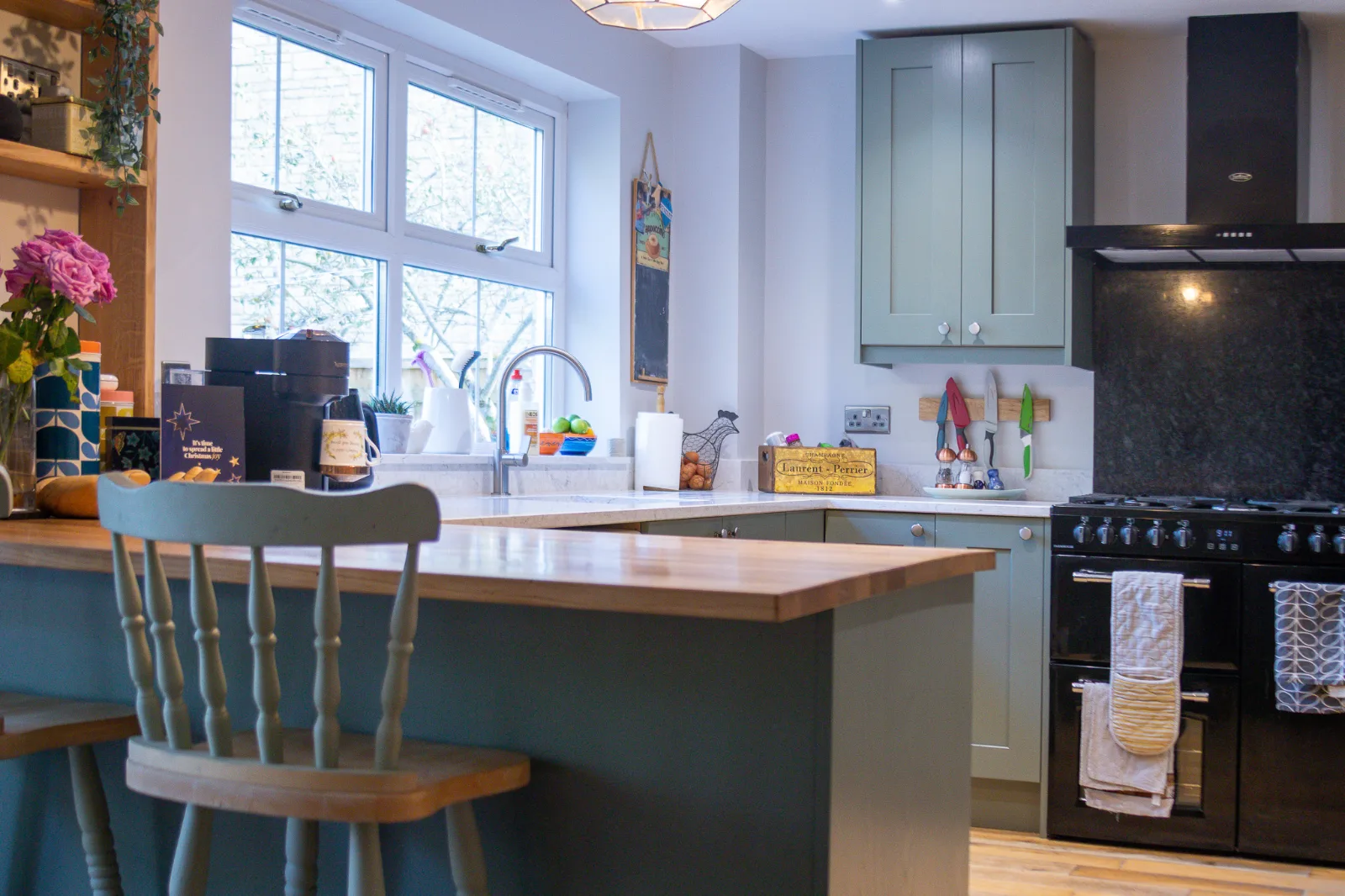
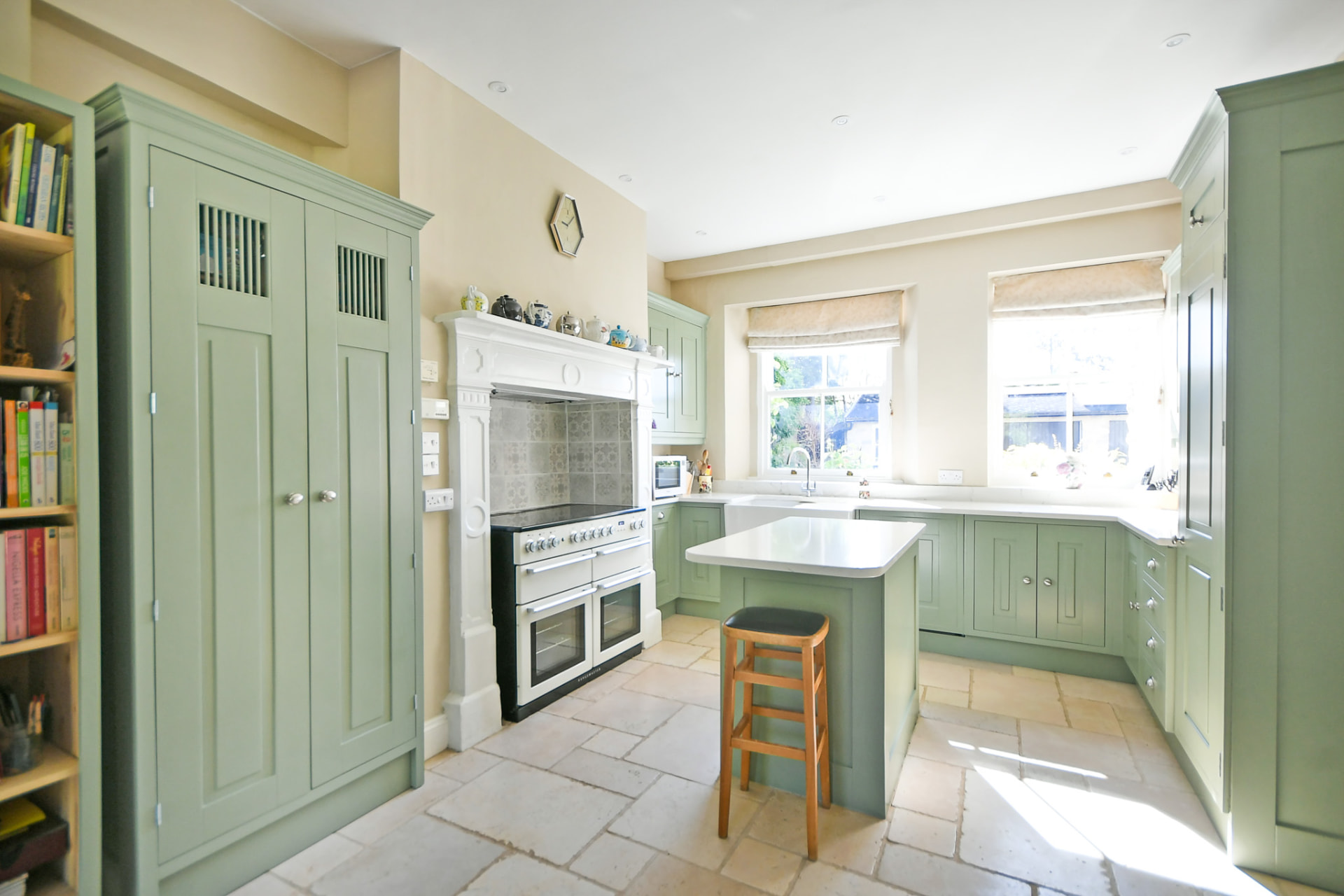
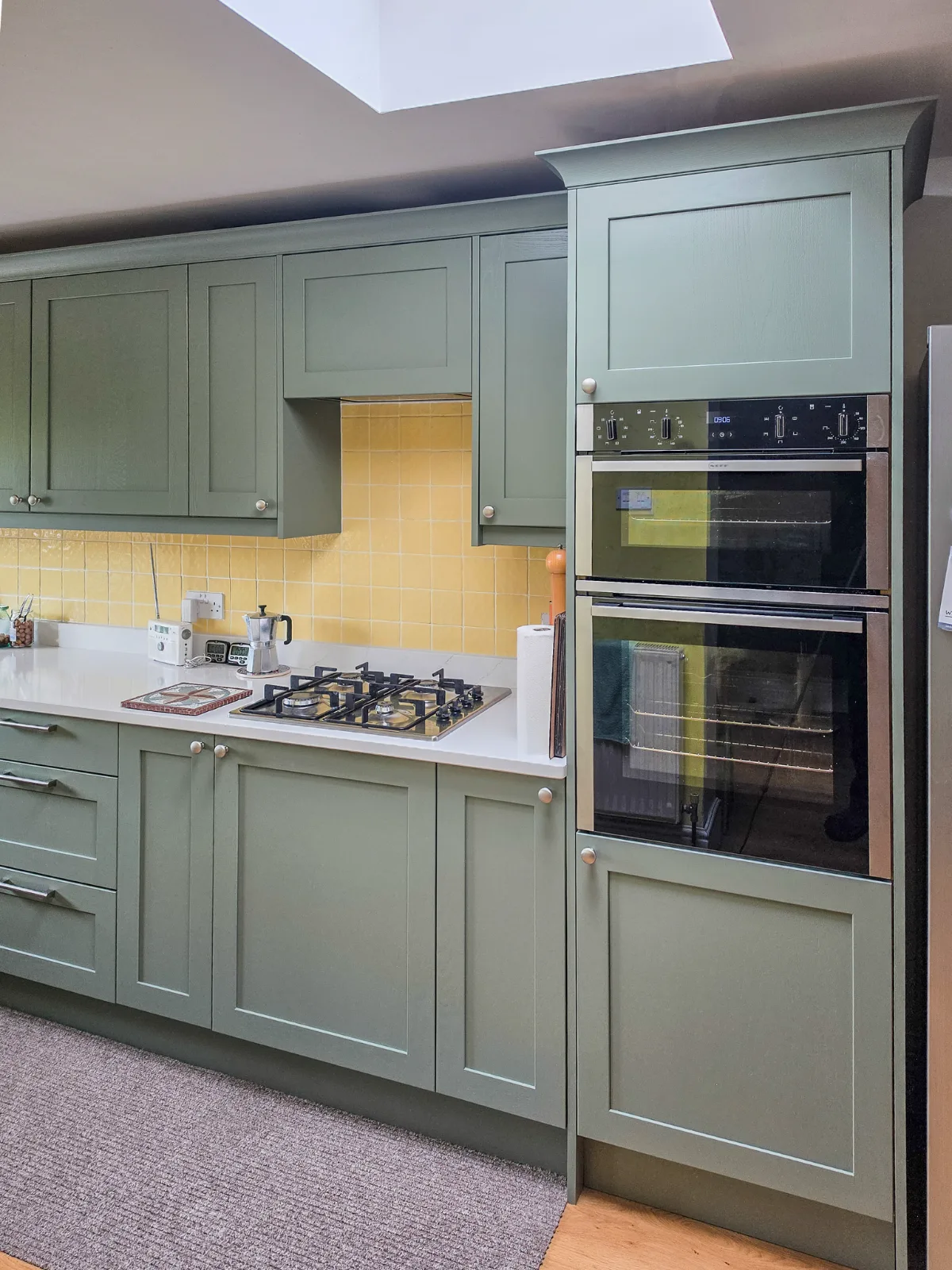
Choosing bespoke kitchen cabinets gives you complete control over dimensions, timber species, internal layouts, and painted finishes. Because one person manages your project from the initial sketch through to cabinet making and installation, there are no hand-offs between designers, factory managers, and subcontracted fitters.
The best way to discuss your room layout, timber choices, and carcase specifications is to arrange a free Home Design Visit. This 60 to 90 minute consultation lets us take accurate measurements, discuss your storage requirements, and provide a clear written quotation within a few days.
To get started on your project, please visit /book-your-visit to choose a convenient day and time.

If this sounds like your kitchen, request your free Home Design Visit.