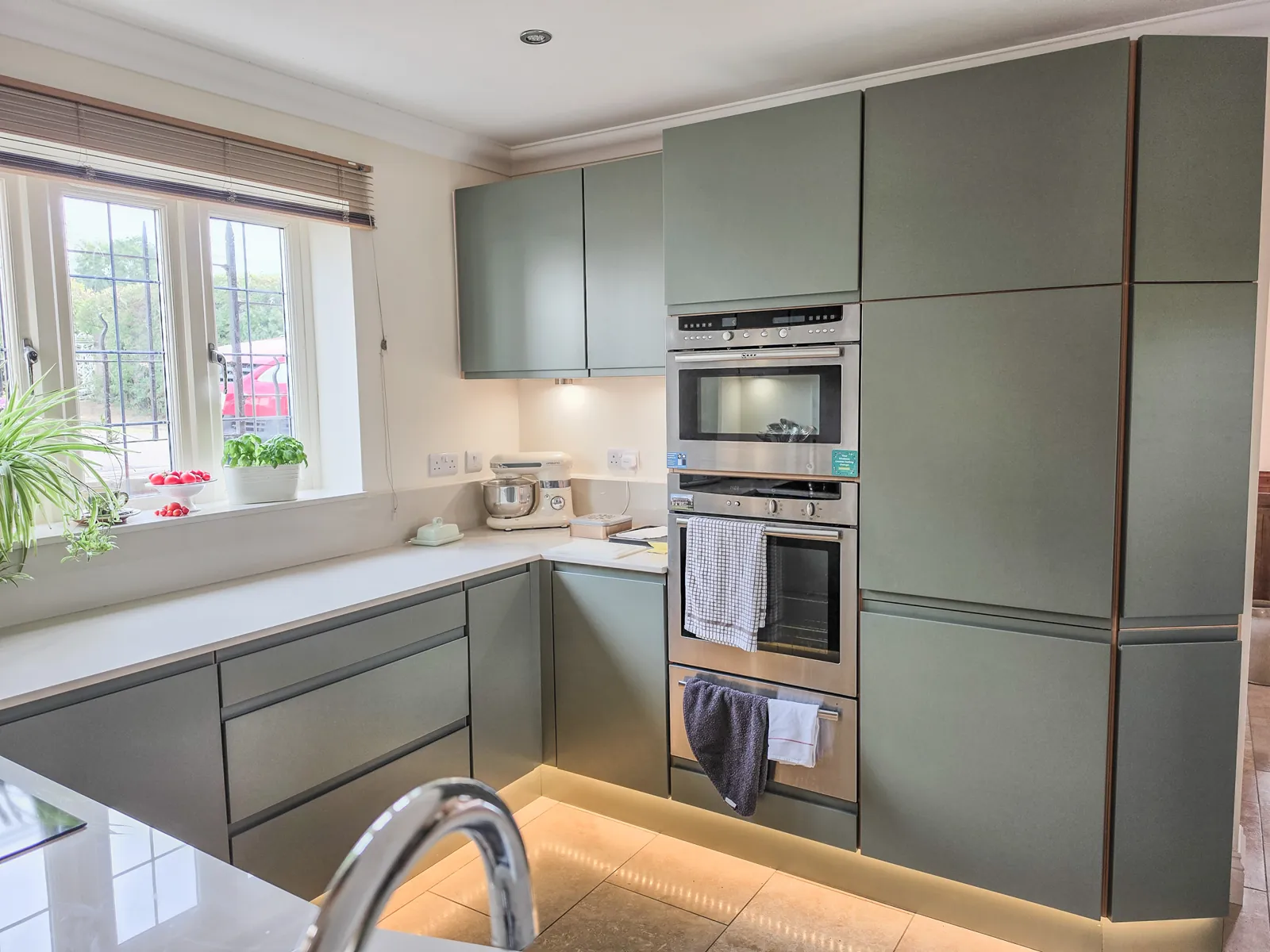
If the layout of your kitchen works and the cabinets are in good condition, a refresh will usually give you the bigger change for the money. If the layout fights you every day, or the cabinets are reaching the end of their useful life, replacing the kitchen is the better investment.
Those are the two ends of the decision, and most kitchens sit clearly at one of them. The difficulty is rarely the decision itself. It is being sure which side of the line your own kitchen is on.
When I visit a home, I look at three things before anything else: how well the layout works, the condition of the cabinetry, and how the homeowner feels about the room. Those three factors settle most refresh-versus-replace questions.
How do you know if your kitchen is worth keeping?
Start with the layout, not the doors. A kitchen can look dated while being fundamentally well planned. If cooking is straightforward, storage is adequate and the appliances are in sensible positions, the bones of the room are good, and new doors and worktops will go a long way.
Then look at the cabinets themselves. Sound, square carcasses with doors and drawers that still work properly are worth keeping. Sagging shelves, swollen panels and failing hinges tell a different story.
Finally, there is sentiment. Some people are simply ready for a change, and that matters too. But it is worth knowing what a refresh can achieve before assuming only a new kitchen will do.
What did a refresh achieve in Brinkworth?
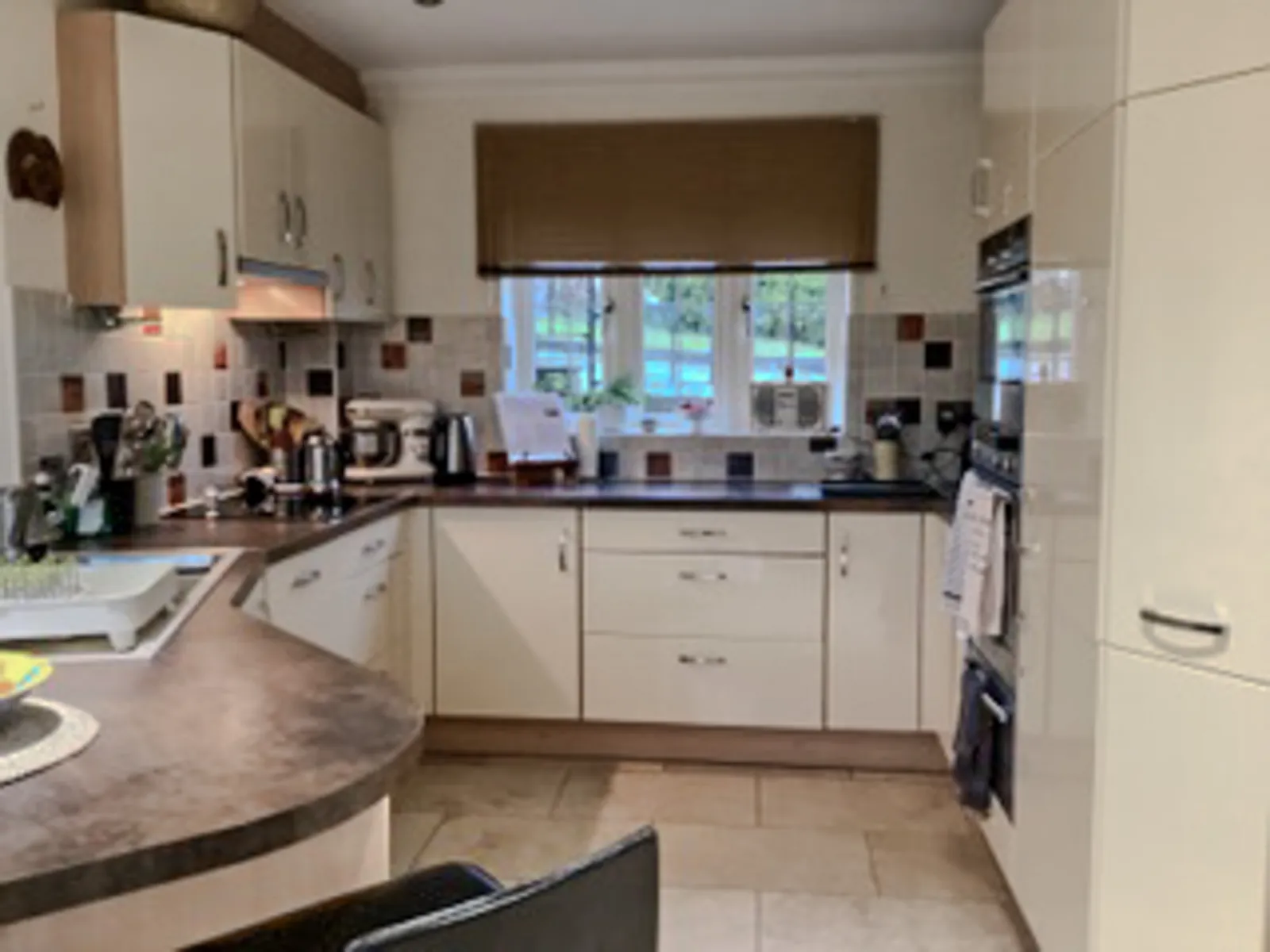
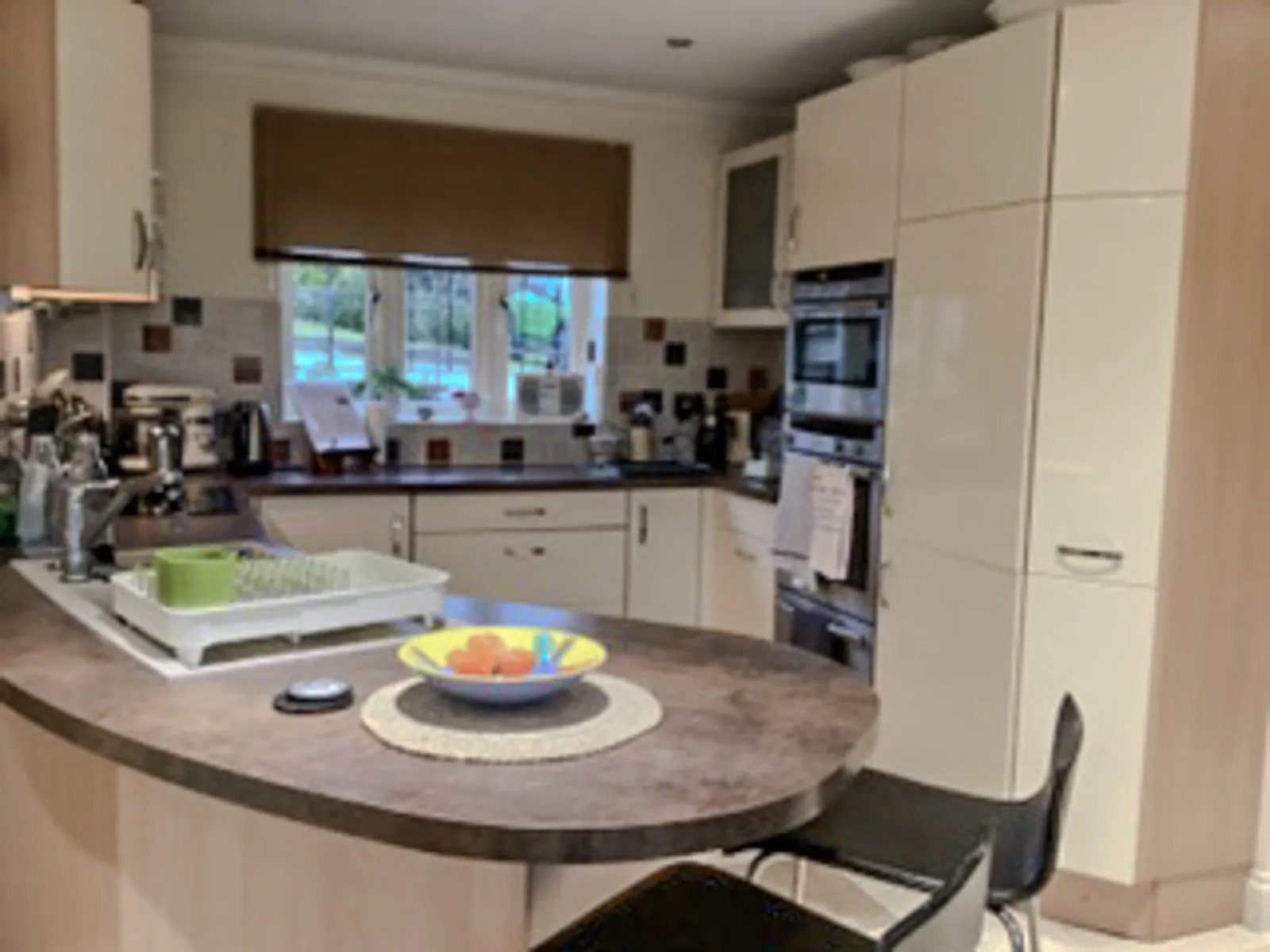
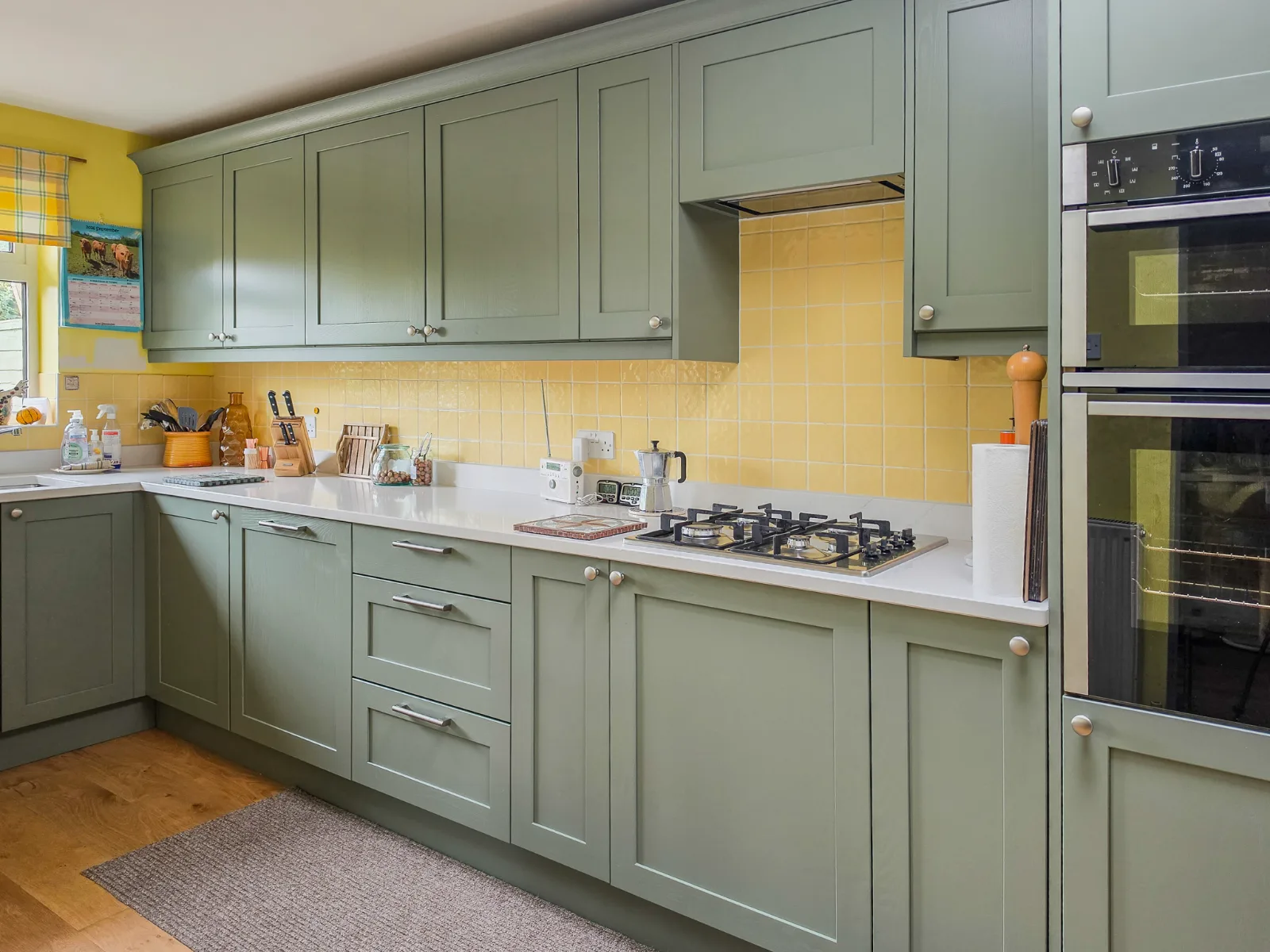
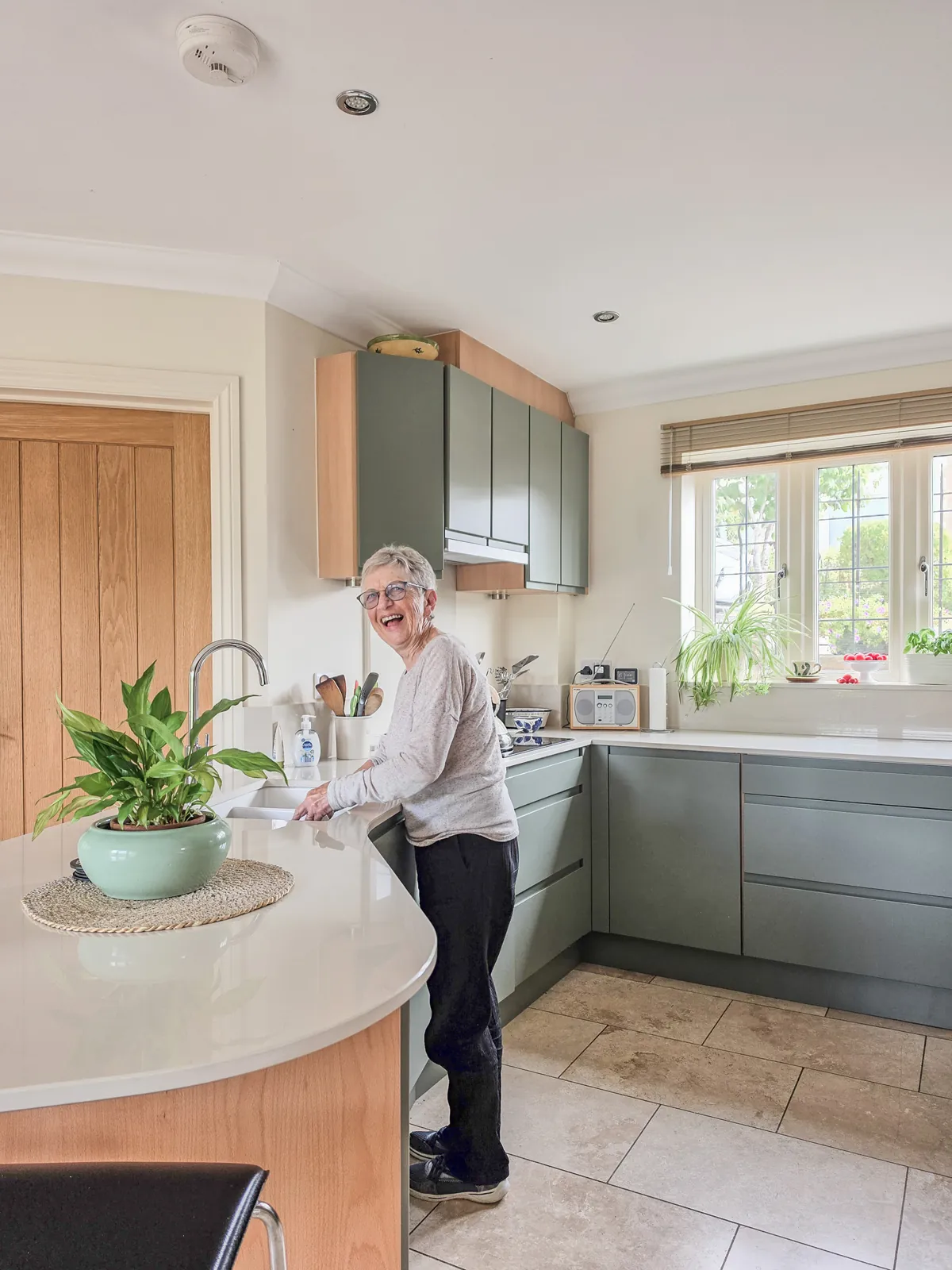
A couple in Brinkworth were seriously considering replacing their whole kitchen. The room had cream doors, a tiled splashback and dark worktops, and it felt tired. But the layout worked, and the cabinets were in good order.
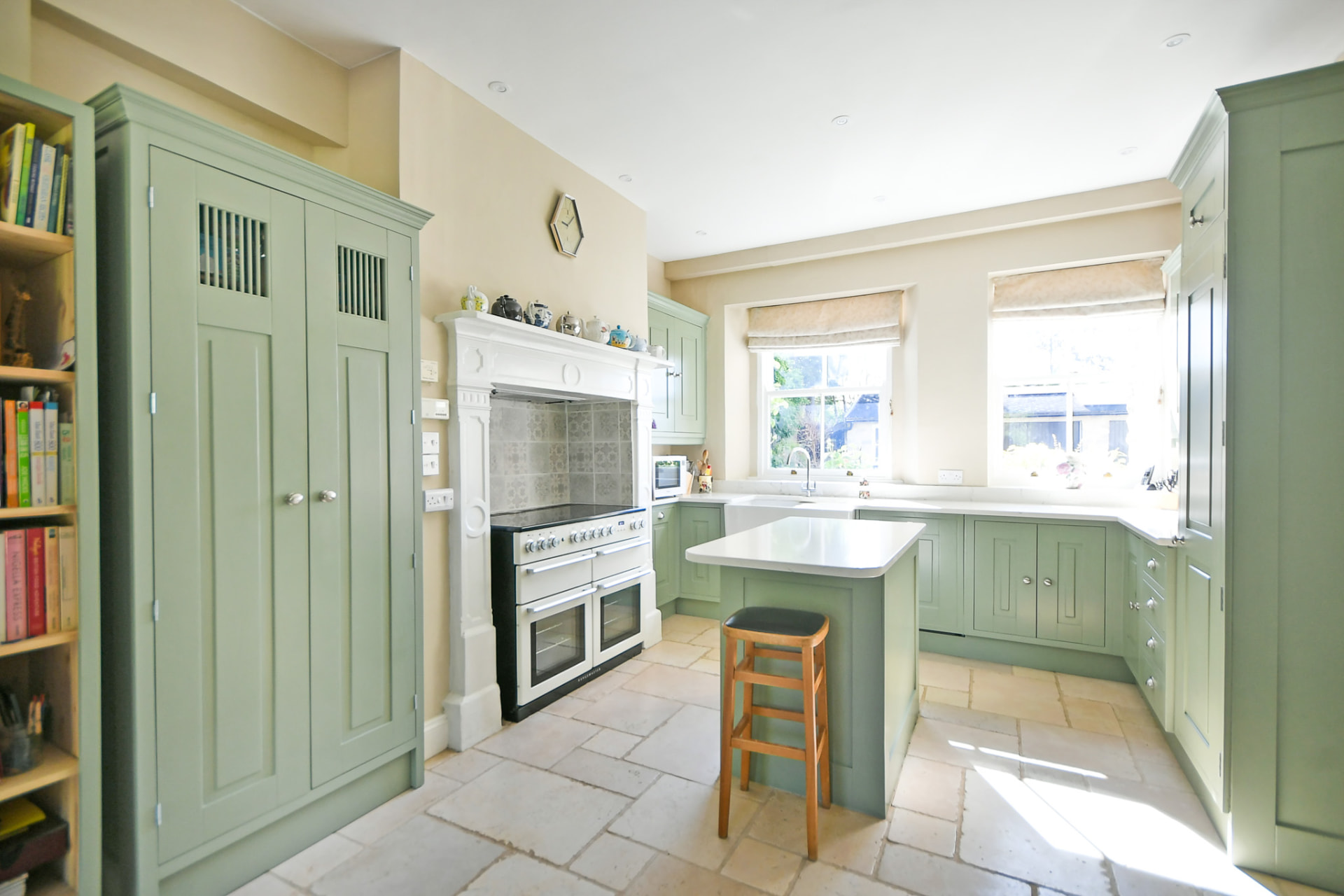
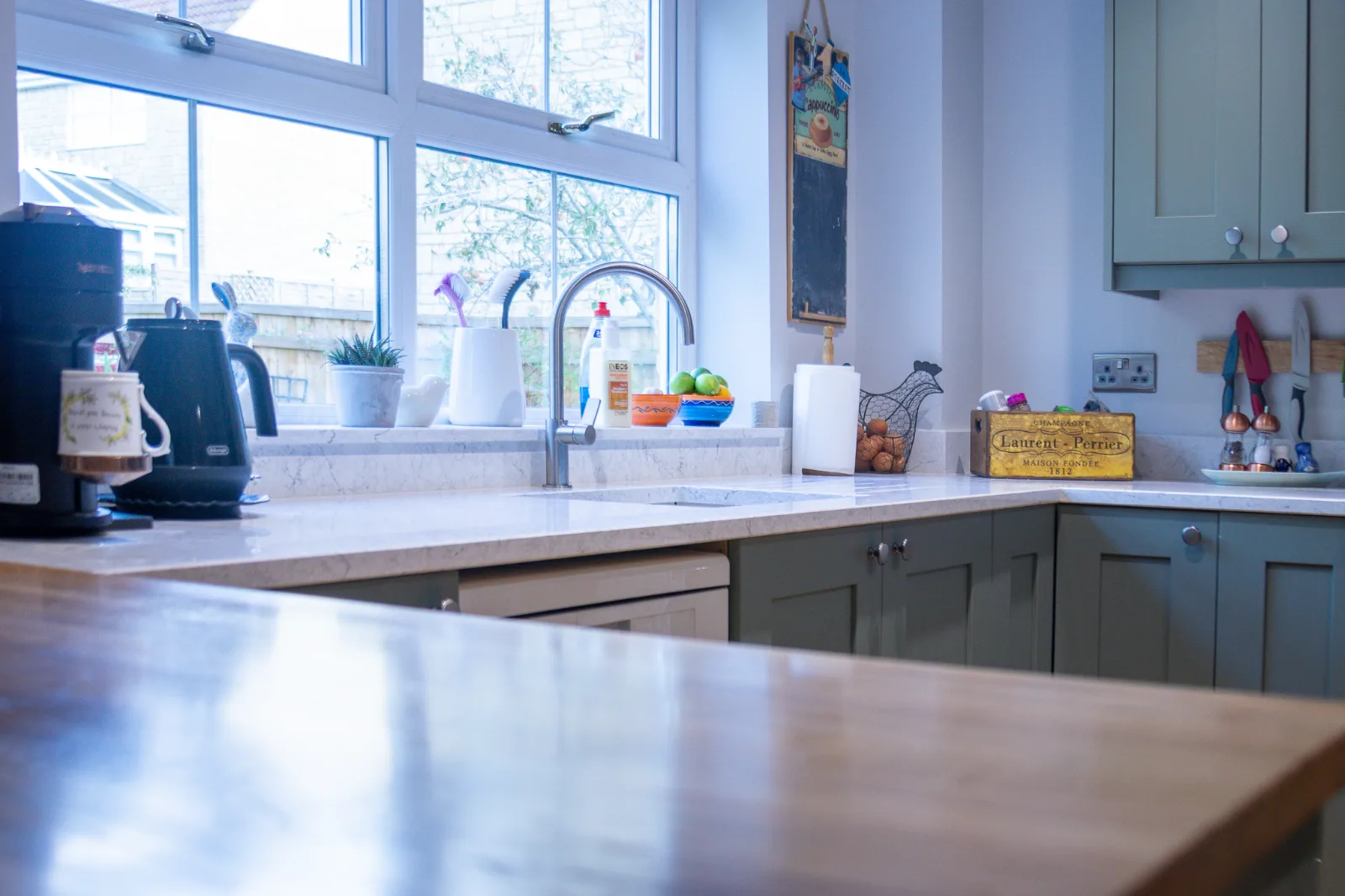
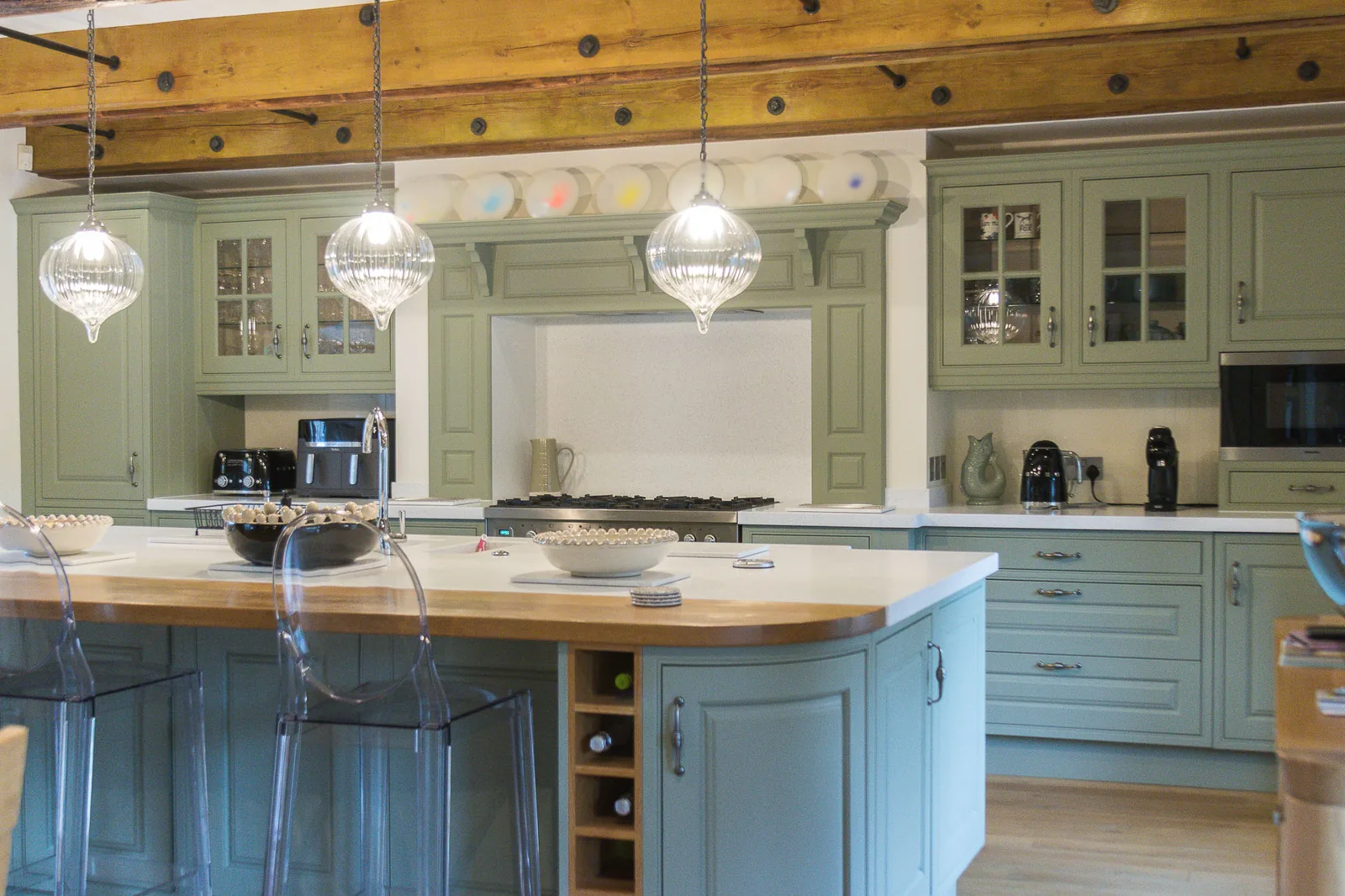
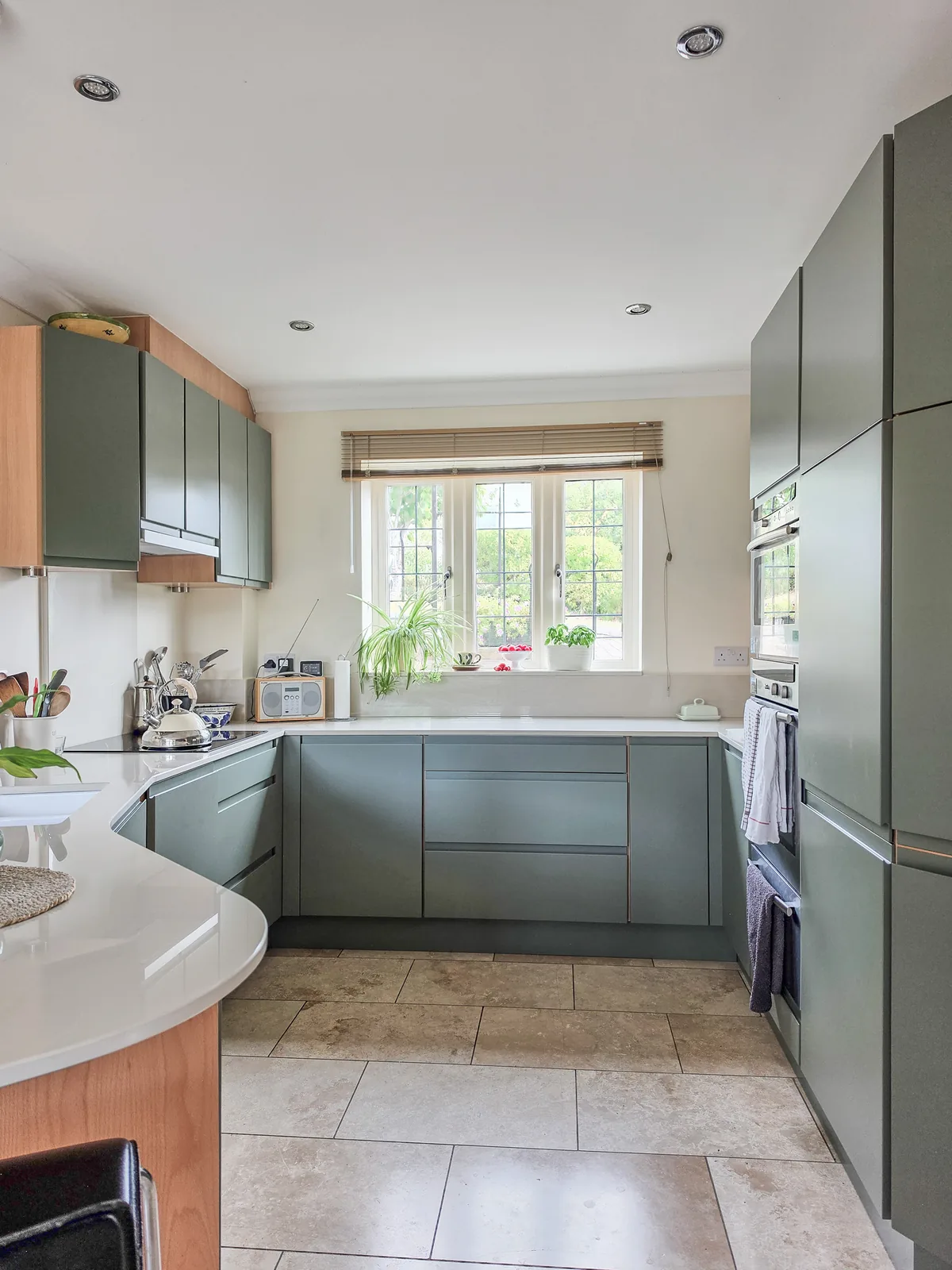
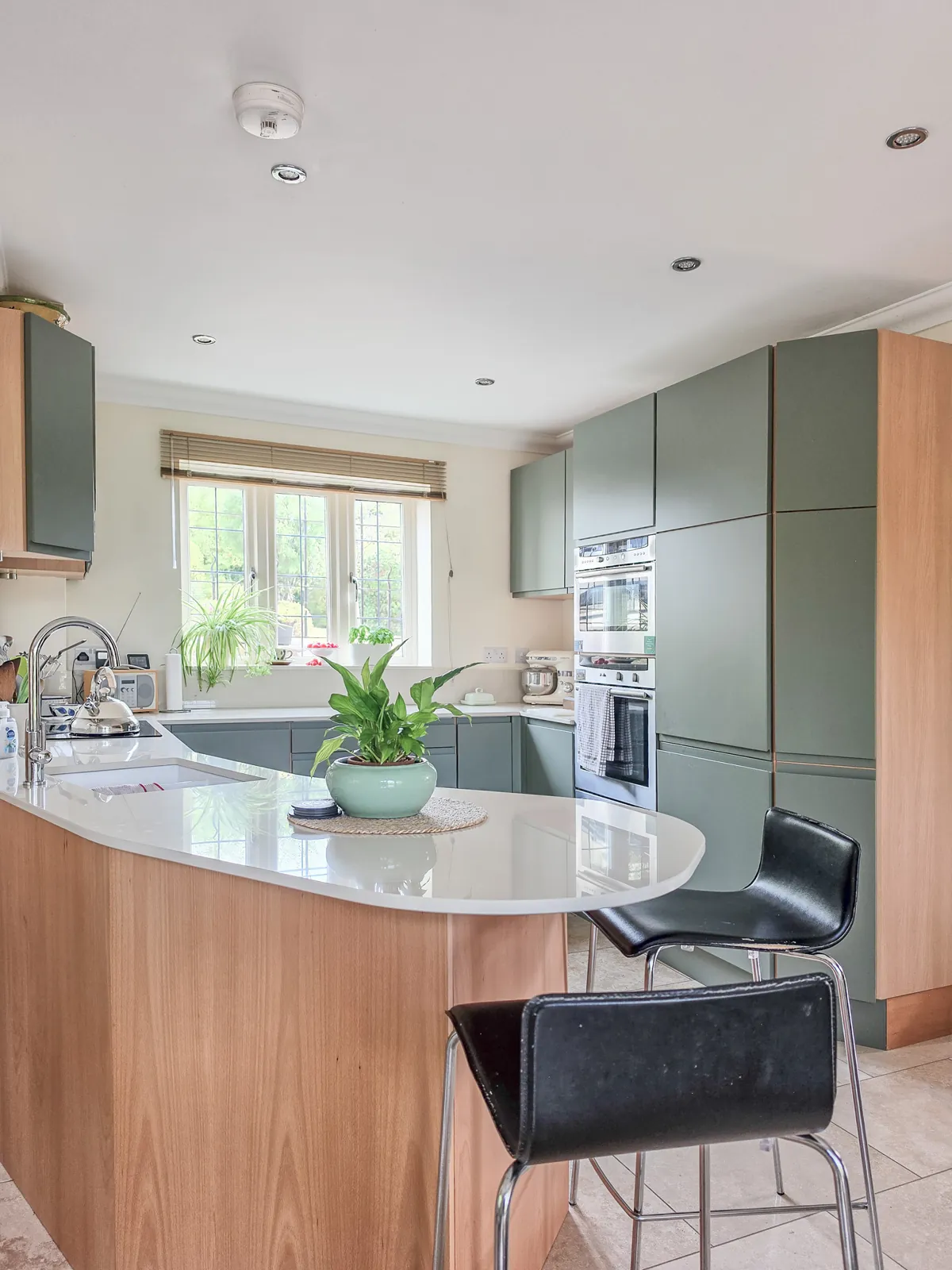
Instead of starting again, they had new handleless doors and drawer fronts made in a soft sage green, new white Dekton worktops, a new undermount sink and tap, and LED lighting under the cabinets and along the plinths. A matching desk and shelving run and a curved breakfast bar completed the room.
A new, similarly specified kitchen would have cost £30,000 to £35,000. The refresh came in at £15,000 to £20,000, roughly half the cost, and the door replacement work took days on site rather than the weeks a full replacement would have needed.
What did the finished kitchen look like?
When is replacing the better choice?
Replacement earns its cost when the layout restricts how the room is used, when the cabinets are failing, or when several separate changes would be needed just to work around old limitations. It can also be the right answer when building work has changed the shape of the room, or when the household's needs have altered.
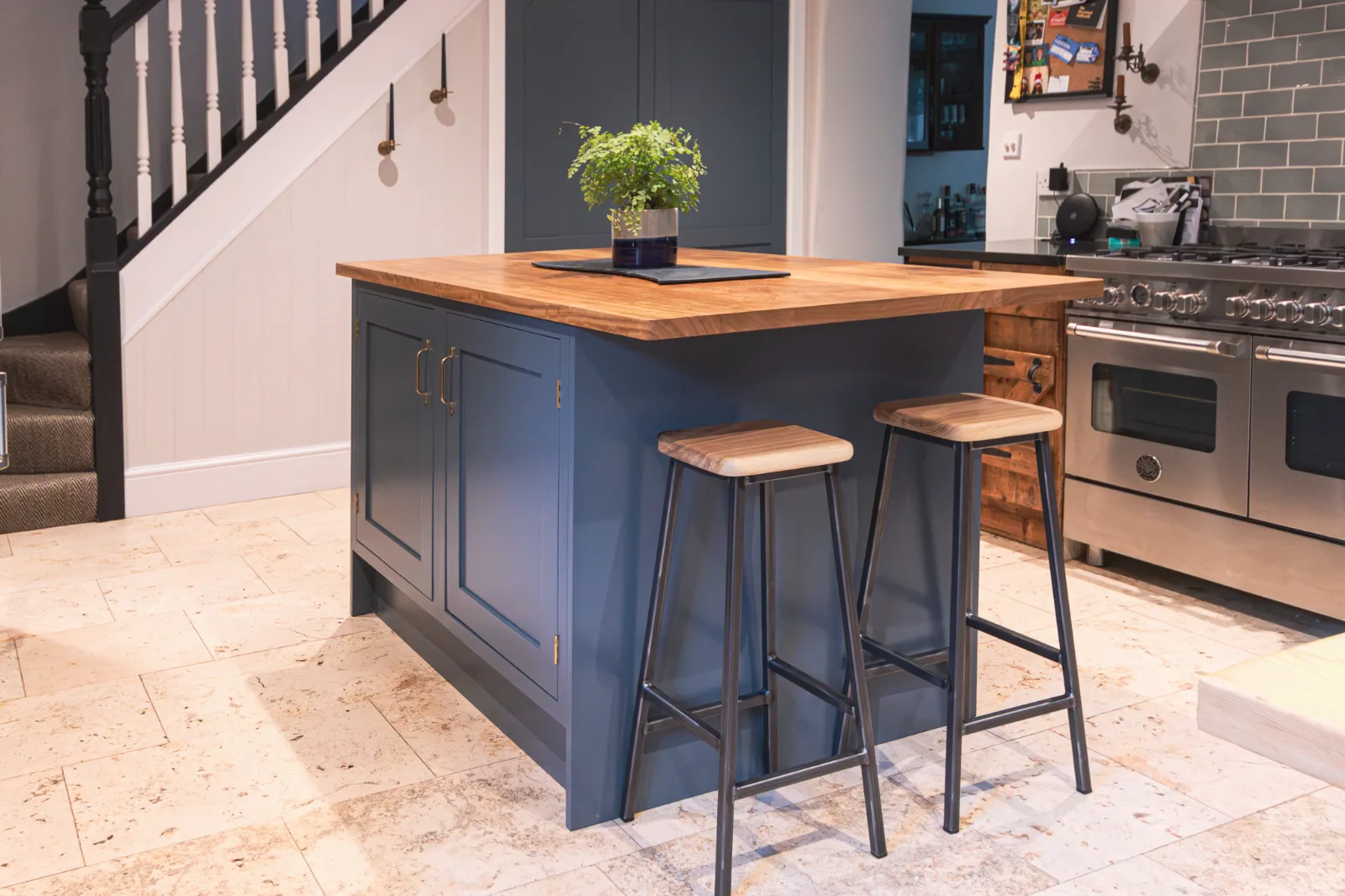
A new kitchen does not have to mean a fixed showroom display. Good quality cabinets can be combined around the room and personalised through doors, colours, work surfaces and internal fittings, with workshop-made pieces added where they solve a real problem.
What does the cost difference look like?
Every kitchen is different, but the Brinkworth figures are a fair guide to the gap. A refresh that keeps sound cabinets typically costs around half of a comparable new kitchen, and sometimes less. The door and drawer fronts are usually the biggest single item, and my guide to the cost of replacement kitchen doors breaks those figures down.
Prices checked October 2026. For a wider view of where the money goes across a whole project, see my kitchen refurbishment cost guide for Wiltshire.
How disruptive is each route?
A refresh is measured in days. Doors and drawer fronts are made away from your home, worktops are templated and fitted, and the kitchen is out of action for a short time. A full replacement is measured in weeks: removal, any making-good, first-fix services, fitting, worktops and finishing.
For many households, that difference alone settles the question.
How do you decide?
Weigh up the three factors: layout, condition and sentiment. If the layout works and the cabinets are sound, a refresh will transform the room for roughly half the cost and a fraction of the disruption. If the layout or the cabinets are the real problem, put the money towards a new kitchen instead.
If you are not sure which side of the line your kitchen is on, that is exactly what a free Home Design Visit is for. I will look at the room with you, tell you plainly which route I would take, and you can decide from there. Request a free home visit and we will start with your kitchen as it is.
If this sounds like your kitchen, request your free Home Design Visit.