
Should You Refresh Your Kitchen or Replace It Completely? A Simple Guide for Homeowners
If you are thinking about improving your kitchen, one question usually appears very early on:
Should you refresh what you already have — or replace the kitchen completely?
For many homeowners, that decision feels surprisingly difficult.
Social media, showroom displays and TV renovation shows often present kitchen projects as complete transformations. Rip everything out. Start again. Bigger island. More storage. New layout. New appliances. New everything.
But real homes — and real families — are usually more nuanced than that.
Sometimes a kitchen genuinely needs replacing.
Sometimes it simply needs rethinking.
And sometimes the smartest solution sits somewhere in between.
The challenge is knowing which approach is right for your home, your budget and the way you actually live.
The Problem With Starting in a Showroom
Most people begin their kitchen journey in a showroom.
At first, that seems logical. But it can quickly become overwhelming.
Rows of door samples. Endless colour options. Appliance displays. Worktop choices. Lighting systems. Storage mechanisms. Different price bands. Different opinions.
Very quickly, the project becomes about products rather than your home.
The reality is that good kitchen design rarely starts with choosing doors.
It starts with understanding how the room currently works — and where it frustrates you.
That is why I prefer to begin projects in your own home.
Seeing how you move through the space, where clutter gathers, how the light changes during the day and which parts of the kitchen already work well tells you far more than any showroom display ever can.
Often, the answers become much clearer once you step back from the noise.

Showrooms can be bewildering places
When a Kitchen Refresh Makes Sense
A refresh can be an excellent option when the existing kitchen is fundamentally sound but visually tired or lacking functionality in certain areas.
In many cases, the cabinetry itself still has years of life left in it.
The improvements may involve:
replacing doors and panels
repainting cabinetry
upgrading worktops
improving storage
changing lighting
replacing appliances
adding bespoke elements such as a dresser, island or seating area
A thoughtful refresh can completely change how a kitchen feels without the disruption and waste of full replacement.
Importantly, it also allows budget to be focused where it creates the greatest impact.
Rather than replacing everything automatically, the investment goes into the parts that genuinely improve daily life.
For many homeowners, this approach feels calmer, more sustainable and more financially sensible.
When Full Replacement Is the Better Option
Sometimes, however, a kitchen has simply reached the end of its useful life.
Poor layouts, damaged cabinetry, insufficient storage, structural limitations or low-quality original installation can all make full replacement the smarter long-term decision.
Likewise, if the way you use your home has changed significantly, the kitchen may need reconfiguring entirely.
Perhaps:
the family has grown
more home working now happens in the kitchen
entertaining has become more important
accessibility needs have changed
the room feels disconnected from the rest of the house
In those situations, trying to force the existing kitchen to work can become a false economy.
A properly considered redesign allows the room to function naturally again.
The Space Between Standard and Fully Bespoke
There is also a middle ground that many homeowners do not realise exists.
Not every project needs a completely handmade kitchen built entirely from scratch.
Equally, not every home suits a standard off-the-shelf showroom system.
Often, the best solution combines high-quality British cabinetry with carefully designed bespoke elements tailored specifically to the home.
That might mean:
a custom island
a fitted dresser
handcrafted shelving
tailored storage solutions
feature cabinetry designed around awkward architecture
This approach allows flexibility where it matters most without unnecessarily increasing complexity or cost.

A bespoke island adds a unique, personal touch to your home
Good Design Should Reduce Stress — Not Create It
One thing I see regularly is homeowners becoming paralysed by too much information.
Too many choices. Too many conflicting opinions. Too much pressure to “get it right.”
A kitchen project should not feel like navigating a maze.
Good design is usually quieter than that.
It is about carefully understanding:
how you live
what frustrates you
what already works
where investment genuinely matters
and how to create a room that feels settled and natural over time
The best kitchens rarely shout for attention.
They simply work beautifully for the people who use them every day.
Start With Your Home — Not a Product List
Whether your kitchen ultimately needs a refresh, a redesign or a fully bespoke solution, the most useful first step is usually the same:
Look carefully at the room you already have.
Understand the problems properly before jumping to solutions.
That is why my design visits take place in your home rather than a showroom.
It allows conversations to stay practical, personal and grounded in how you actually live — not how a display kitchen is styled for photographs.
Sometimes the conclusion is that a refresh is enough.
Sometimes the room needs more substantial work.
But either way, the process begins calmly, honestly and without pressure.
And in most cases, that clarity alone makes the entire project feel far more manageable.
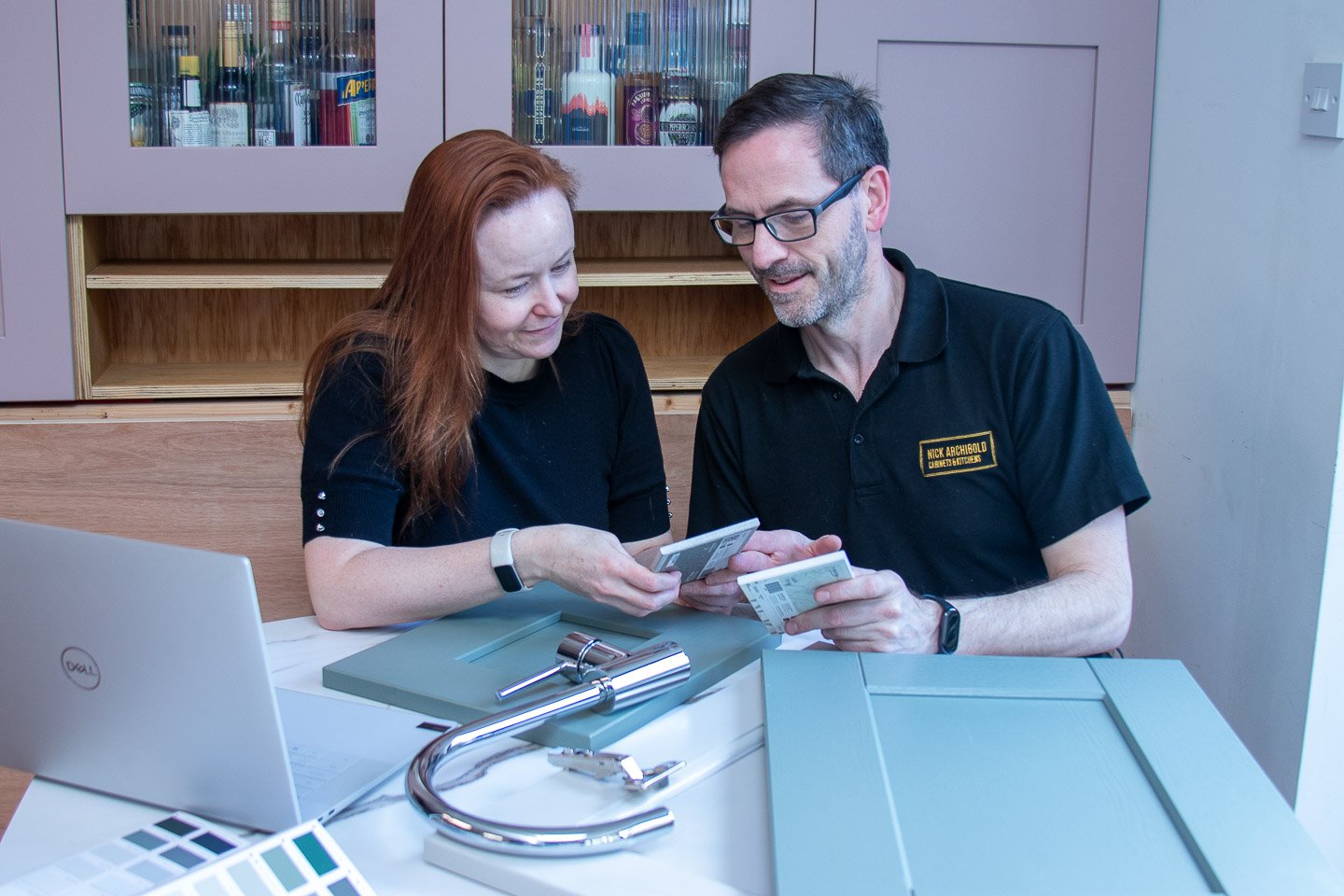
A home visit is a great way to start your journey!
