
Refresh, Rework or Replace? How to Decide What Your Kitchen Actually Needs
There’s a question most people ask at the start of a kitchen project.
“Do we need a new kitchen?”
It sounds straightforward. But in practice, it’s often the wrong place to begin.
Because what your kitchen needs is not always a full replacement. And equally, not every kitchen can be improved with a simple refresh.
The difficulty is that the market tends to push you toward a particular answer before the question has been properly understood.
The Problem With Starting at the Wrong End
If you speak to a kitchen makeover company, the solution is usually a refresh.
New doors. New worktops. A quick transformation.
If you visit a high-end showroom, the answer is often a complete replacement.
A beautifully designed, entirely new space.
And if you sit somewhere in the middle, you’ll likely be offered something described as “custom”—which can mean a wide range of things.
None of these are necessarily wrong.
But they are all shaped by what that particular company sells.
The risk is that the decision is made too early—before your space has been properly understood.

Too many competing options can lead to anxiety…and costly mistakes
Three Possible Routes
Most kitchen projects fall into one of three categories.
1. Refresh
Keeping the existing structure, while improving appearance and some functionality.
This might include replacing doors, updating worktops, repainting cabinetry, or improving smaller details.
2. Rework (or Customisation)
Retaining some standard elements, but adapting the layout and cabinetry to better suit the space.
This is where careful design can resolve awkward areas, improve flow, and refine proportions.
3. Replace (Fully Bespoke or New System)
Starting again, either with a high-quality system or a fully bespoke kitchen built from scratch.
Each of these routes has its place.
The challenge is knowing which one your kitchen actually needs.
Why the Decision Isn’t Always Obvious
On the surface, many kitchens look tired.
Worn doors. Outdated finishes. Worktops that have seen better days.
That naturally leads to the idea of replacement.
But often, the underlying structure is still sound.
And with the right adjustments, the space can be improved significantly without starting again.
Equally, some kitchens appear workable—but hide deeper issues:
Poor layout
Inefficient storage
Awkward circulation
Compromised proportions
In those cases, a simple refresh can feel like a missed opportunity.
The key is understanding the difference.
Looking Beyond the Surface
A good kitchen decision starts by stepping back.
Not looking at colours or styles—but at how the space works.
Questions worth asking include:
Does the layout support how you use the room?
Are there areas that feel cramped or underused?
Is storage working properly—or just about coping?
Are there elements worth keeping?
These are practical questions.
And they are much easier to answer in the room itself than in a showroom.

How do you use your kitchen?
The Value of Seeing the Space Properly
This is where starting in your home changes the process.
You can see things clearly:
Where a cabinet could be adjusted slightly to improve flow
Where a full rethink is needed
Where something simple would make a noticeable difference
Often, the answer sits somewhere between extremes.
Part refresh.
Part rework.
Occasionally, full replacement.
But each decision is grounded in the space—not driven by a product.

Start with the space - not a showroom display
When a Refresh Works Well
A refresh is usually appropriate when:
The layout already works
Cabinet structure is sound
The room feels fundamentally right
In these cases, improving surfaces and finishes can be enough.
New doors, worktops, and details can lift the space significantly.
The advantage is clear:
Less disruption
Lower cost
Reduced waste
But it only works when the underlying design is solid.
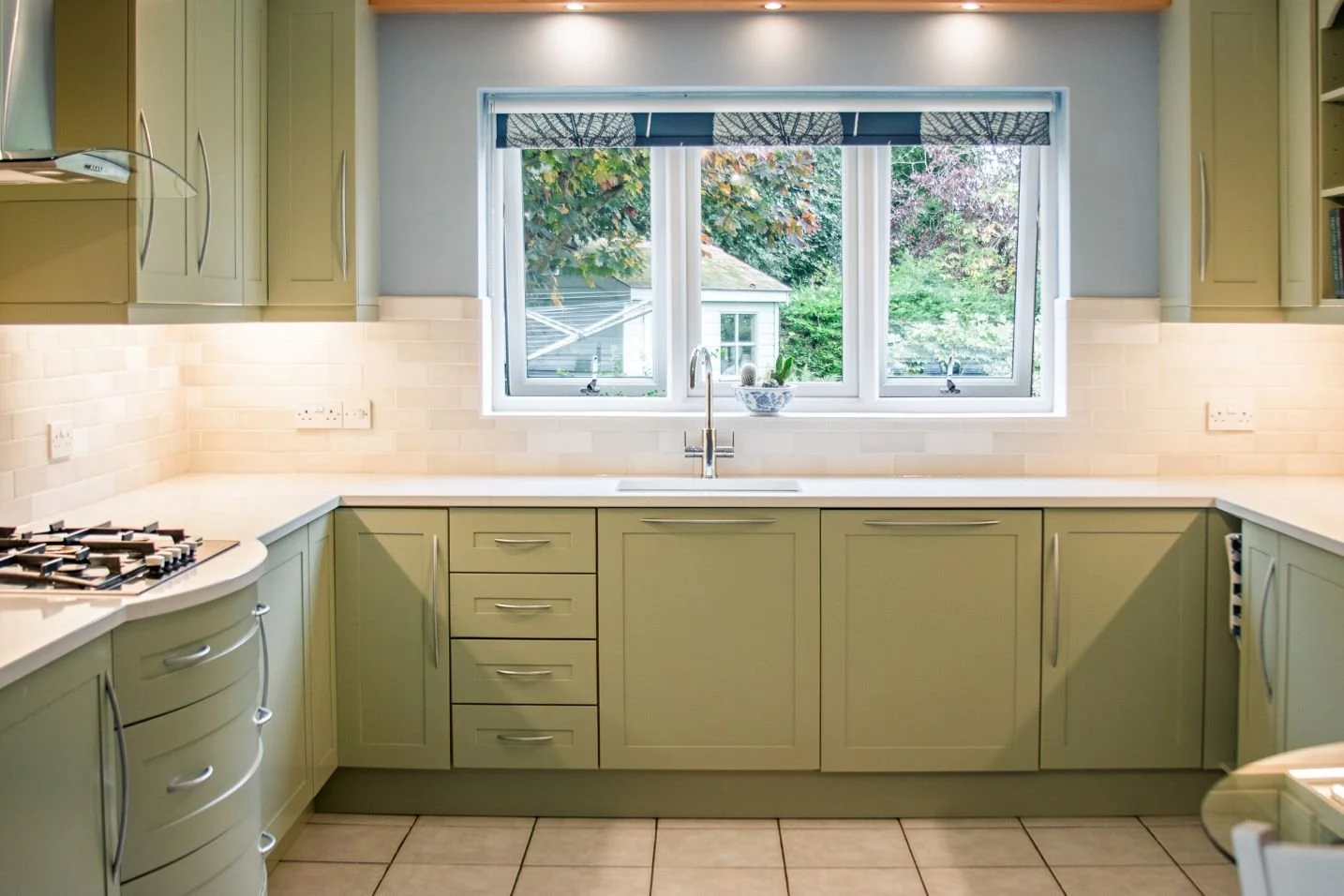
A refresh can transform your space for a fraction of the cost of a full replacement
When Reworking Makes the Difference
Many kitchens fall into this middle category.
They’re not fundamentally wrong—but they’re not quite right either.
Perhaps:
A corner doesn’t work well
Storage is inefficient
Proportions feel slightly off
Here, thoughtful customisation can transform the space:
Adjusting cabinet sizes
Rebalancing layout
Introducing bespoke elements where needed
This is often where the most value is created.
Not by replacing everything—but by improving the right things.
When Replacement Is the Right Call
Sometimes, a kitchen needs starting again.
That might be because:
The layout doesn’t work at all
The cabinetry is worn beyond repair
The space needs a more fundamental rethink
In these cases, a new kitchen allows for a more coherent solution.
Whether that’s a high-quality system or a fully bespoke build depends on the level of detail and flexibility required.
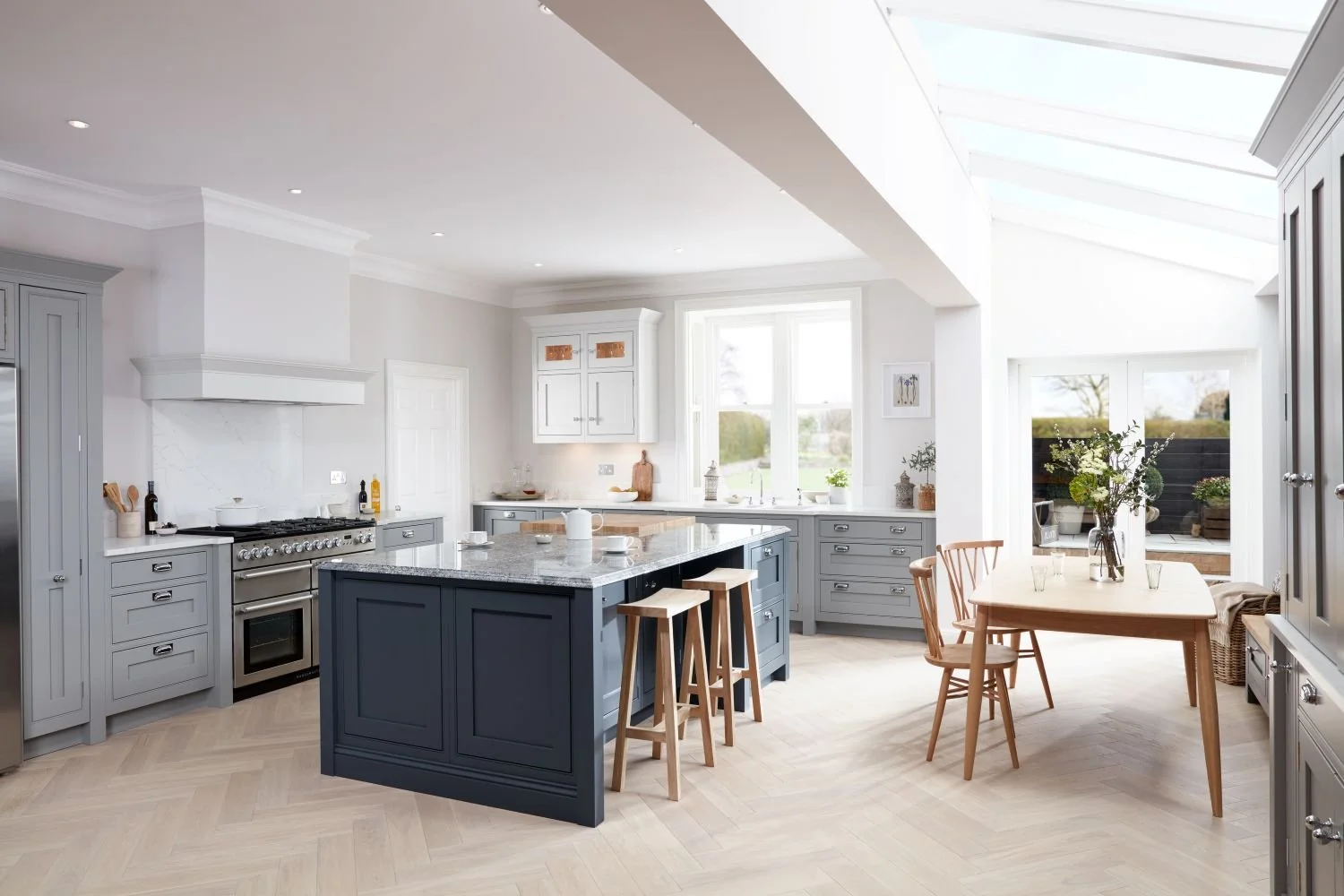
Avoiding Over- or Under-Specifying
One of the biggest risks in kitchen projects is getting the level wrong.
Spending more than necessary on a full replacement when a refresh would have worked.
Or trying to improve something that really needs rethinking.
Both lead to frustration.
The right outcome sits in proportion to the space.
A More Considered Approach
A calmer process tends to produce better kitchens.
Not rushing into decisions.
Not starting with products.
Not assuming the answer.
Instead:
Understanding the room first
Exploring options properly
Applying the right level of intervention
This doesn’t need to feel complicated.
It just needs to be grounded.
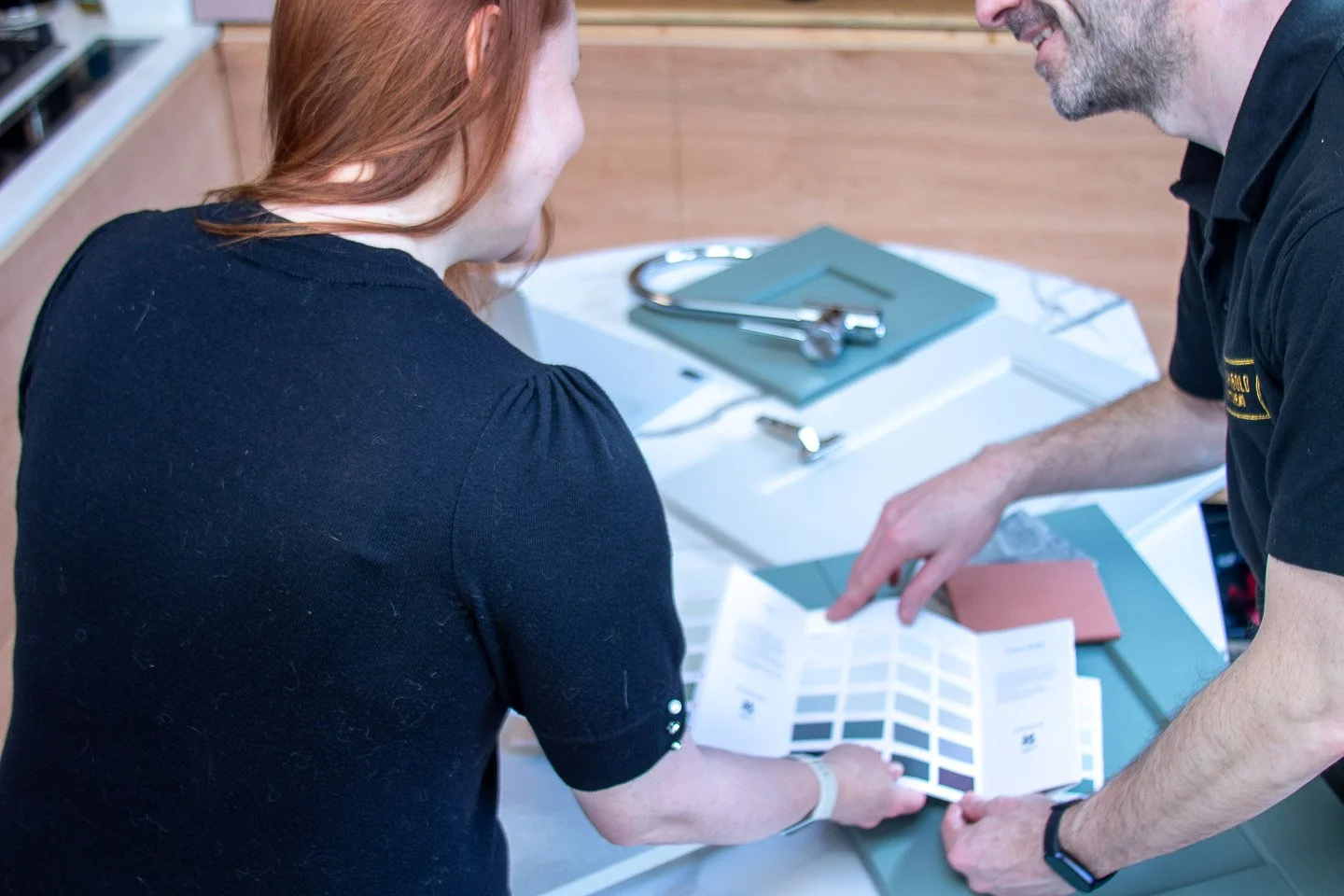
A friendly, informed chat - not a sales pitch
Where to Start
If you’re thinking about changing your kitchen, the most useful first step is not choosing a style or visiting a showroom.
It’s understanding your space.
Seeing what’s working.
What isn’t.
And what could be improved with the least disruption and the best long-term result.
From there, the right path becomes much clearer.
A good kitchen project doesn’t begin with a product. It begins with the room itself.
If you want to explore that properly, a home design visit is a straightforward place to start—looking at the space together and working out what’s genuinely worth doing before any decisions are made.
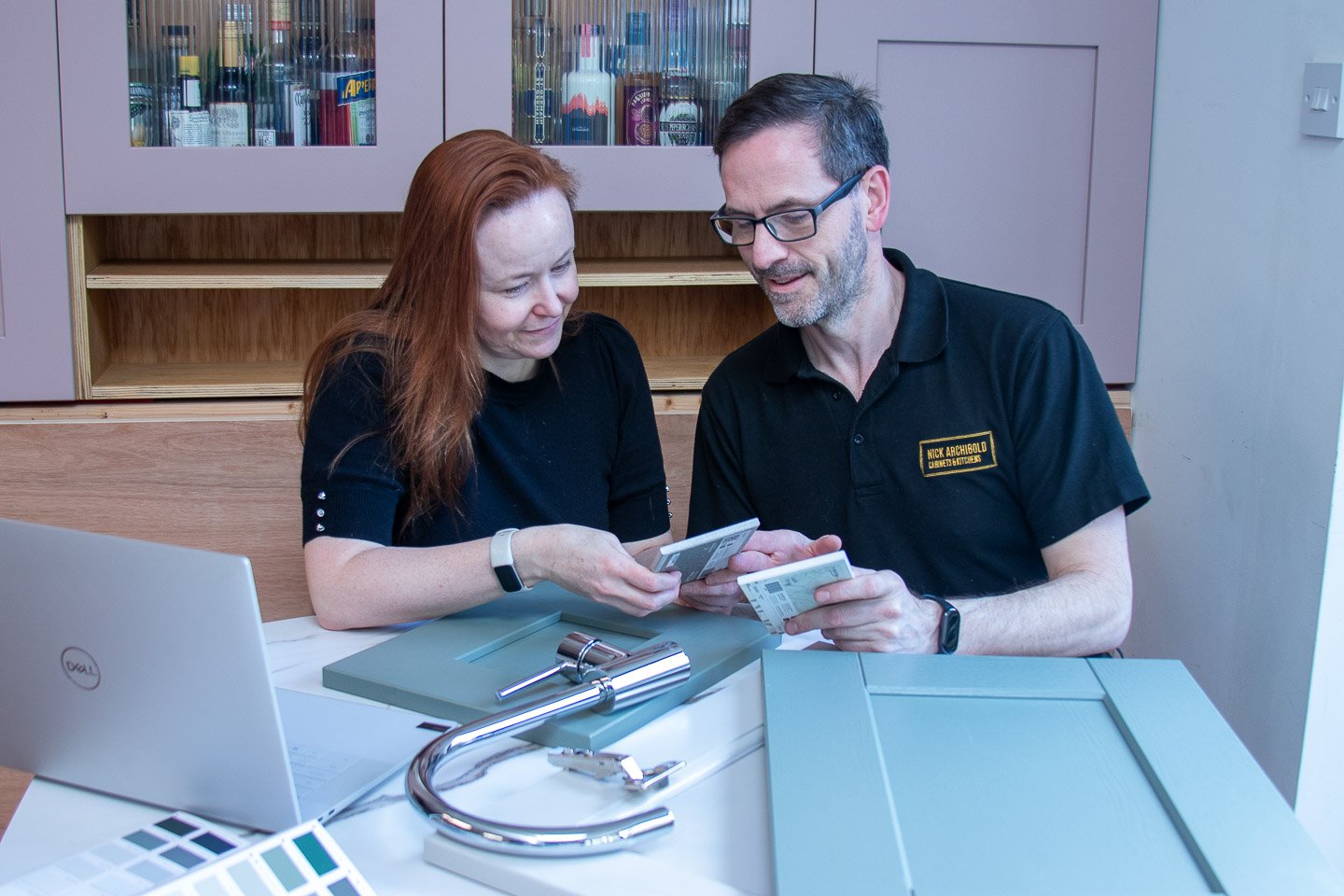
A relaxed Home Design Visit is a great place to start
Not sure which option to choose. Let us guide you →
Ready to find out more? Click to learn more →
