Should You Refresh Your Kitchen or Replace It?
One of the first questions I'm often asked about an existing kitchen is whether it is worth improving or whether it would be better to take everything out and start again.
There isn't a universal answer.
Sometimes replacing doors, work surfaces and a few carefully chosen details can completely change a kitchen without disturbing perfectly good cabinetry.
In another home, doing that would simply disguise problems that really ought to be addressed.
And sometimes the best answer lies somewhere between the two.
Rather than starting by choosing a new kitchen, I think it makes more sense to start by looking carefully at the one you already have.
First, forget how the kitchen looks
That might sound strange when you're thinking about changing it, but appearance is actually one of the easiest things to alter.
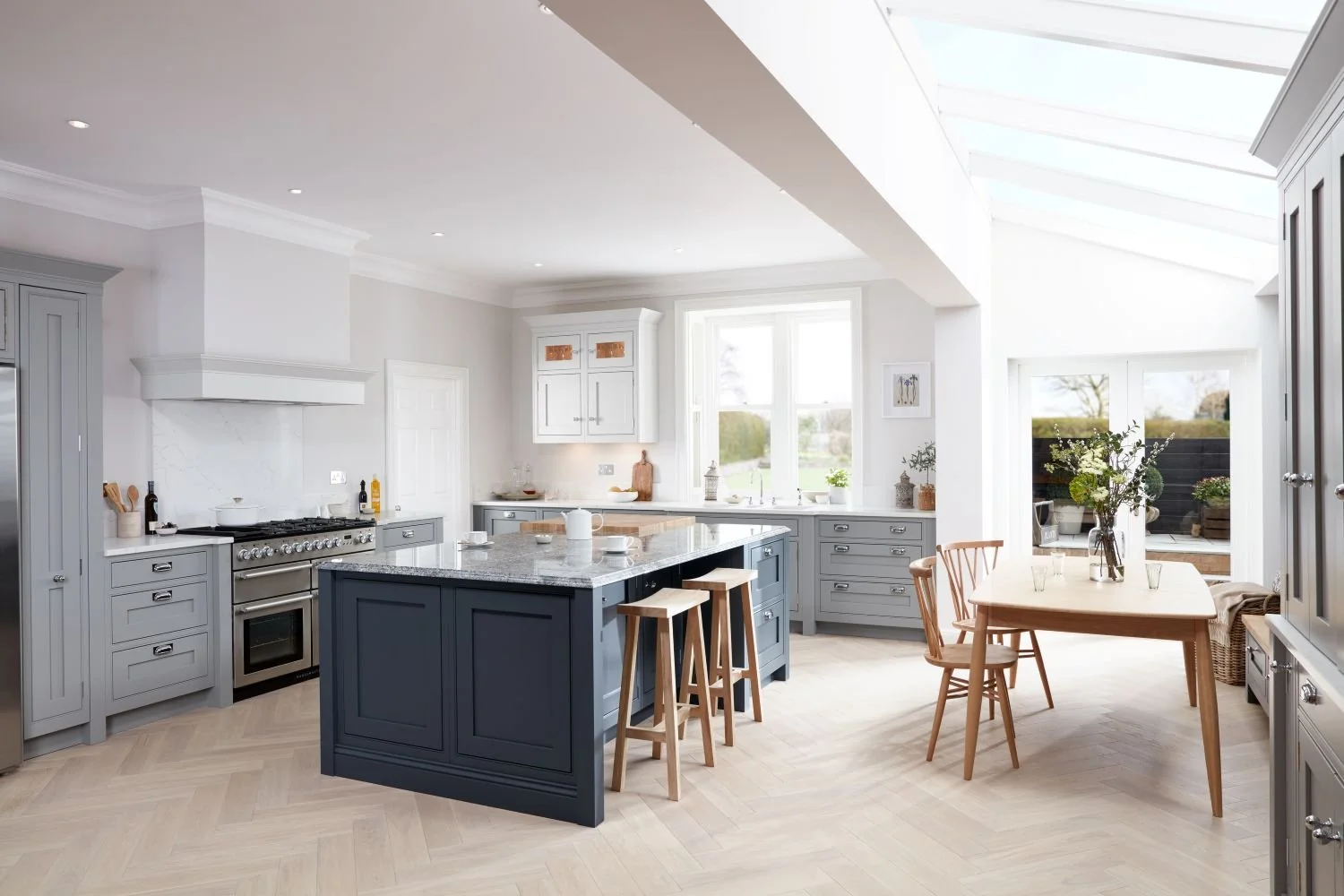
Doors can be replaced. Existing solid timber doors may be professionally sprayed. Handles can change. Work surfaces, sinks, taps, splashbacks and end panels can all be updated.
So a kitchen looking tired doesn't necessarily mean it has reached the end of its useful life.
The more important questions are underneath the surface.
Are the cabinets themselves in good condition?
Does the existing layout work?
Is there enough storage?
Are the appliances where you want them?
Do the drawers and cupboards work properly?
Is there anything about using the kitchen that frustrates you every day?
If the underlying kitchen works well, replacing all of it simply to achieve a different colour or door style may be difficult to justify.
That is where a refresh can make a great deal of sense.

When is a kitchen refresh worthwhile?
A refresh works particularly well when you already have a good foundation.
Perhaps the cabinetry was well made when originally installed and remains structurally sound. Perhaps you like the layout and don't want the disruption of moving plumbing, electrics and appliances.
In that situation, retaining what works and concentrating the budget on what doesn't can produce a very substantial change.
Replacement doors and drawer fronts can alter the character of the kitchen completely. New panels, plinths and trims can make the change feel coherent rather than cosmetic.
If existing solid timber doors are good quality, professional spray finishing can sometimes be an even better option.
Changing the work surfaces to quartz or stone, together with a new sink and tap, can transform both the appearance and the way the kitchen feels to use.
Storage fittings can also be improved inside otherwise perfectly serviceable cabinets.
A refresh isn't simply the cheaper version of buying a new kitchen.
Done for the right reasons, it is often the more sensible one.
When should you consider replacing the kitchen?
There comes a point where retaining the existing kitchen begins to restrict what can be achieved.
If the cabinetry is poor quality, damaged or approaching the end of its life, investing heavily in new doors and work surfaces may not represent particularly good value.
The same applies if the layout fundamentally doesn't work.
Perhaps there isn't enough preparation space. The fridge may be in the wrong place. A badly positioned peninsula might restrict movement through the room. Or the kitchen may simply have been designed for a household that used the space very differently from you.
Those aren't problems a new door can solve.
A new kitchen gives you the opportunity to reconsider the room properly.
And even then, completely bespoke cabinetry isn't automatically necessary.
High-quality manufactured British cabinetry offers enormous choice in dimensions, colours, door styles and storage. Carefully designed, it can produce an excellent kitchen.
The important thing is not to confuse new with better. The benefit comes from having the opportunity to correct the things that weren't working before.
There is also a useful middle ground
Kitchen decisions are often presented as two extremes.
Keep the old kitchen and change the doors — or remove everything and buy a completely new one.
In practice, there are many more possibilities.
Perhaps most of your existing kitchen is excellent but one area doesn't work.
A new pantry cupboard might solve the storage problem.
An individually made island could improve both working space and how the room feels.
Existing cabinetry might be retained on one side of the room while another section is redesigned.
Or a new manufactured kitchen could be personalised with pieces made specifically for the room — a dresser, bookcase, unusual cabinet or piece of fitted furniture that isn't available from the standard range.
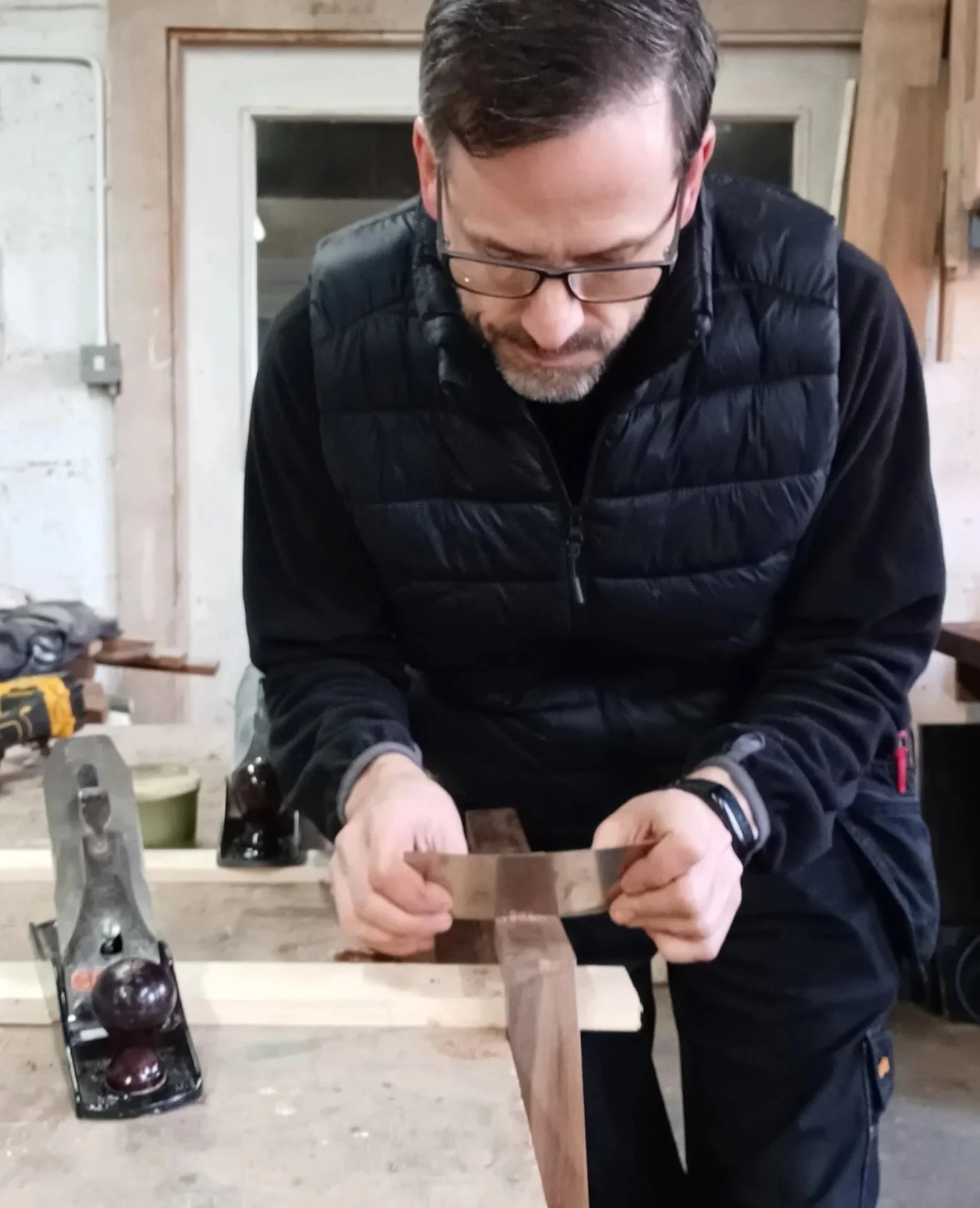
Having a workshop means I'm not restricted to choosing the nearest available cabinet size when something different would work better.
Equally, I don't think something should be made individually when a good manufactured component will do the job perfectly well.
The object isn't to make the kitchen as complicated as possible.
It's to make the right kitchen for the room.
Where should you spend your budget?
I think this is a better question than simply asking what a kitchen costs.
Spend money on the parts you'll benefit from every day.
A good layout is more important than an expensive handle.
Reliable drawers and hinges matter more than a fashionable accessory.
Work surfaces need to suit the way you cook and maintain your kitchen, not simply look impressive in a photograph.
And good installation matters enormously. Even excellent cabinetry can feel disappointing if it hasn't been fitted carefully.
Conversely, there is little benefit in replacing sound cabinets hidden behind closed doors purely because you're changing the fronts.
A good project should concentrate the budget where you will actually notice the difference.
Start in the room, not the showroom
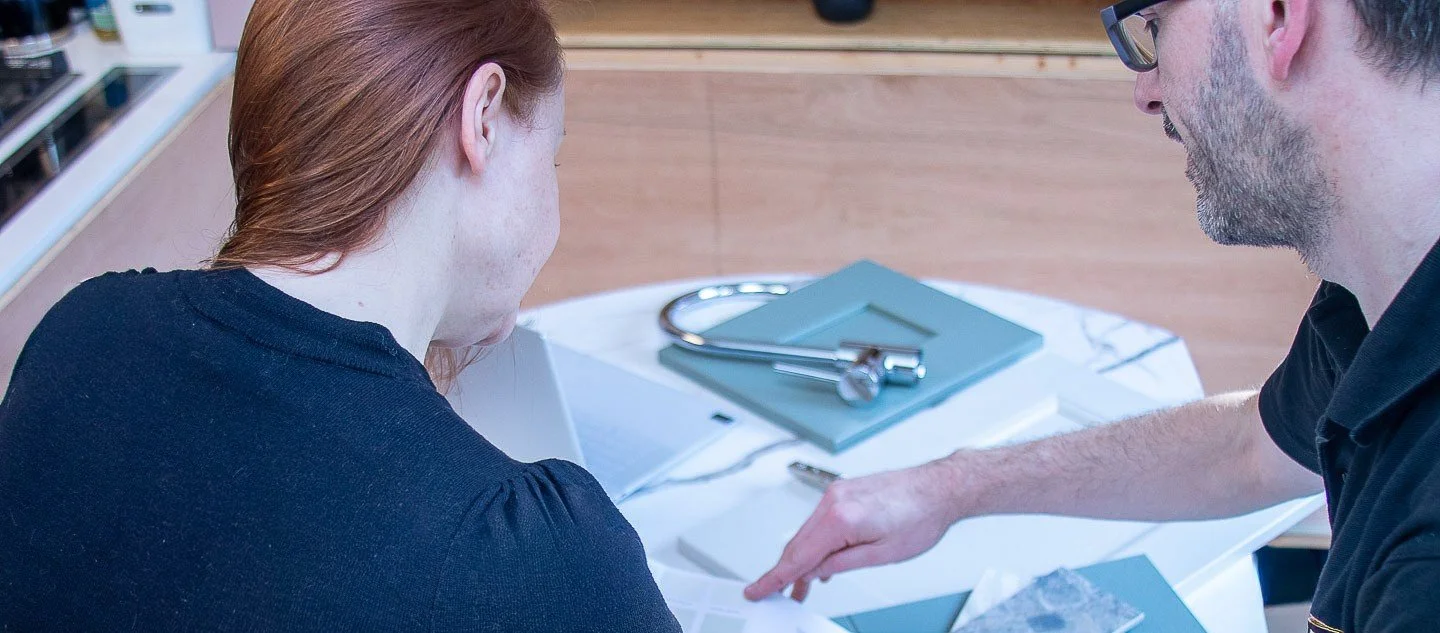
This is why I prefer to begin by visiting your home.
I don't arrive assuming you need a particular type of kitchen.
We can look at what you have, talk about what bothers you and identify what is still worth keeping.
I can see the room's proportions, the light, entrances and adjoining spaces. We can look at samples alongside your flooring, furniture and existing finishes rather than trying to imagine how something seen under showroom lighting might look at home.
From there, we can decide how far the project genuinely needs to go.
That may be a carefully considered refresh.
It may be a completely new kitchen using high-quality manufactured cabinetry.
It might need one or two individually made pieces from the workshop.
Or the room and the brief may justify designing and making the cabinetry entirely from scratch.
None of those answers is automatically better than another.

The right kitchen is the appropriate one
There is understandably a lot of excitement involved in choosing a kitchen, but it is also a significant investment.
Taking a little time at the beginning to understand what you already have can prevent unnecessary expense later.
So before deciding to replace your kitchen, ask what actually needs changing.
And before deciding simply to refresh it, make sure you aren't retaining the very things that frustrate you about the room.
If you're unsure, that's a useful place for us to begin.
During a home design visit, we can look at the kitchen together, discuss what you would like to change and work out whether refreshing, replacing or combining the two approaches would make the most sense for your home and your budget.