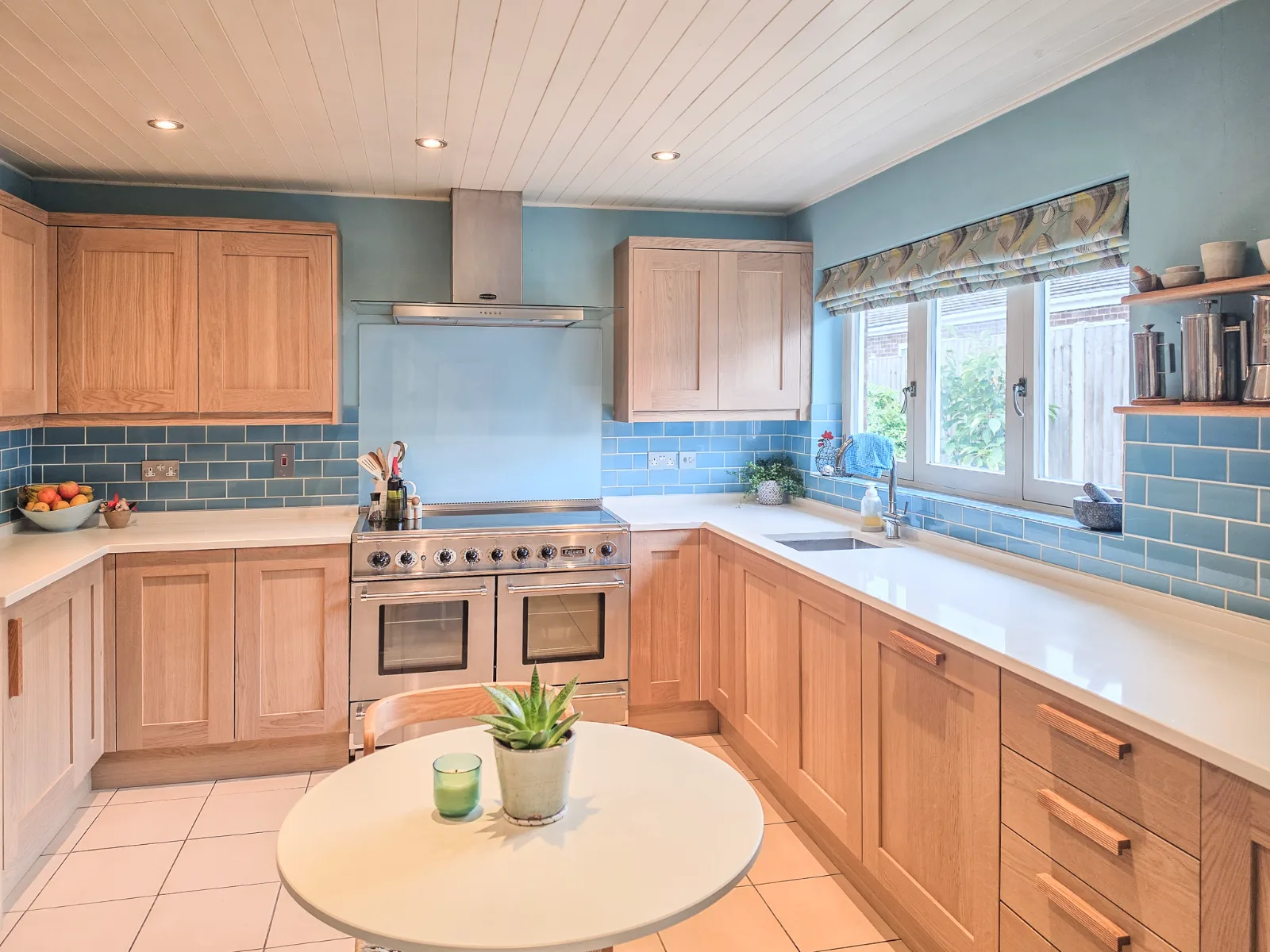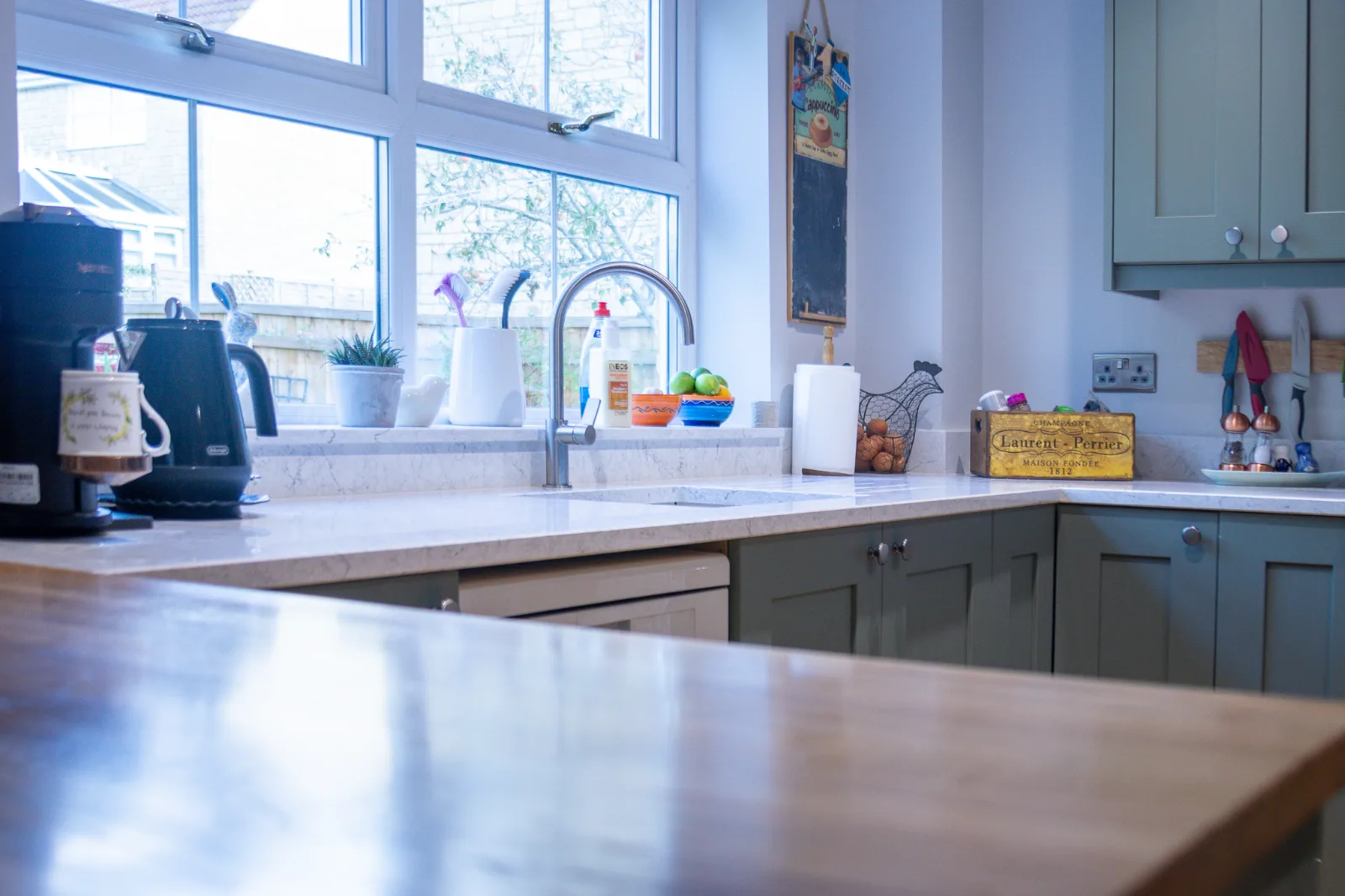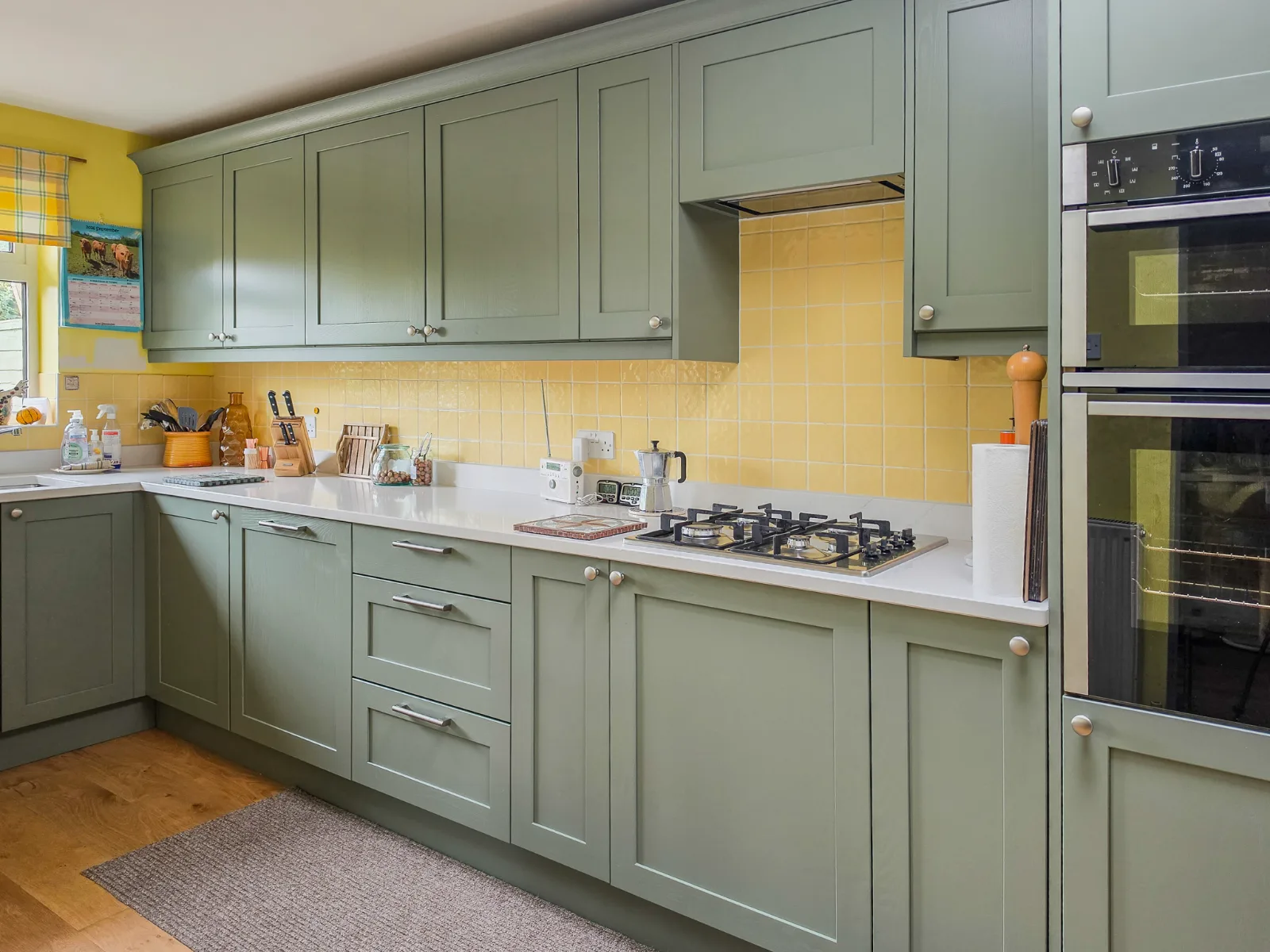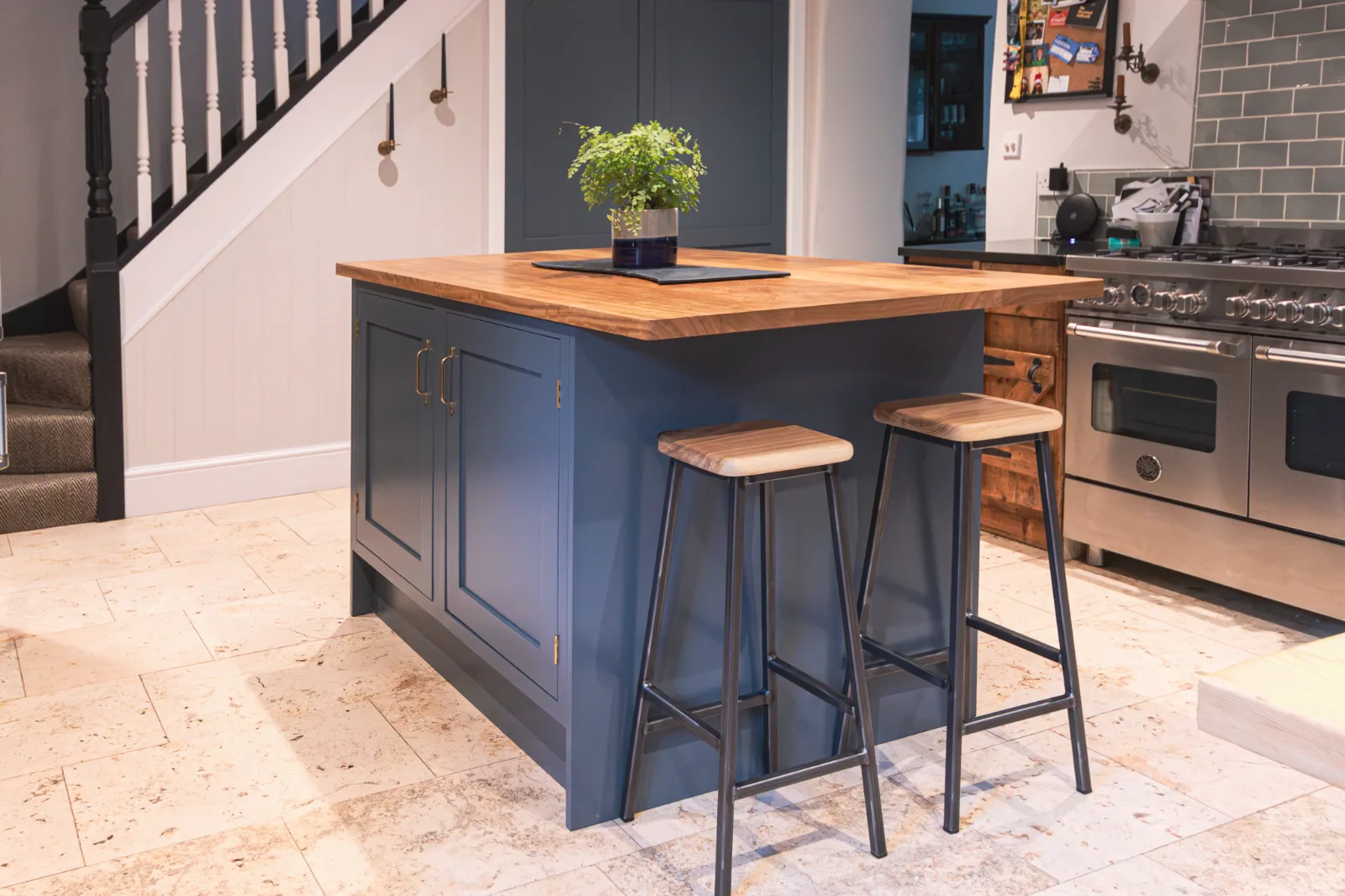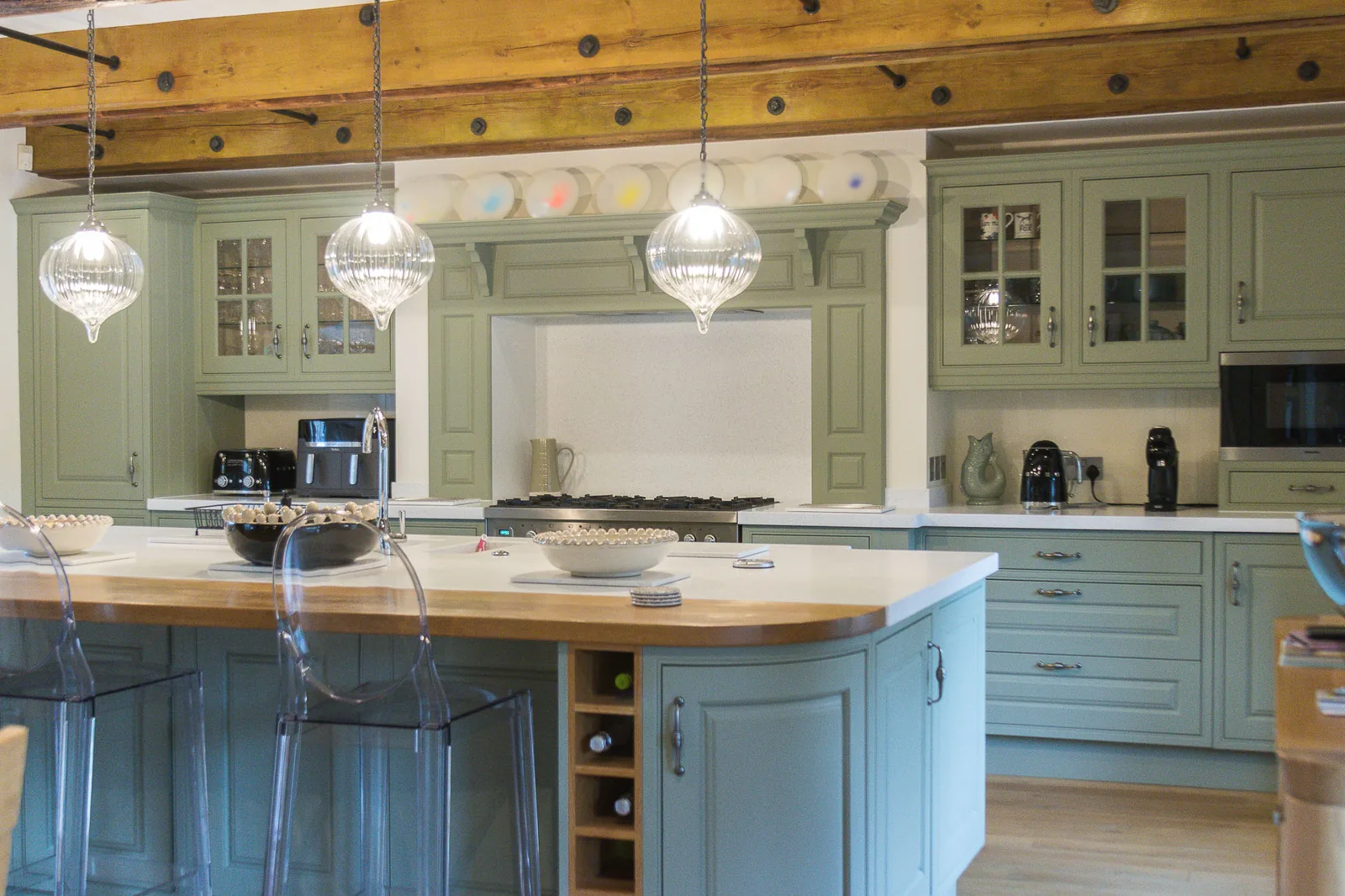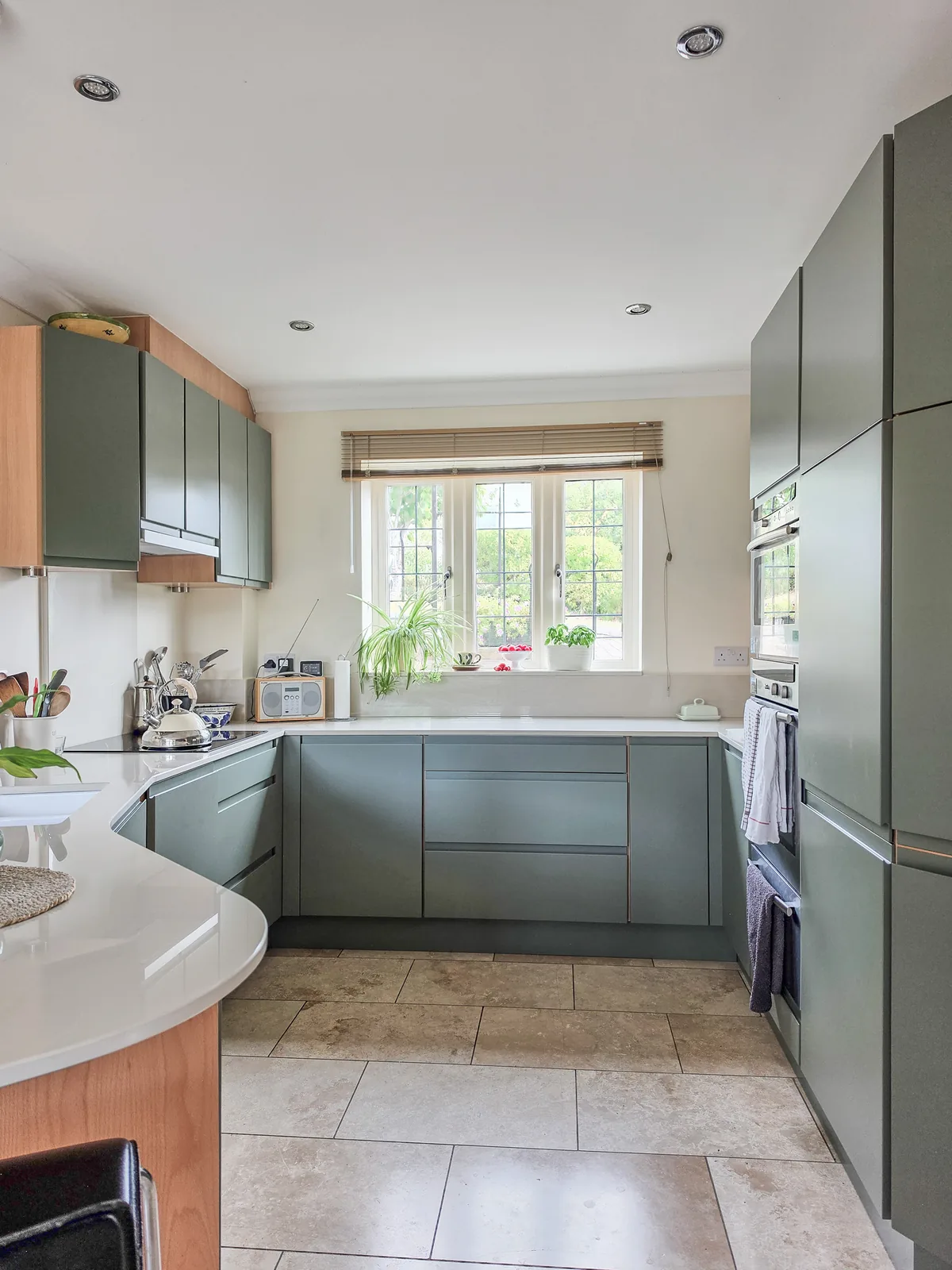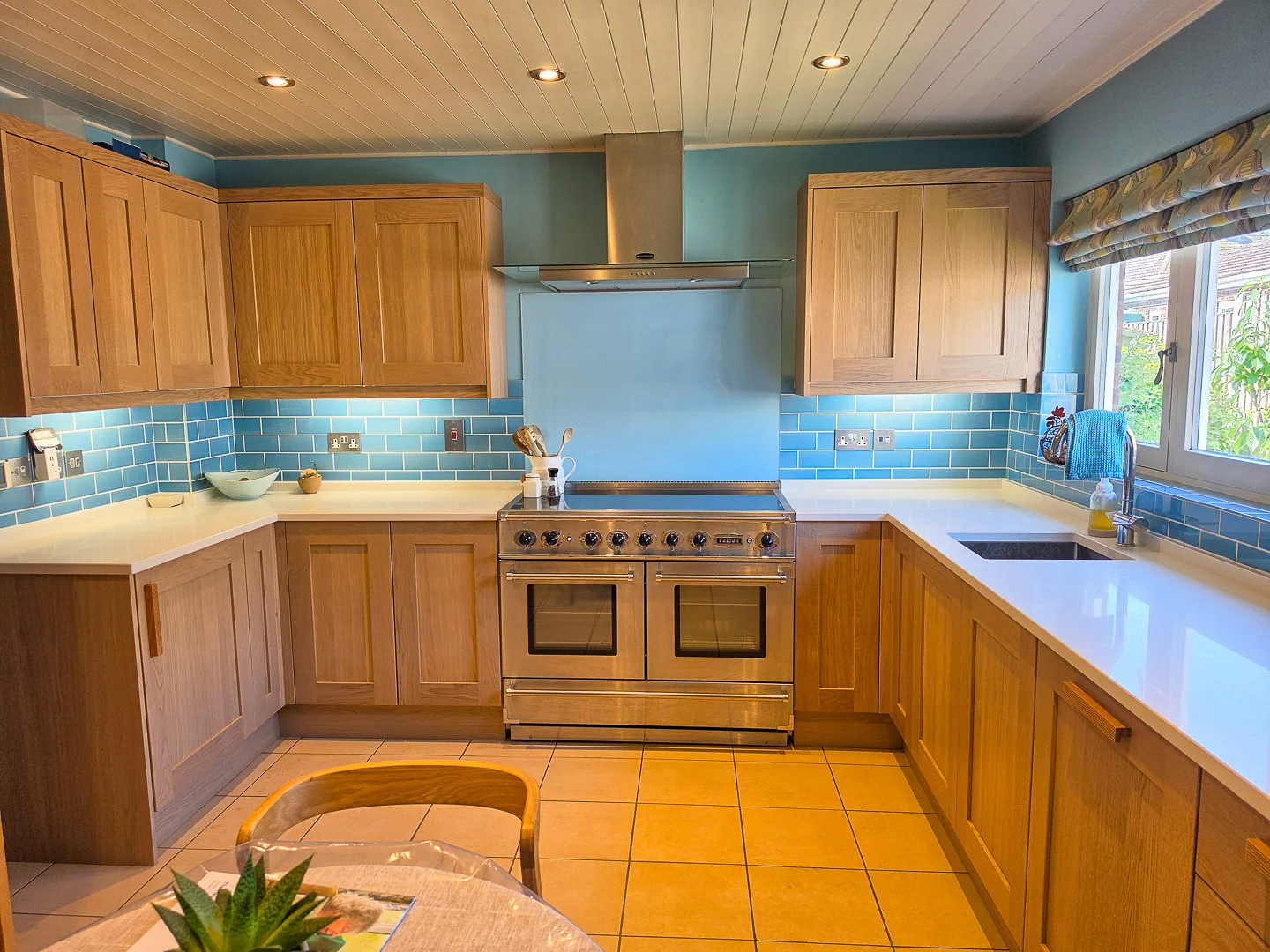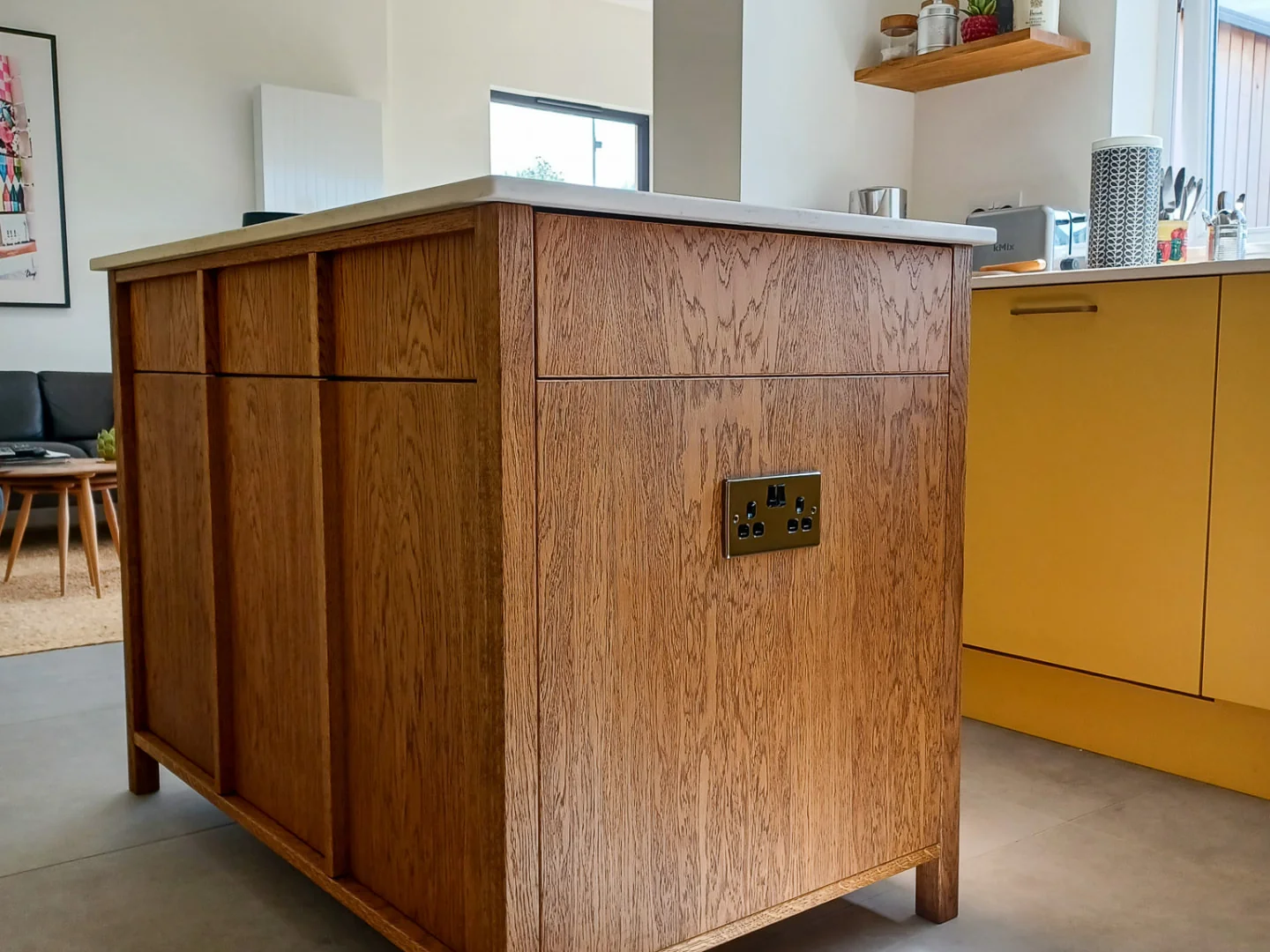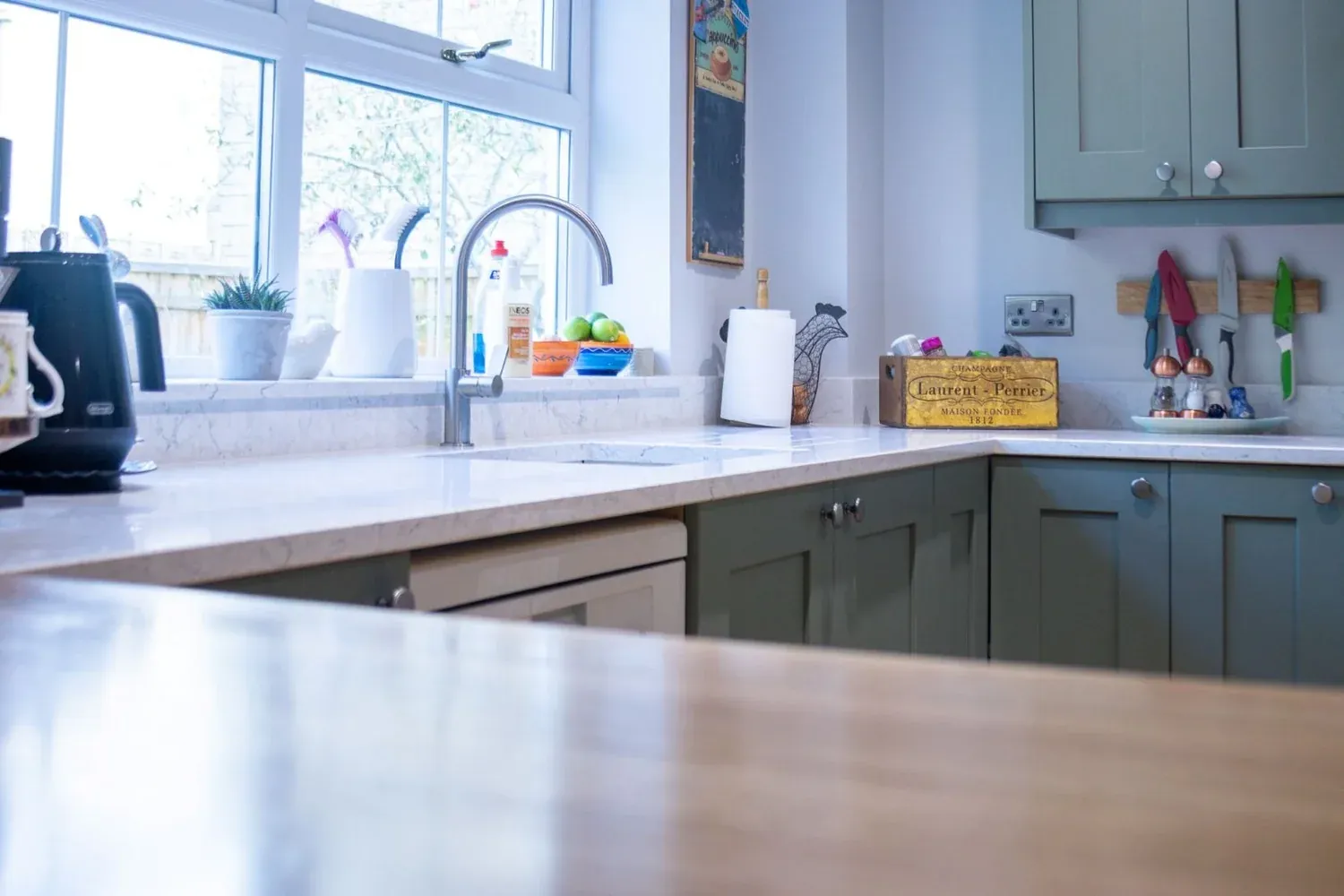
A personalised kitchen means one designed around your room and your routine, not one chosen from a longer list of colours. In the Wiltshire homes I work in, that usually means good manufactured cabinets where they fit, and workshop-made pieces where they do not.
Door styles, colours, handles, work surfaces, cabinet interiors and appliances can all be combined in hundreds of different ways. Many kitchen companies now describe the result as personalised, tailored or even bespoke.
But having plenty of options isn't quite the same thing as designing a kitchen around your home.
For me, the useful question isn't whether a kitchen carries a particular label.
Personalised doesn't have to mean made entirely from scratch
A kitchen doesn't need every cabinet to be individually made to feel personal.
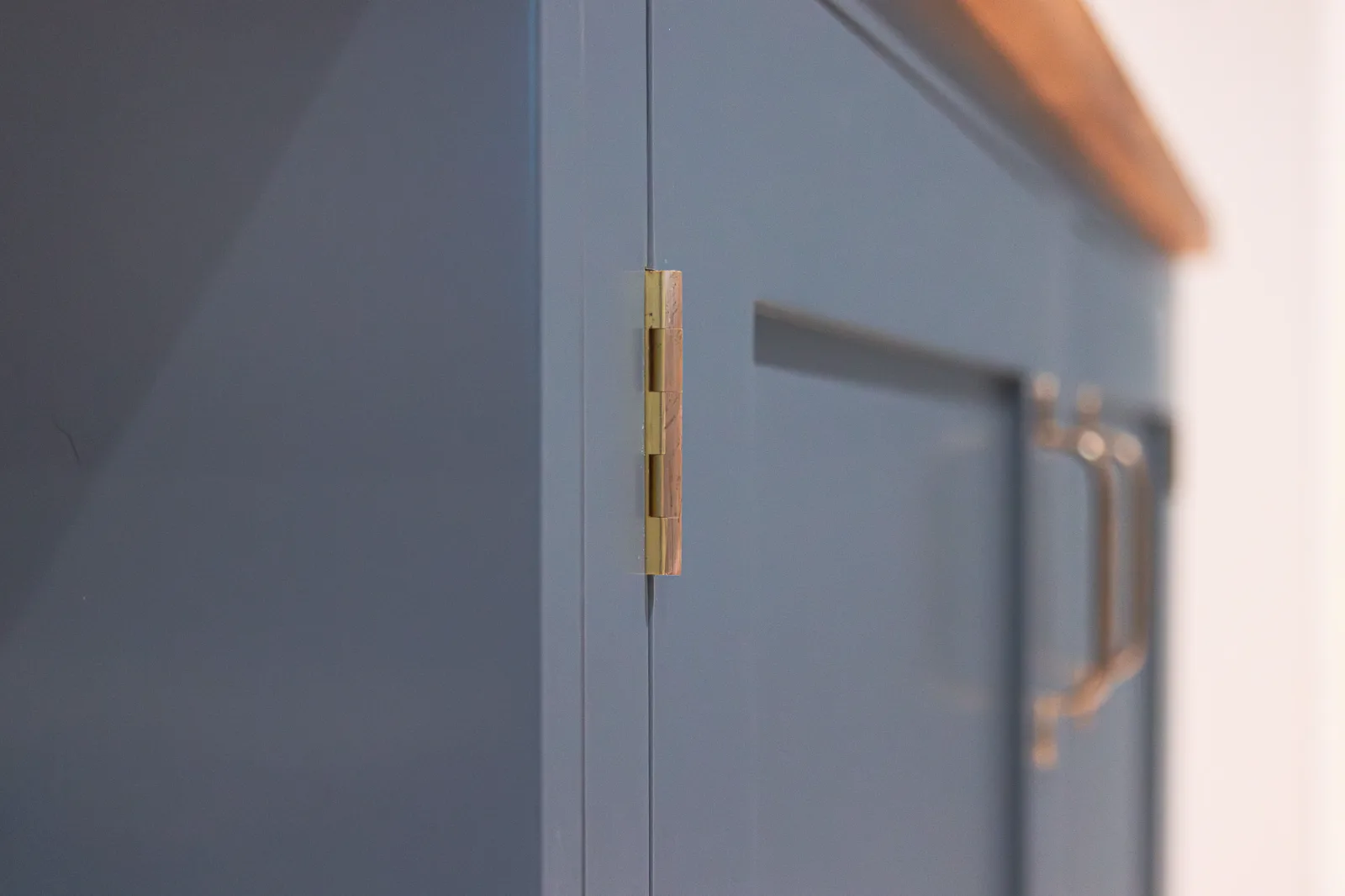
Modern manufactured cabinetry can be extremely good. There are excellent British-made cabinets available in a wide range of sizes and configurations, with well-engineered drawers, hinges and storage fittings.
Used carefully, they can provide a very good foundation for a kitchen.
The advantage is that you aren't paying someone to make an individual cabinet when a well-made manufactured one already does precisely what is required.
The mistake comes when the available range starts dictating the design.
If a cabinet is almost the right size, should the room have to accommodate the cabinet?
Or should the cabinet be adapted to suit the room?
That is where I think thoughtful customisation becomes valuable.
Start with the room rather than the catalogue
A catalogue inevitably starts with products.
Here are the doors. Here are the colours. Here are the cabinets. Which combination would you like?
I prefer to begin the other way around.
What is the room like?
How do you use it now?
What works well?
What irritates you?
Where does everyone naturally walk?
Where do you prepare food?
Would you rather have a large pantry than several smaller cupboards?
Is there an awkward alcove that has never been used properly?
What can you see when you enter from the adjoining room?
Those questions tell me far more about the kitchen you need than choosing a door style at the beginning.
The cabinetry should follow those decisions, not create them.
Where manufactured cabinetry works, use it
There is sometimes an assumption that the more bespoke something is, the better the kitchen must be.
I don't think that's necessarily true.
If a good-quality manufactured cabinet fits the space perfectly and provides the storage you need, making another one from scratch simply so that it can be described as bespoke may add cost without adding much value.
I'd rather put that part of the budget somewhere you will appreciate it.
That might be better work surfaces, stronger drawer systems, good lighting, carefully considered installation or a piece of furniture that genuinely does need to be individually made.
The aim isn't to maximise the amount of bespoke work in a project.
It's to make the finished kitchen as good as it can be.
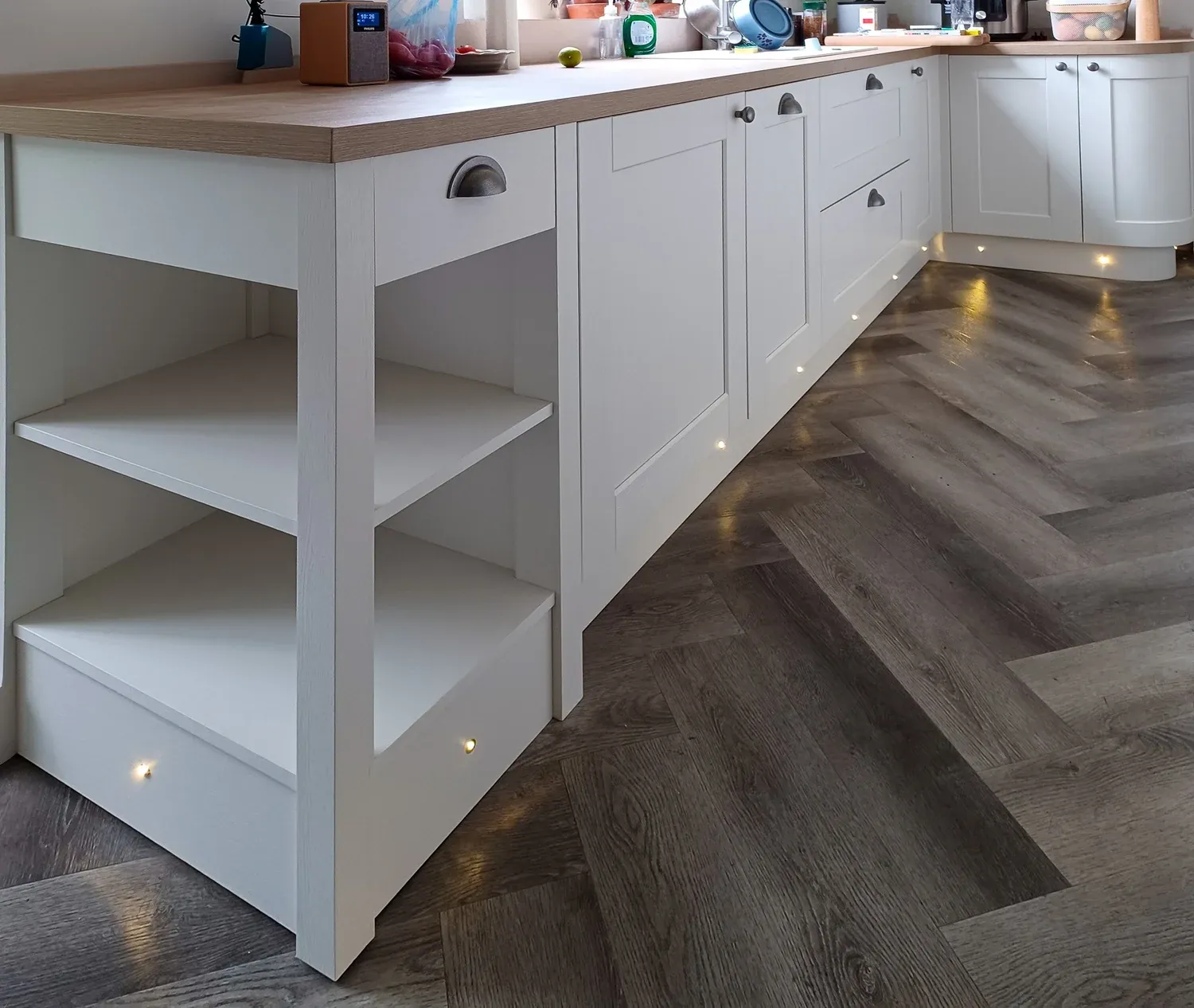
And where a standard cabinet doesn't work?
This is where having a workshop changes what is possible.
Perhaps a cabinet needs to be an unusual width to sit comfortably beside a chimney breast.
Maybe a dresser needs to line through with existing architectural details.
An island might need slightly different proportions to give enough circulation space around it.
A pantry could require a particular internal arrangement because of how you shop and cook.
Or you may want shelving, a bookcase or a freestanding piece that connects the kitchen naturally with an adjoining living area.
Instead of accepting the nearest standard size and filling the remaining space, I can make something specifically for that part of the room.
You don't necessarily need a completely bespoke kitchen to benefit from bespoke cabinetmaking.
Sometimes one carefully designed piece makes the difference.
Personalisation is about more than colour
Colour is important, of course.
So are handles, worktops and door styles.
But these are the easiest elements of a kitchen to personalise.
The more meaningful decisions concern how the room works.
A kitchen becomes personal when the storage reflects what you actually own.
When the preparation space is where you naturally want to work.
When everyday things are easy to reach.
When an island is the right size rather than simply the largest one that can be squeezed into the room.
When the cabinetry relates naturally to the architecture.
And when the room feels connected to the rest of your home rather than resembling a kitchen display that happens to have been installed there.
Those things are harder to choose from a brochure.
They require conversation and a little thought.
Why I design kitchens in your home
This is why my design process starts with a visit to your home.
Samples are useful, but I would rather see them in the room where they're actually going to live.
Colours change enormously with natural light. A timber that looks perfect beneath showroom lighting may feel quite different beside your floor or dining furniture.
More importantly, being in the room allows us to talk about the kitchen in context.
I can see entrances, windows, ceiling heights, existing furniture and adjoining spaces.
We can walk through how you currently use the kitchen rather than trying to describe it across a desk.
And I can look at what is already there.
Sometimes that reveals that more can be retained than you expected.
Sometimes it confirms that a new layout would make a substantial difference.
Sometimes a good manufactured kitchen will provide nearly everything that's required, with just one or two pieces made individually.
The right answer varies from one home to another.
A kitchen doesn't need a label to be individual
The kitchen industry uses words such as custom, personalised, made-to-measure and bespoke very freely.
They can all describe good kitchens.
But I don't think choosing between those labels is where a project should begin.
Start instead with what you want the room to do.
Use well-made standard components where they genuinely work.
Change them when they don't.
Make something individually when there is a good reason to.
And spend the budget on the details that will improve the kitchen every day.
That's what personalisation means to me.
Not simply being offered more things to choose from, but having enough flexibility to make sensible choices for your particular home.
If you're considering a new kitchen but aren't sure how much customisation you actually need, a Home Design Visit is a useful place to start.
We can look at the room together, talk through what you want to achieve and decide where manufactured cabinetry works perfectly well, and where something designed and made specifically for you could make the kitchen substantially better.
If this sounds like your kitchen, request your free Home Design Visit.