
Don’t Replace Your Kitchen — Rethink It First
There’s a moment most people reach with their kitchen
It no longer feels quite right
The layout might still work. The cabinets may still be solid. But something feels dated, disconnected, or simply no longer reflective of how you live
At that point, the default assumption is usually the same:
“We probably need a new kitchen”
In many cases, you don’t
What you often need is a clearer way of thinking about what’s already there—and what could be improved

Showrooms - Selling you the complete dream…not just the elements that you actually need
The Problem with Starting at the Showroom
Most kitchen projects begin in a showroom
You walk in, you see full displays, and you’re immediately faced with complete kitchens—fully formed, pre-designed, and often tied to specific ranges
It’s impressive. But it subtly shapes the way you think
You’re no longer looking at your kitchen
You’re looking at someone else’s version of one
That’s where unnecessary replacement often begins
Because once you’re comparing full kitchens, it becomes difficult to separate what you actually need from what you’re being shown
A Different Starting Point: Your Kitchen, As It Is
A more useful question is this:
What’s worth keeping?
In many homes, quite a lot
Cabinet carcasses are often structurally sound
Layouts, while not perfect, are usually workable
Storage may just need refining rather than replacing
When you start here, the project shifts
It becomes less about buying a kitchen, and more about shaping the one you already have

The Goal: To shape and improve the kitchen you already have
Where Real Transformation Happens
A kitchen rarely needs wholesale change to feel completely different
In most refresh projects, the transformation comes from a small number of carefully chosen elements:
1. Frontals (Doors and Drawer Fronts)
These define the visual identity of the kitchen. Changing them alone can completely alter the feel—from dated to calm, from busy to refined
2. Work Surfaces
Introducing quartz or stone brings a sense of weight and permanence. It’s often the single biggest shift in perceived quality
3. Colour and Finish
Whether through replacement or professional spray finishing, colour has a disproportionate impact. It’s where personality and atmosphere are set
4. Details and Hardware
Handles, rails, trims—these are small decisions that quietly elevate the whole space when considered properly
5. Sink and Tap Pairing
Often overlooked, but when coordinated with new surfaces, this becomes a subtle focal point.
None of these, individually, require a full replacement
But together, they can completely redefine how the kitchen feels
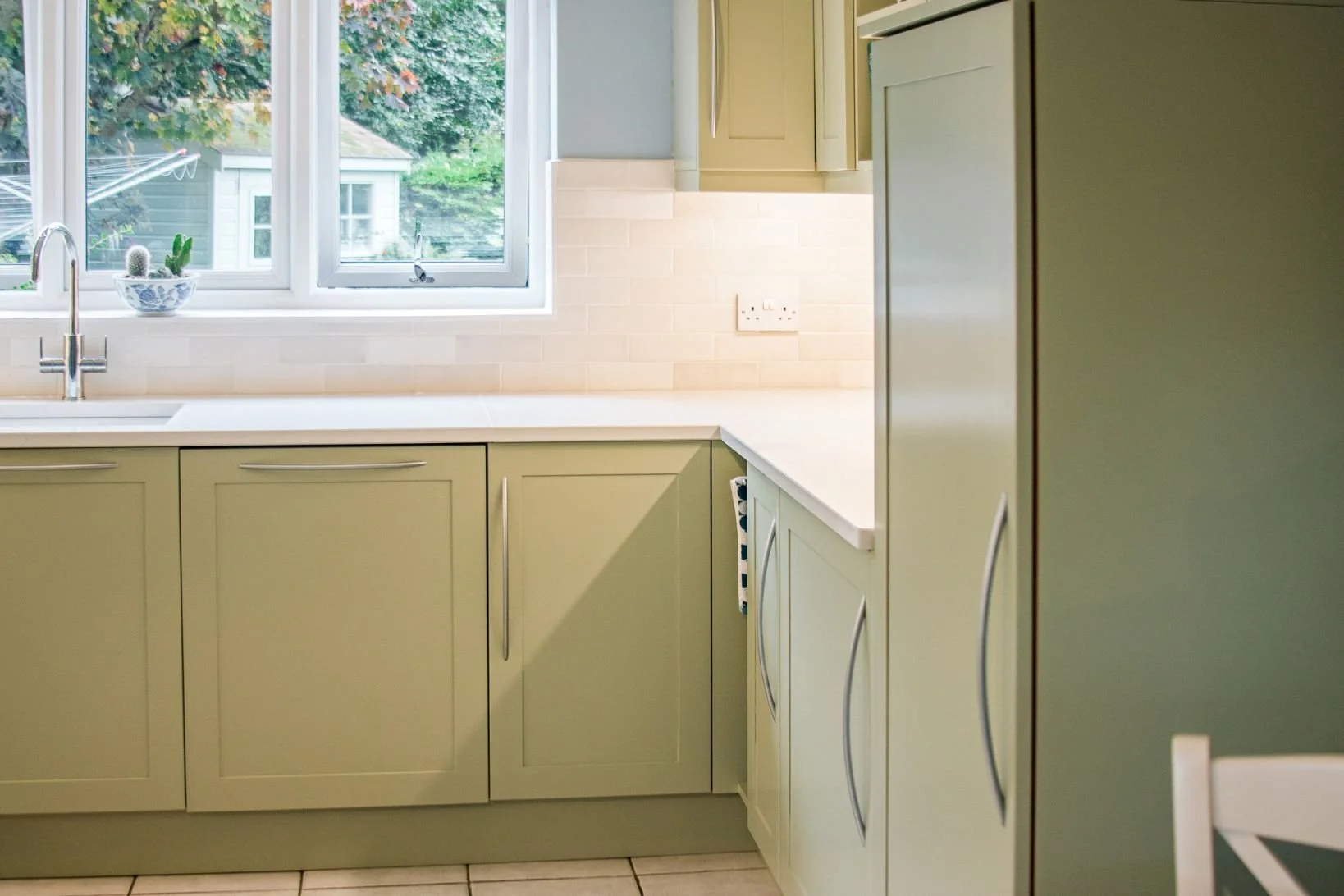
Many smaller changes combine into a major transformation
The Difference Is in the Decisions
What separates a thoughtful refresh from a superficial one is not the components—it’s the decisions behind them
And those decisions are best made in context
In your home
With your lighting
Your flooring
Your way of using the space
This is where most approaches fall short
Because it’s difficult to make good decisions about a kitchen when you’re standing somewhere else, looking at something that isn’t yours
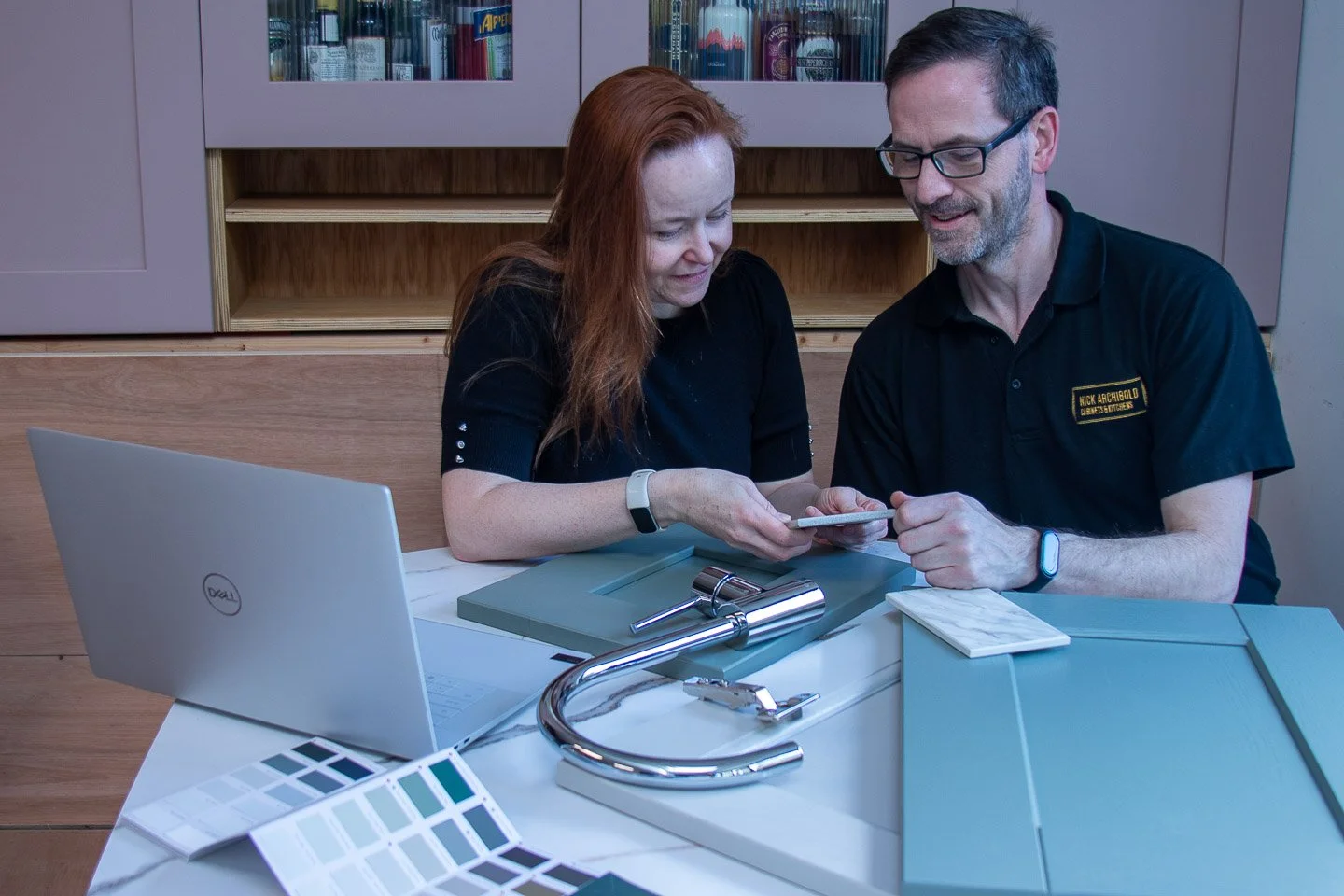
A relaxed home design visit is the best way to start your project
Designed in Your Home, Not Chosen from a Display
When you bring the design process into the home, something changes
Instead of selecting from a wall of options, you begin to edit
Samples are placed directly into the space
Combinations are tested against real surroundings
Decisions are made more slowly—and more confidently
You start to see what works
Just as importantly, you see what doesn’t
And that clarity prevents costly mistakes
When Replacement Is the Right Decision
Of course, not every kitchen can—or should—be refreshed
There are clear cases where replacement makes sense:
The layout fundamentally doesn’t work
Cabinets are worn beyond recovery
Storage needs are completely different
Structural changes are required
But even then, the same principle applies
Start with the home
Understand the constraints
Design around how you actually live
Not around what’s displayed in a showroom
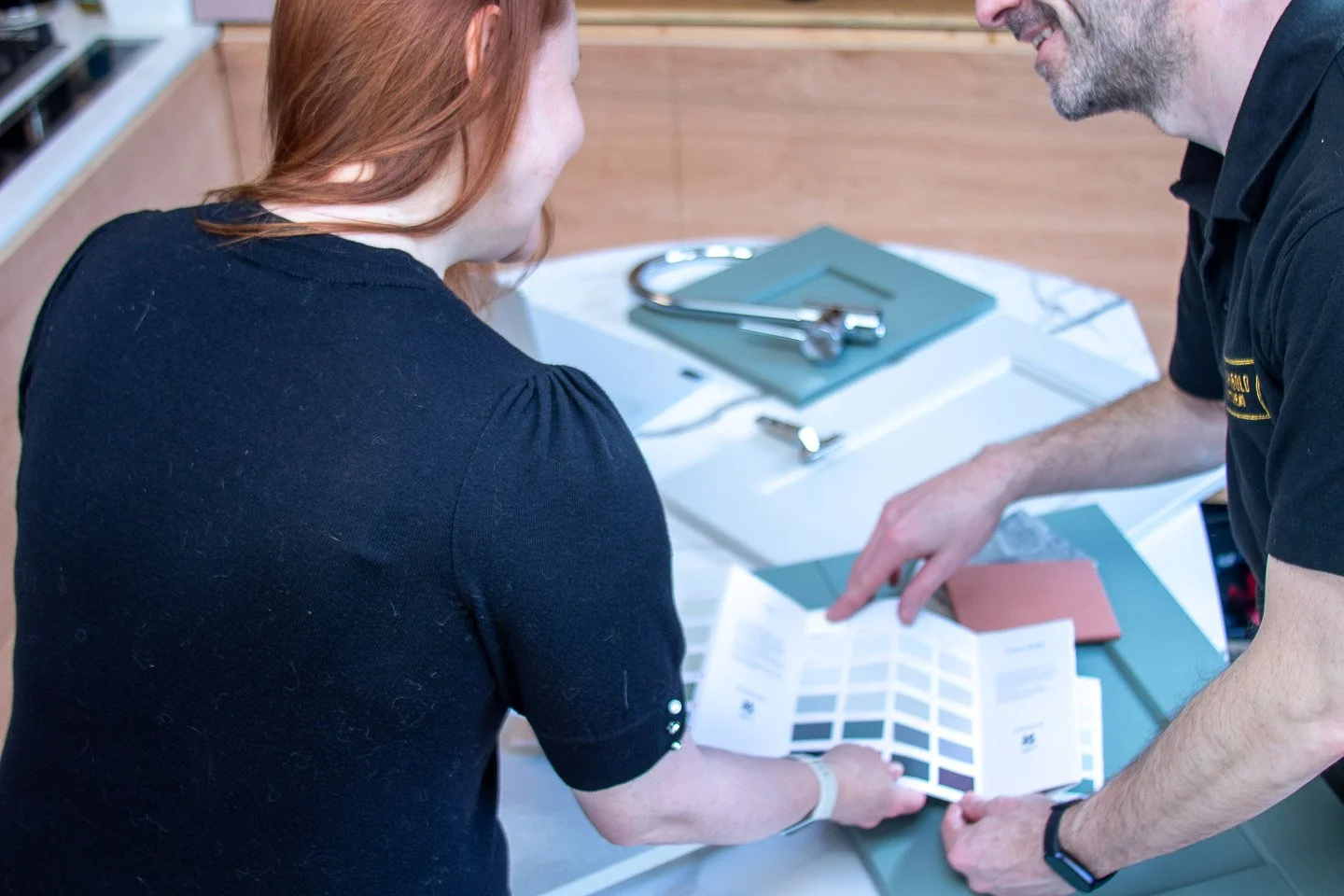
During the home visit we’ll openly discuss the best approach for you - refresh, custom or fully bespoke
A More Considered Way to Approach Your Kitchen
The aim isn’t to avoid replacing your kitchen at all costs
It’s to make that decision properly
To understand:
What you already have
What can be improved
What genuinely needs changing
And to move forward with clarity rather than assumption
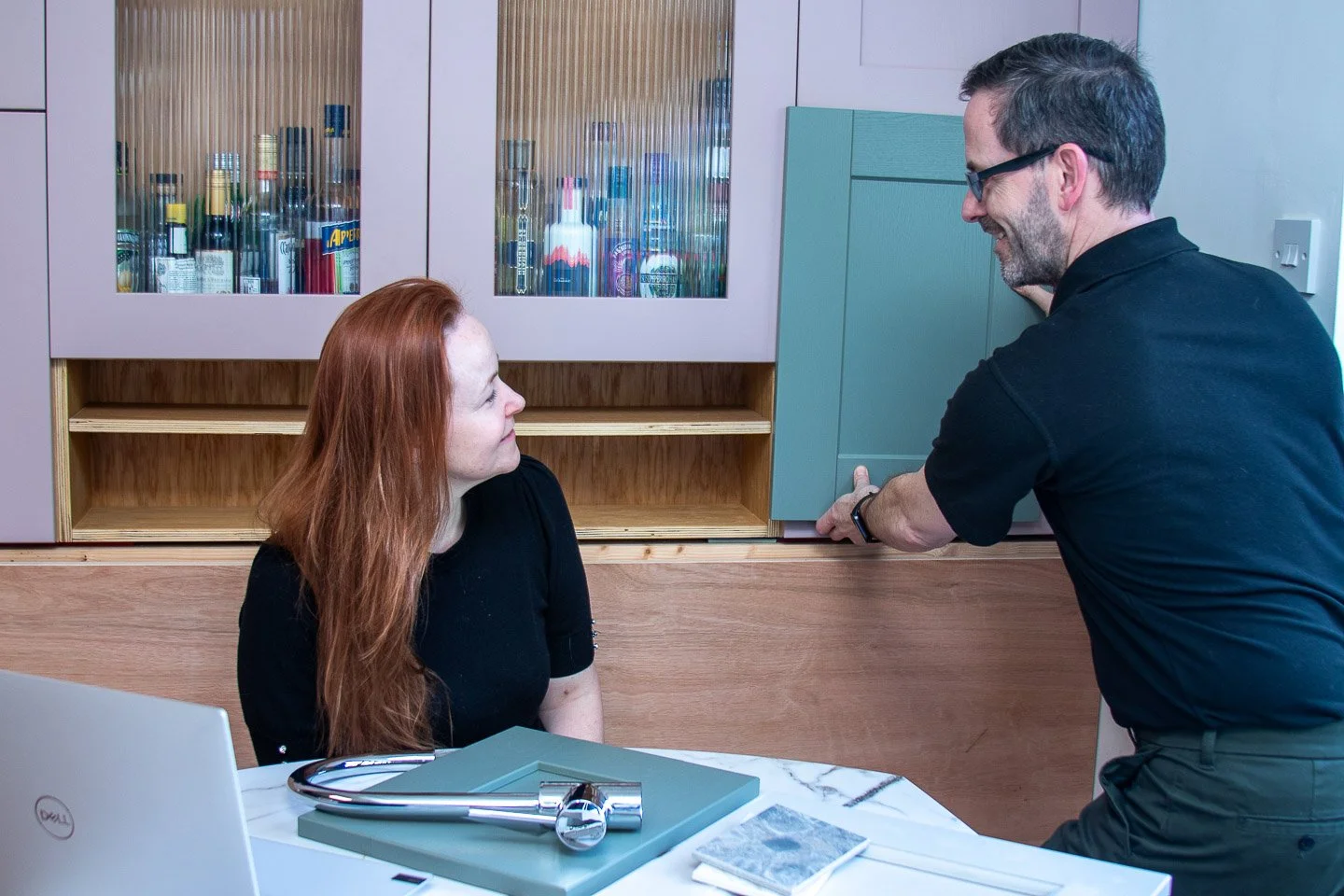
Design in your home provides much greater confidence in your decisions
A Final Thought
A kitchen should feel like it belongs to the home it sits in—and to the people who use it every day
That doesn’t come from choosing a range
It comes from making a series of small, well-considered decisions, in the right place, at the right pace
If you’re at the point where your kitchen no longer feels right, it’s worth stepping back before deciding to replace it
A different approach at the start often leads to a very different outcome
If you’d like to explore what’s possible within your existing kitchen, a home design visit is a good place to begin
It allows everything to be considered in context—calmly, clearly, and without pressure
