Custom Kitchen or Showroom Kitchen? Designing a Kitchen That Truly Fits Your Home
When people begin thinking about a new kitchen, the first instinct is often to visit a showroom
Rows of beautiful displays promise inspiration and ideas. Doors, handles and worktops are neatly presented under bright lighting. Designers walk you through different ranges and options
Showrooms can certainly be helpful for seeing materials up close
But when it comes to designing a kitchen that genuinely works in your home, the most important decisions are rarely made in a showroom
They are made in the kitchen itself
Why Kitchens Often Feel “Almost Right”
Many kitchens installed over the past twenty years were built using well-made cabinet systems. In many cases, the underlying structure of the kitchen is still perfectly serviceable
What tends to age is not the cabinet carcasses themselves, but the overall combination of elements
Doors may look dated
Worktops may feel tired
Appliances may have evolved since the kitchen was installed
Sometimes the layout works reasonably well but simply lacks refinement
This is where thoughtful customisation becomes valuable
Instead of choosing a completely new system from a showroom catalogue, the kitchen can be redesigned around the way you actually use the room
The Difference Between Catalogue Kitchens and Custom Kitchens
Most kitchens sold through showrooms are based around a predefined system
Cabinet sizes are fixed
Layout possibilities are determined by the catalogue
The design process is often about selecting and arranging components
A custom kitchen approaches the process slightly differently
Rather than starting with a catalogue, the design begins with the room itself
How the space is used
Where light enters the room
How people move through the kitchen during the day
The goal is not simply to choose cabinets
The goal is to create a kitchen that feels naturally suited to the home
Designing in the Real Environment
One of the challenges of designing kitchens in showrooms is that the environment is entirely different from the client’s home
Lighting is carefully controlled
Colours appear slightly different
Room proportions rarely match those of the real space
Even beautiful materials can look quite different once installed in a home
Designing directly within the home allows decisions to be made with far more clarity
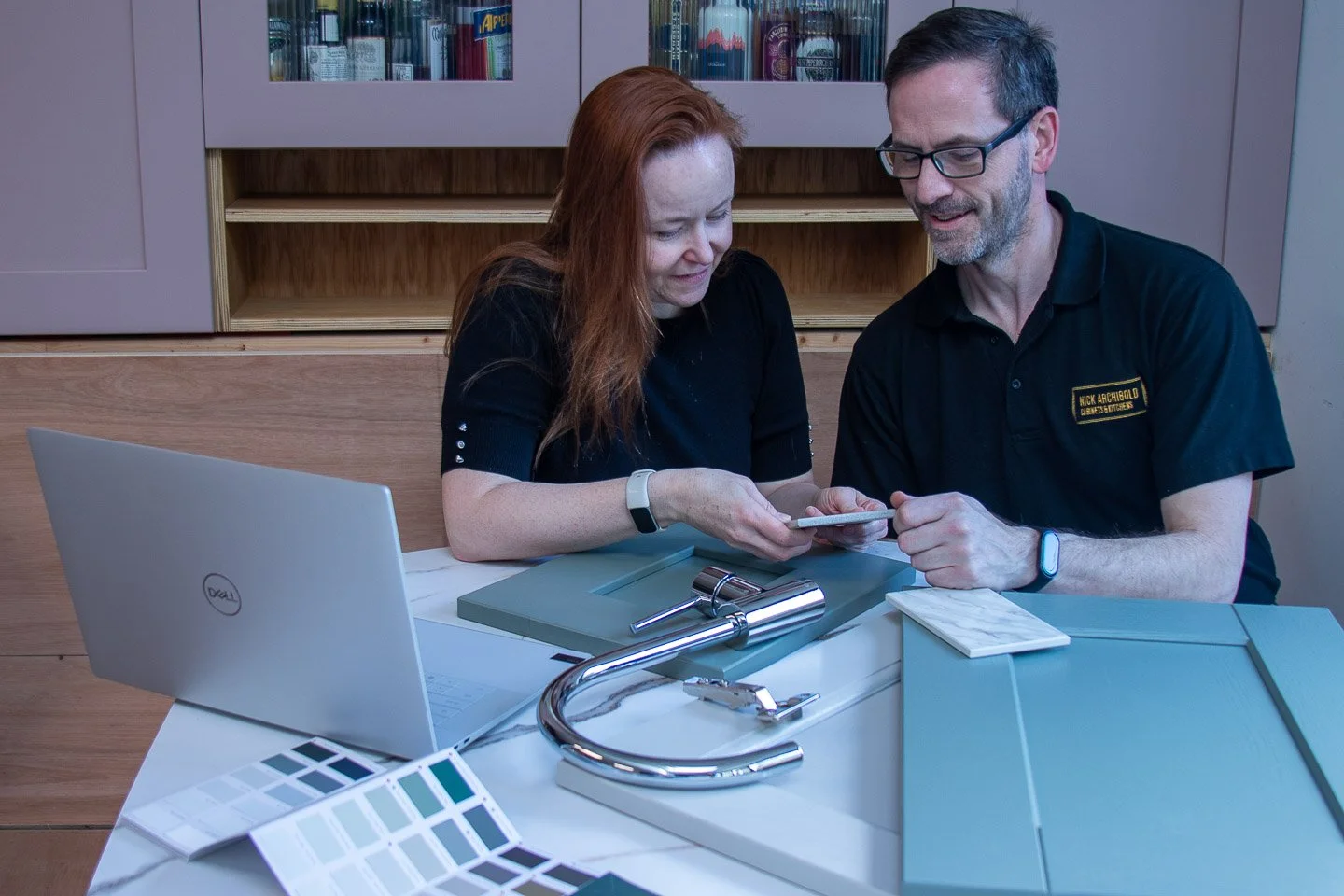
Work surface samples can be viewed in natural - and artificial daylight
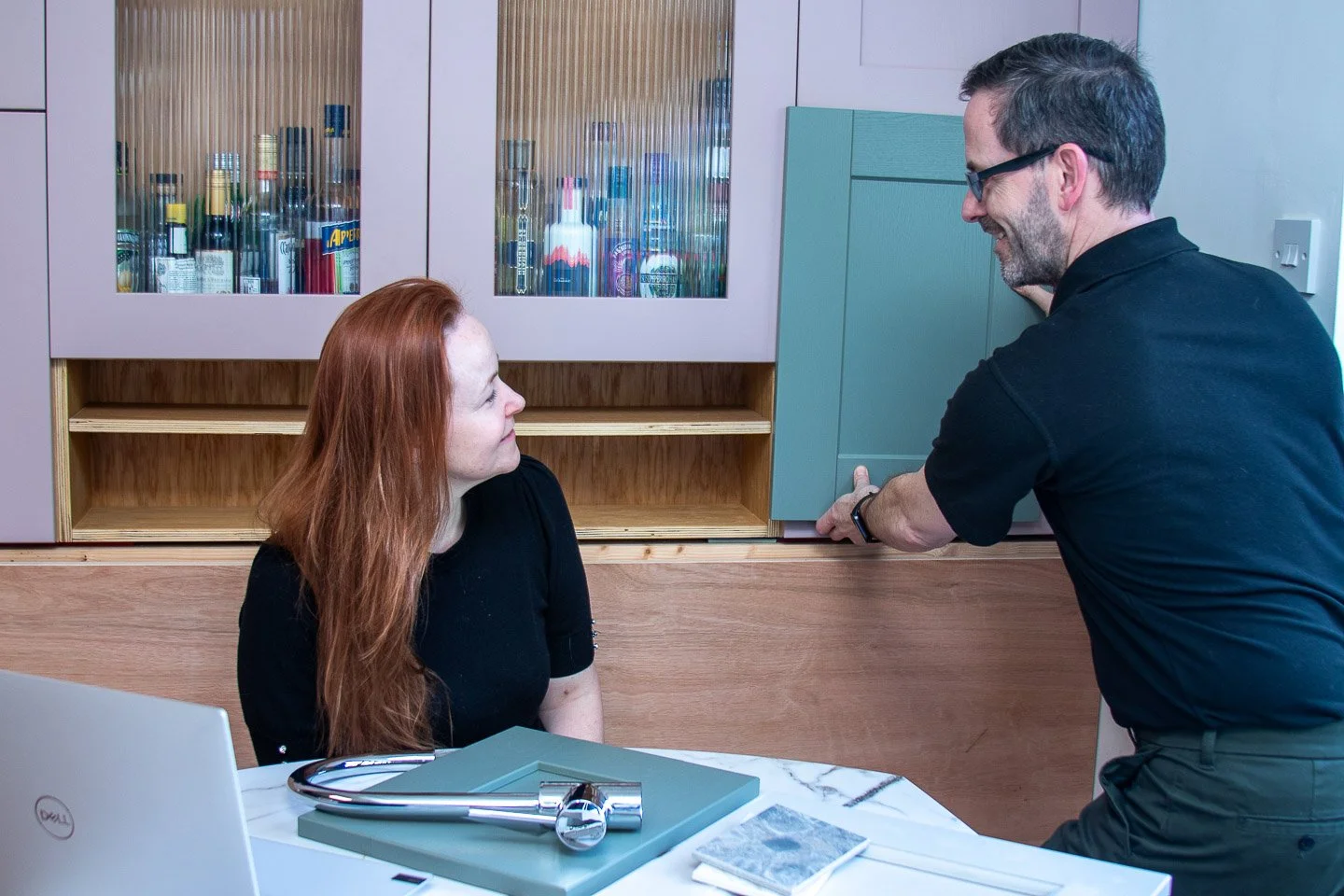
Cabinet colours can be compared alongside existing flooring, paint colours and furniture
Layout ideas can be discussed while standing in the space itself
This often leads to calmer, more confident decisions
Personalisation Without Unnecessary Complexity
Another common misconception is that homeowners must choose between two extremes
At one end of the spectrum are fully bespoke kitchens, where every cabinet is individually built from scratch
At the other end are catalogue kitchens, assembled directly from a standard system
In reality, many of the best kitchens sit somewhere in the middle
High-quality cabinet systems can provide a strong structural foundation. From there, thoughtful design decisions shape the final result
Door styles, colours, work surfaces and layout choices all contribute to the character of the kitchen
Where needed, workshop-made elements can also introduce small bespoke touches — shelving, cabinetry adjustments, or tailored features that adapt the kitchen to the room
The result is a kitchen that feels individual and carefully considered without the cost and complexity of fully bespoke manufacture
The Value of Calm, Guided Design
Perhaps the most important part of a successful kitchen project is not the cabinets themselves
It is the process of making decisions
Homeowners are often presented with an overwhelming number of options — colours, materials, appliances, layouts and styles
Without guidance, the process can quickly become confusing
A calm design process focuses on clarity rather than choice
What does the kitchen need to do better?
What elements already work well?
Where will thoughtful changes make the greatest difference?
Once these questions are answered, the design tends to emerge quite naturally
A Kitchen That Belongs to the Home
The most satisfying kitchens rarely feel like a display installation
Instead, they feel as though they belong naturally to the home
Materials sit comfortably alongside existing architecture
The layout supports daily routines
The room feels calm, functional and welcoming
This kind of kitchen is rarely created by simply selecting a display in a showroom
It emerges through careful observation of the space and thoughtful design decisions made within it
Starting With the Kitchen You Already Have
If you are thinking about improving your kitchen, the most useful first step is often simply to look at the room together
Not in a showroom, but in your home
Seeing the space in context makes it much easier to understand what will genuinely improve it — whether that means refreshing the existing kitchen, refining the layout, or creating something entirely new
If you would like to explore the possibilities, you are very welcome to arrange a home design visit
It is simply a relaxed conversation about how your kitchen could work better for the way you live