
Should You Refresh or Replace Your Kitchen? A Practical Guide
When a kitchen begins to look tired, it is easy to assume that everything must be removed and replaced
That may be the right decision. But it is not the only one
Many kitchens can be transformed by retaining sound cabinetry and carefully updating the elements that have aged. Others need a completely new layout but can be created successfully using high-quality manufactured units. Some rooms genuinely benefit from furniture designed and made from scratch
The important question is therefore not simply, “Which new kitchen should I buy?”
It is:
What does my home actually need?
Begin with the condition of the existing kitchen
A refresh is worthwhile only when the foundations are sound
Cabinet carcasses should be secure, reasonably level and free from serious water damage. Hinges and drawer mechanisms can often be replaced, but loose joints, swollen boards or extensively damaged cabinetry may indicate that further investment would be unwise
The layout matters too
If the room functions well and the principal appliances, sink and work areas are sensibly positioned, retaining the existing cabinets can avoid unnecessary disruption and cost
However, a fresh set of doors will not correct a fundamentally poor layout. If circulation is awkward, storage is inadequate or essential appliances are badly positioned, a more substantial change may offer better long-term value
This is why I prefer to assess the kitchen in the home before recommending a solution

A Home Design Visit is a friendly and informative conversation
When a kitchen refresh makes sense
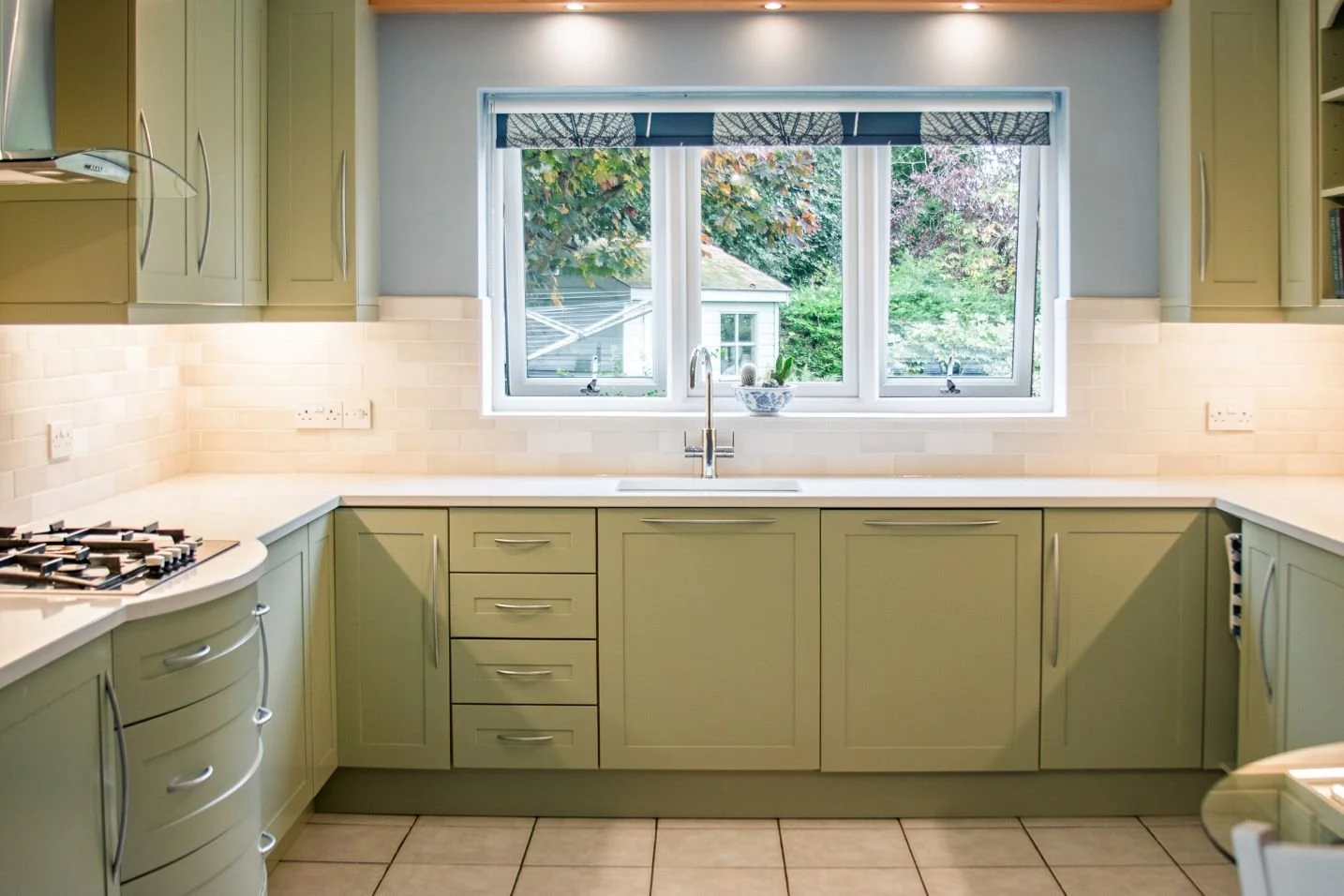
A refresh is often suitable when the kitchen works well but looks dated or lacks some of the finishing quality you would now choose
Depending on the room, the work may include:
replacement doors and drawer fronts;
new end panels, plinths and trims;
professional spray finishing;
replacement worktops;
a new sink and tap;
an updated splashback;
improved hinges, runners and internal storage;
individually made cabinets or furniture.
A carefully planned refresh can change the character of the entire room
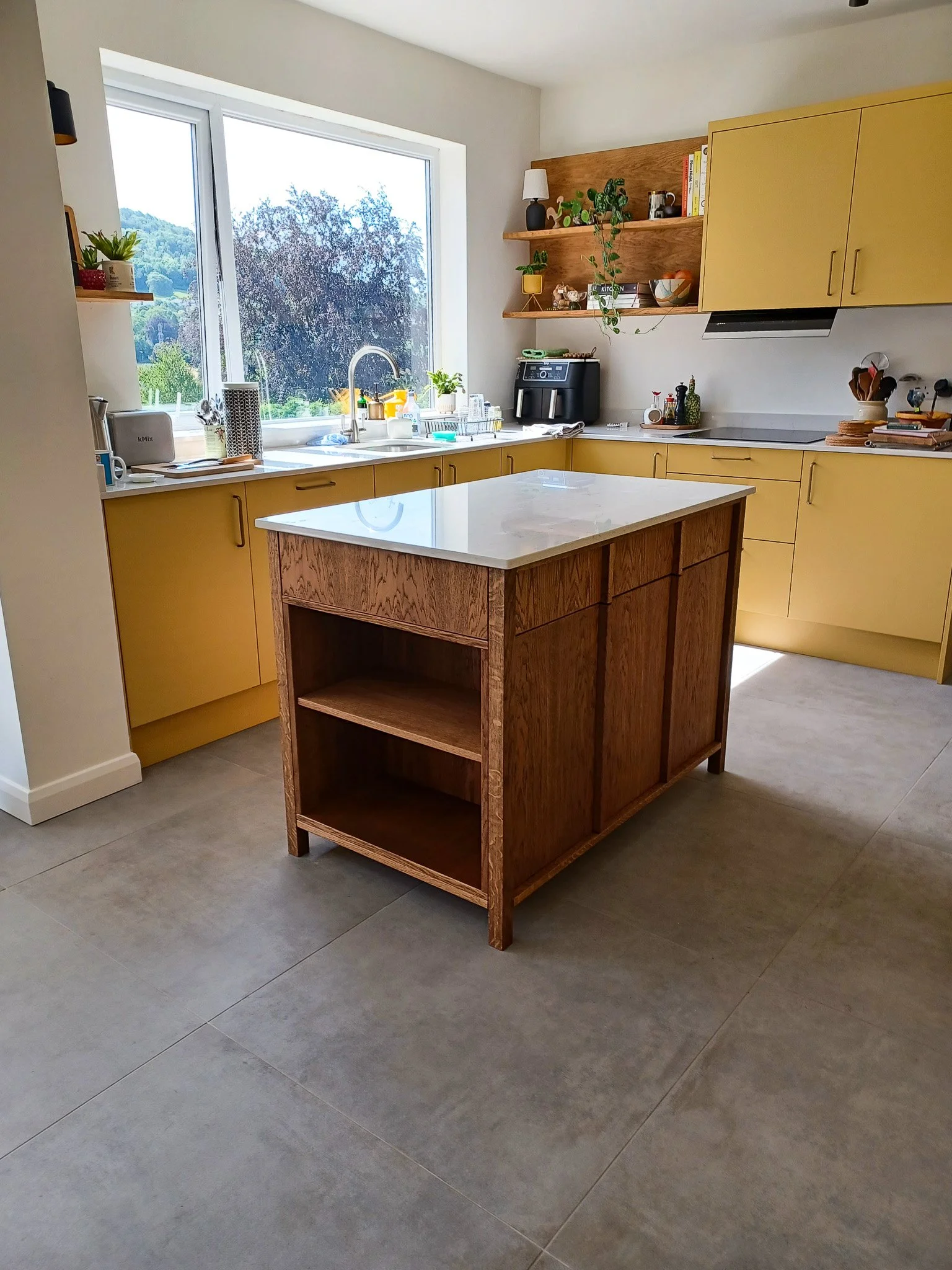
New painted fronts can soften a dark kitchen. Better panels and trims can make the furniture feel more complete. Quartz or stone worktops can add durability and visual weight. A purpose-made pantry, dresser or island can solve a practical problem without discarding everything around it
The value is not simply that a refresh costs less than replacement
It allows the budget to be concentrated where it will make the greatest difference
Refreshing should not mean accepting compromises
The makeover market often promotes speed and a broad choice of replacement doors. Those benefits are useful, but the result still needs to be considered as a whole
A successful refresh should take account of:
the proportions of the room;
natural and artificial light;
adjoining flooring and decoration;
existing appliances;
visible cabinet ends and junctions;
worktop thickness and overhangs;
handle placement;
how new additions will relate to retained furniture.
Selecting a fashionable door from a brochure is not enough on its own
The new elements should feel as though they belong in the room
When a new custom kitchen is the better answer
A full replacement becomes more sensible when the existing cabinets are failing or when the layout no longer supports the way the household lives
This does not automatically require a fully bespoke kitchen
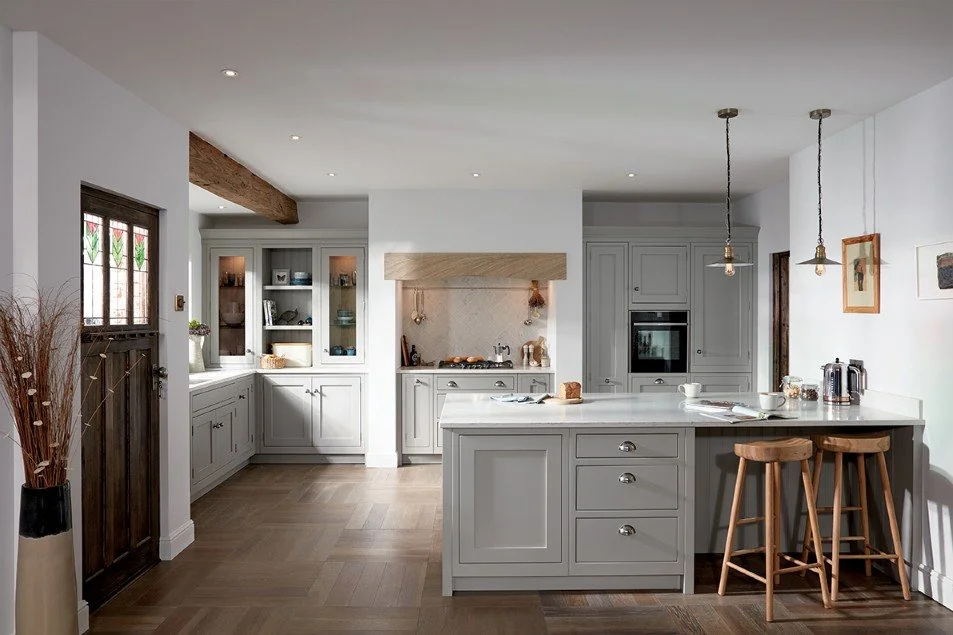
High-quality British manufactured cabinetry can provide an excellent basis for a new design. Used thoughtfully, it offers reliable construction, useful storage options and a wide choice of finishes
The difference lies in how it is designed and personalised
Rather than accepting a standard showroom arrangement, the layout can be developed around the room. Manufactured cabinets can be combined with individually made end panels, shelving, islands, dressers or unusual units from the workshop
This approach sits between an off-the-shelf showroom kitchen and furniture made entirely from scratch
For many homes, it provides the right combination of flexibility, quality and value
When bespoke cabinetry is genuinely worthwhile
Bespoke furniture becomes particularly valuable when the architecture or required detail cannot be resolved convincingly with standard sizes
This may include:
irregular walls and floors;
sloping or unusually high ceilings;
chimney breasts, beams or deep window reveals;
period features that should be respected;
non-standard cabinet depths or widths;
particular storage requirements;
fitted furniture that needs to relate to the wider room;
a very specific choice of material, construction or moulding.
In these situations, furniture can be designed around the building rather than filling the remaining gaps around a modular system
That does not mean every cabinet needs to be complicated. Good bespoke work is often quiet. Its success can be seen in comfortable proportions, clean junctions and the way the kitchen appears naturally settled within the home
Think carefully about where the budget goes
A kitchen budget is not spent on cabinets alone
It may also need to cover:
removal and disposal;
electrical and plumbing work;
flooring and decoration;
appliances;
worktops and splashbacks;
fitting;
specialist cabinetry;
finishing details.
Replacing everything can sometimes divert money away from the parts that would make the greatest practical or visual improvement
Equally, continuing to upgrade weak existing cabinets can become a false economy
The aim should be to find the level of work that creates a coherent, lasting result—not merely the cheapest initial quotation or the most extensive possible project
Make decisions in the room where the kitchen will live
Showrooms are useful for viewing door styles and materials, but they cannot reproduce the conditions of your home
Colours alter in different light. Samples relate differently to existing floors, walls and architectural details. An island that looks well proportioned in a large display may overwhelm a smaller room. A storage arrangement that suits one household may be unnecessary for another
During a Home Design Visit, we can look at these issues in context
We can discuss what works in the existing kitchen, what causes frustration and what you want to achieve. Samples can be viewed in the room, practical constraints can be identified early and the different levels of investment can be considered honestly
This reduces guesswork before important decisions are made
Choose the right degree of change
There is no virtue in replacing a sound kitchen simply because replacement is the usual sales model
There is equally no value in retaining cabinetry that will undermine the finished result
The right approach may be:
a carefully executed refresh;
a new custom kitchen using high-quality manufactured components;
a fully bespoke kitchen produced specifically for the room;
or a thoughtful combination of these methods.
The most successful kitchen projects begin with a clear understanding of the home rather than a predetermined product range
Before choosing doors, worktops or cabinet styles, decide what level of change the room genuinely needs
That decision is much easier to make when the process starts in your home
