
Kitchen Refresh or Full Replacement? How to Decide in Your Own Home
For many homeowners, the first step towards improving their kitchen is also the most confusing
You know - the space no longer feels quite right
Perhaps the cabinets are tired
Perhaps the worktops have seen better days
Perhaps the layout never quite worked from the beginning
But the real question is usually this:
Do you need a new kitchen, or simply a thoughtful refresh?
The industry often pushes people toward one answer or the other. Large makeover companies promise fast transformations
Kitchen showrooms present complete replacements as the default solution. The truth is more nuanced. The right approach depends on your home, your existing cabinets, and how the space actually works day-to-day
And the best place to figure that out is not in a showroom. It is in your kitchen
Why Many Kitchens Don’t Need Full Replacement
A surprising number of kitchens are structurally sound.
The cabinet carcasses may still be solid
The layout may work reasonably well
Storage may already be adequate
In these cases, replacing the entire kitchen often creates unnecessary cost and disruption
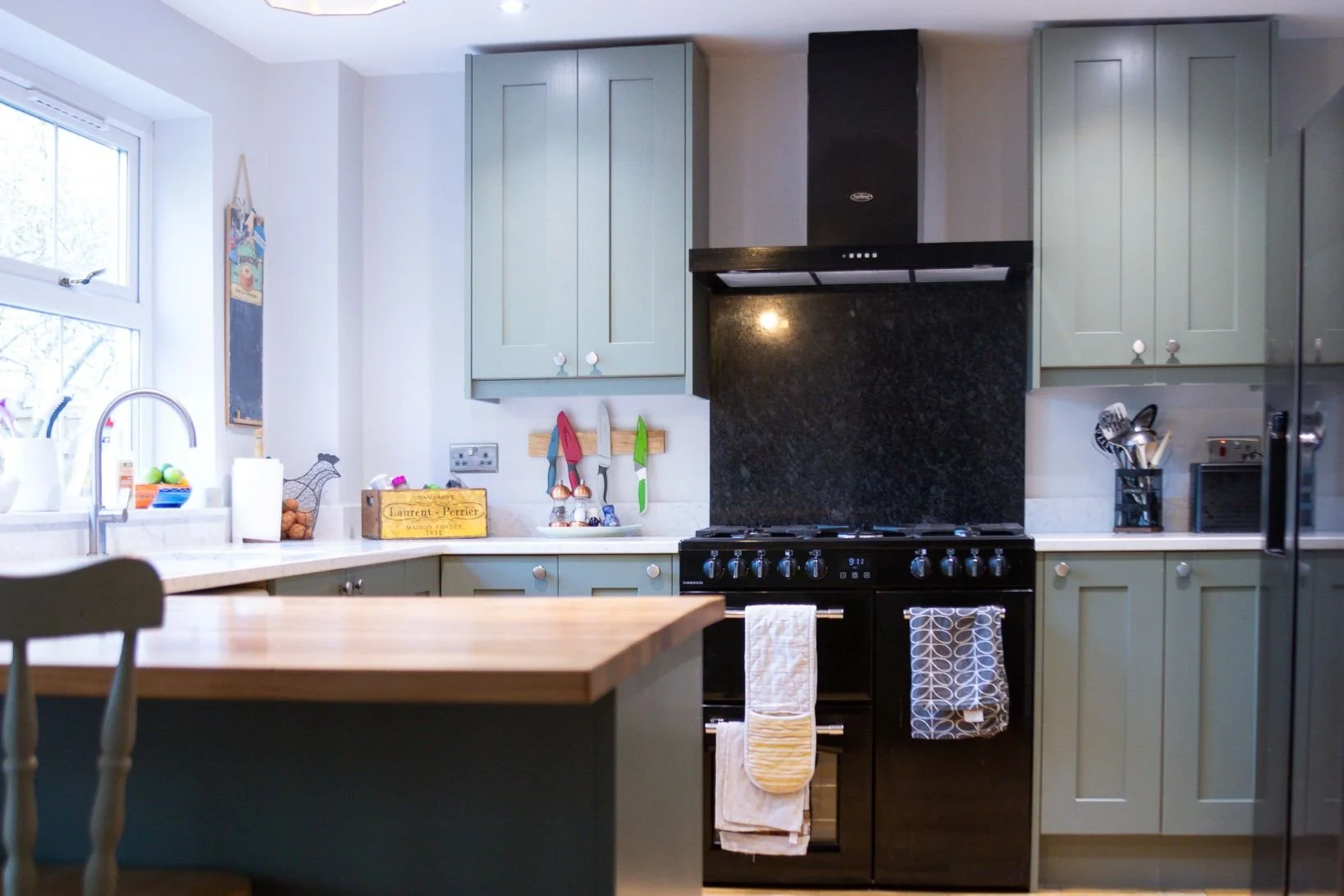
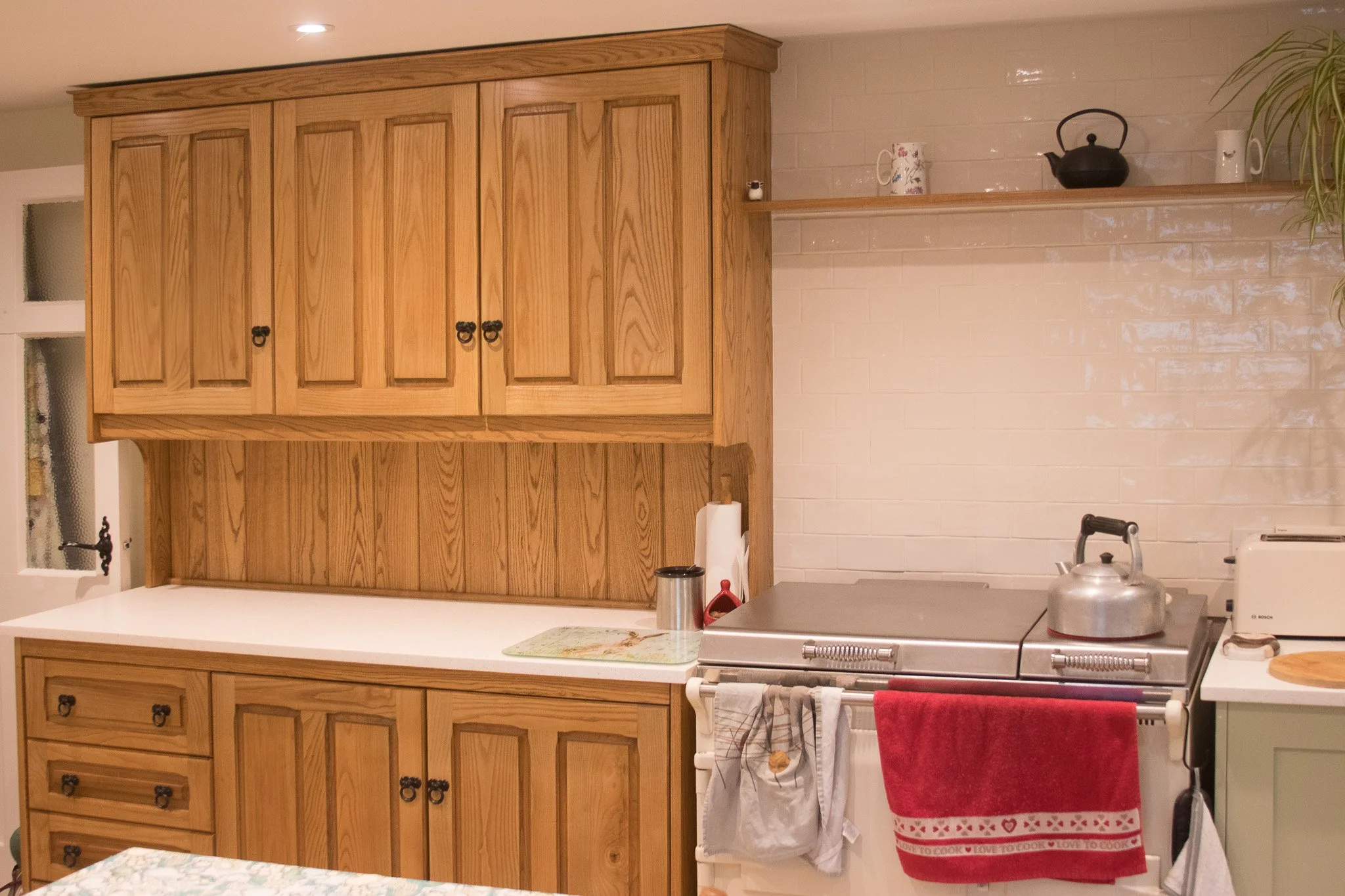
A carefully considered kitchen refresh can achieve remarkable results
Typical improvements might include:
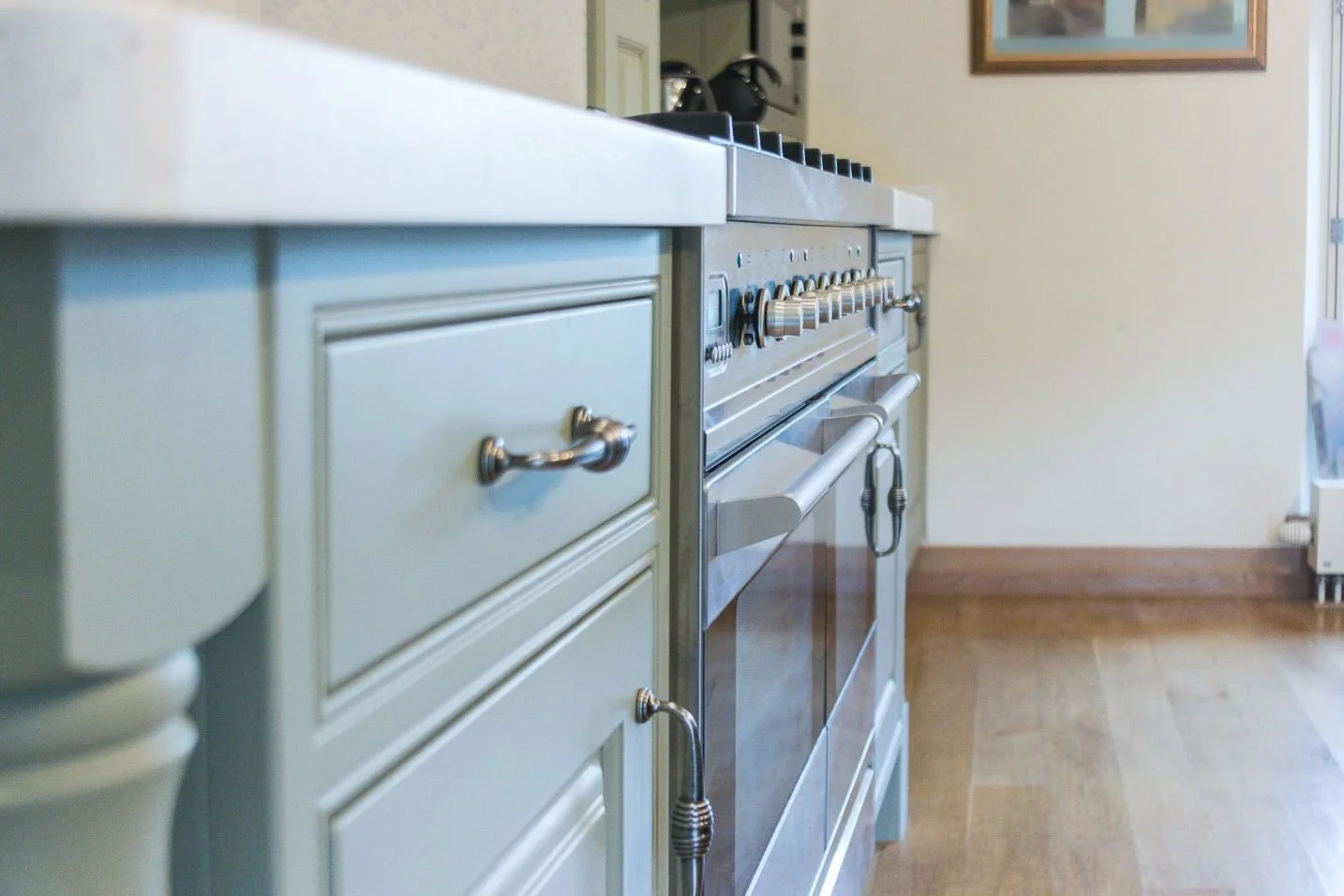
new cabinet doors and drawer fronts
quartz or granite worktops
updated handles and taps
improved lighting
better internal storage
Because the underlying cabinets remain in place, the project can often be completed far more efficiently
But the result still feels like a new kitchen
When Replacement Makes More Sense
There are also situations where refreshing the existing kitchen simply isn't the right answer
Sometimes the layout is fundamentally flawed
Common issues include:
awkward circulation paths
poor appliance placement
insufficient worktop space
lack of usable storage
In these cases, redesigning the layout is usually the better long-term solution
This may involve:
relocating cabinets
adding an island or peninsula;p a dresser or storage cabinet
integrating modern appliances
improving zoning for cooking, preparation and storage
A well-designed kitchen should support the way you actually live
When the structure of the room needs to change, a replacement kitchen is often the most sensible route
The Problem With Showroom Design
Most kitchen decisions today are made in showrooms
Rows of perfect displays look impressive, but they rarely resemble the kitchens people actually live with
Showroom lighting is different
The room proportions are different
Your flooring, wall colours and furniture are not there
As a result, many choices are made slightly out of context. That is why I prefer to design kitchens in the home itself
Designing Where the Kitchen Actually Lives
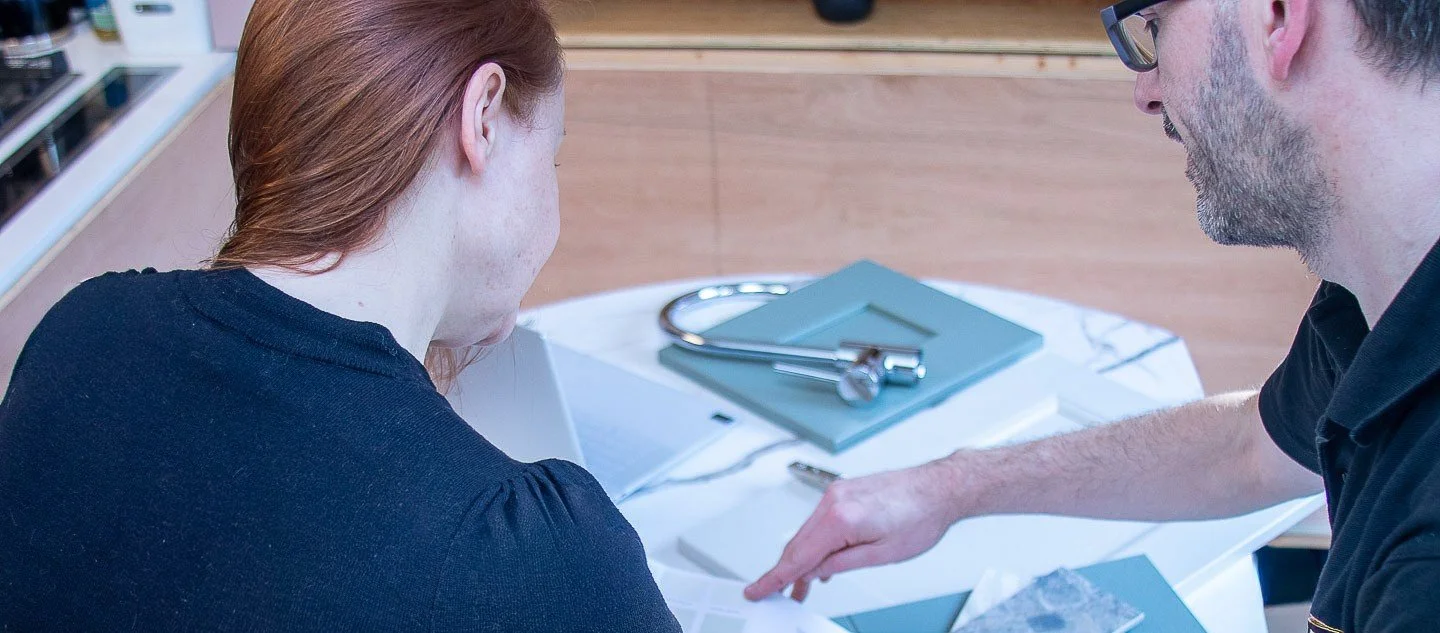
A home design visit allows decisions to be made in the environment where the kitchen will ultimately exist
Real light falls across the work surfaces
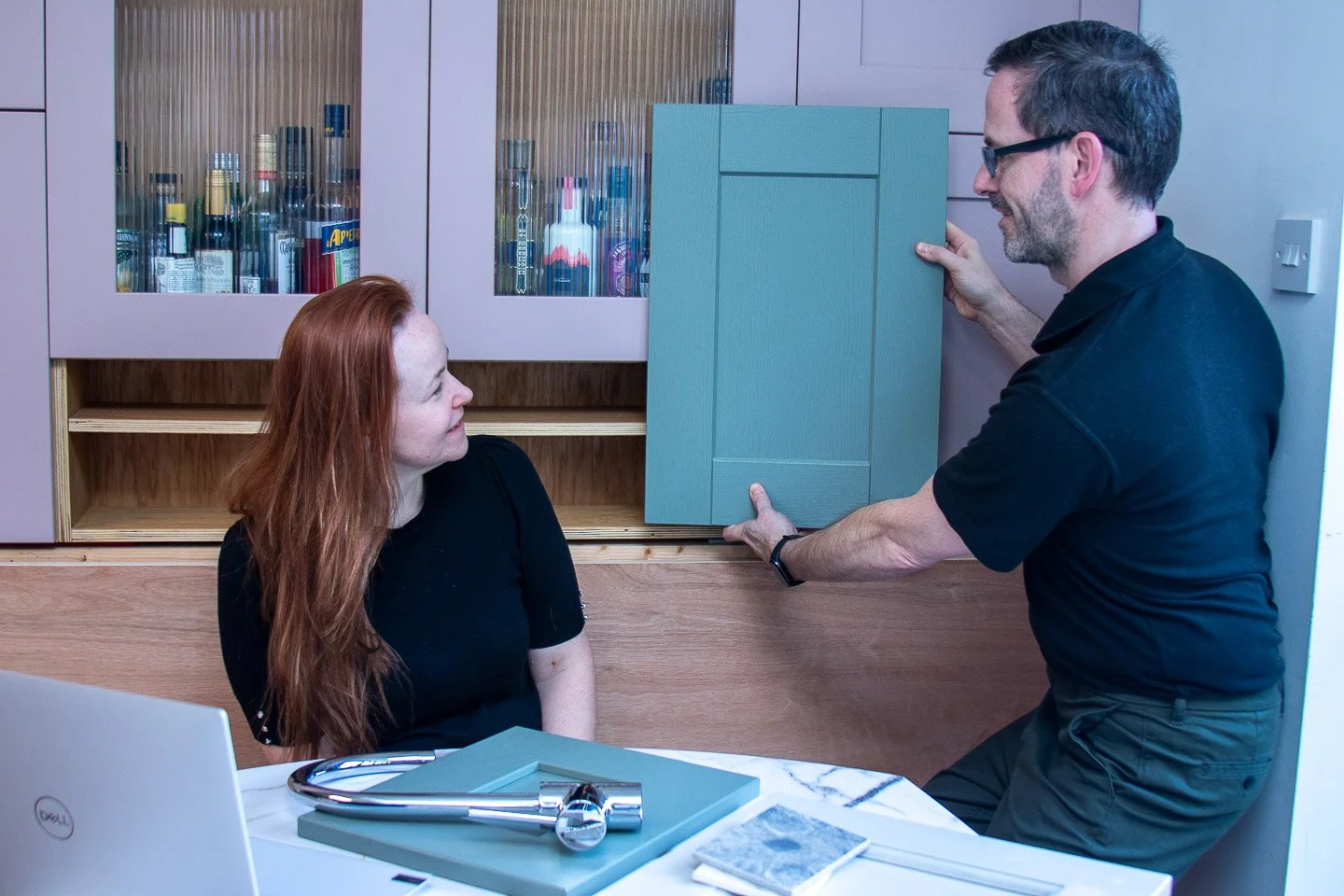
Samples can be placed beside your flooring, wall colours and furniture
Door finishes can be compared directly in the space
Quartz, granite and timber worktops reveal their character far more honestly in natural light
Most importantly, we can look at how you actually use the room
Where people gather
Where appliances sit
Where circulation works well — or doesn’t
This makes it far easier to decide whether a refresh or a replacement will deliver the best result
Personalisation Without Unnecessary Complexity
Another misconception in the kitchen world is that there are only two choices
Either a fully bespoke handmade kitchen or an off-the-shelf showroom system
In reality, there is a very practical middle ground
By combining high-quality UK-made cabinetry with carefully chosen finishes, worktops and detailing, it is possible to create a kitchen that feels completely personal without the cost of building every component from scratch
Where appropriate, however, workshop-made elements can also be introduced
These might include:
custom shelving
bespoke cabinetry features
tailored details that adapt the kitchen to the room
The result is a kitchen that feels individual and thoughtfully designed, rather than assembled from a catalogue
A Simpler Way to Start
If you are considering improving your kitchen, the most useful first step is simply to look at the space together
Not in a showroom - But in your home
Seeing the kitchen as it really exists — its light, its proportions, its character — makes it much easier to decide what will genuinely improve it. Sometimes that will be a refresh. Sometimes it will be a new layout
Either way, the aim is the same:
a kitchen that works beautifully in the home you already love
If you are exploring possibilities, you are very welcome to arrange a home design visit. It is simply a relaxed conversation about what could be improved — and the most sensible way to achieve it
