
What Makes A Kitchen Truly Bespoke? A Practical Guide For Homeowners
The word "bespoke" appears everywhere in the kitchen industry
Browse a few websites and you'll quickly discover that almost every kitchen is described as bespoke
But what does that actually mean?
More importantly, how do you know whether a bespoke kitchen is the right choice for your home?
These are questions that many homeowners struggle to answer, largely because the industry doesn't always explain the difference clearly
The purpose of this article isn't to persuade you that you need a bespoke kitchen - In fact, sometimes the opposite is true
Instead, I'd like to explain what bespoke really means, when it offers genuine benefits, and when a different approach may be more appropriate
Bespoke Is A Manufacturing Process, Not A Style
One of the biggest misconceptions is that bespoke refers to a particular look - it doesn't
A bespoke kitchen can be:
traditional
contemporary
Shaker
in-frame
minimalist
period-inspired
The appearance isn't what makes it bespoke
A kitchen becomes bespoke when it is designed and manufactured specifically for your home rather than assembled from pre-determined cabinet sizes and systems
Every cabinet, panel and component can be adjusted to suit the room, the architecture and the way you live
In simple terms, the kitchen is built around the home rather than the home adapting to the kitchen
When Standard Cabinetry Works Perfectly Well
This may sound surprising coming from a cabinetmaker, but many kitchens do not need to be fully bespoke
Modern British kitchen manufacturers produce excellent cabinetry
For straightforward spaces, these systems can often provide a practical and cost-effective solution
If the room is relatively regular in shape and your requirements are fairly conventional, a thoughtfully designed kitchen using high-quality manufactured cabinetry may achieve everything you need
The key is understanding the limitations and opportunities of each approach
Good design matters far more than whether a cabinet originated in a factory or a workshop
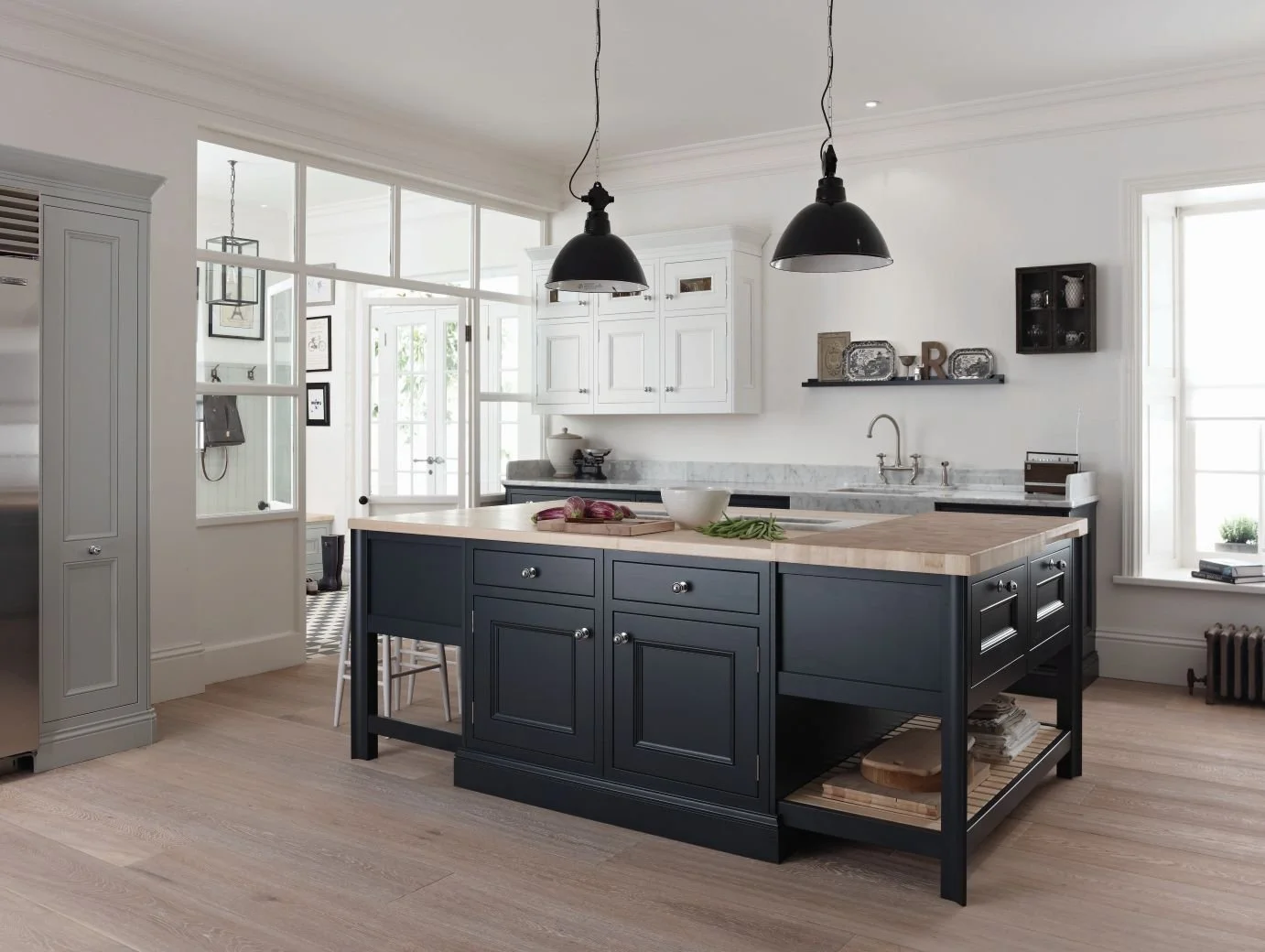
High-quality British cabinetry can’t be beaten
When Bespoke Starts To Make Sense
Bespoke becomes particularly valuable when a home presents challenges or opportunities that standard systems cannot easily address
Examples might include:
Listed buildings
Period properties
Uneven walls and floors
Awkward roof lines
Alcoves and recesses
Unusual room proportions
Special storage requirements
Furniture-style features
In these situations, the ability to alter dimensions freely can transform both the appearance and functionality of the space
Rather than filling gaps with filler panels and compromises, the cabinetry can be designed to fit naturally within the architecture
The result often feels less like a fitted kitchen and more like part of the house itself
The Details Matter
One of the less obvious benefits of bespoke cabinetry is control over detail
This can include:
cabinet proportions
door thicknesses
moulding profiles
timber selection
internal storage arrangements
furniture features
visible grain character
These details may seem minor individually
Collectively, however, they contribute significantly to how a kitchen feels
The most successful bespoke kitchens rarely draw attention to themselves
Instead, they feel comfortable, natural and entirely at home within their surroundings
Start With The Home
The best kitchen projects rarely begin with a door style - they begin with the home itself
Every property has its own character
The architecture, natural light, circulation routes and existing features all influence what will work well
This is one reason I prefer starting projects with a home design visit
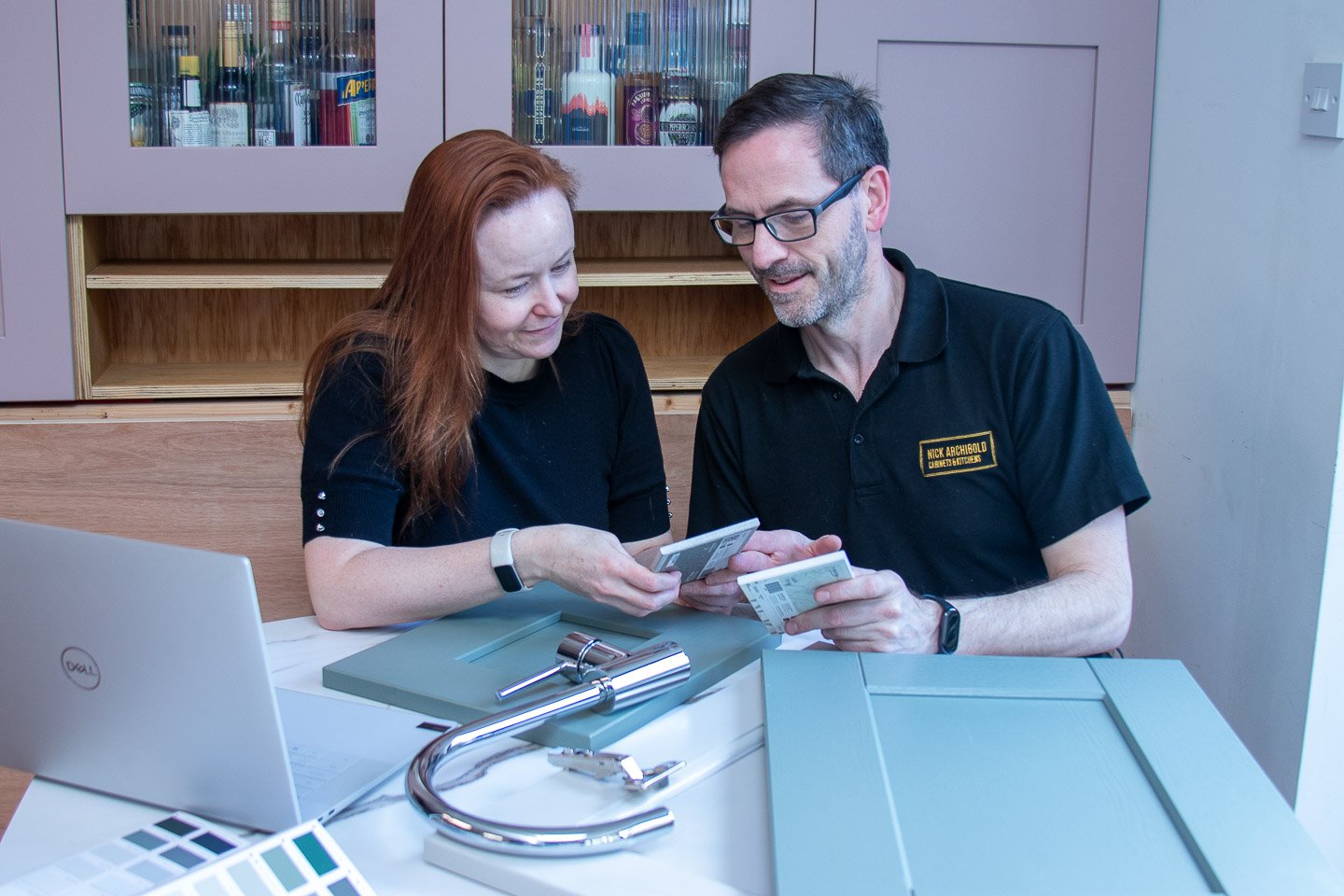
A Home Design Visit is a great way to start your project
Looking at plans or photographs can be useful, but there is no substitute for experiencing the space in person
During a visit we can discuss:
how the room is used
what currently works
what doesn't
where storage is needed
whether bespoke construction would add value
Sometimes the conclusion is that a bespoke kitchen is absolutely the right solution
Sometimes a custom kitchen using high-quality British cabinetry is more sensible
Occasionally a kitchen refresh may achieve the desired outcome
The objective is not to arrive at a predetermined answer - the objective is to identify the most appropriate one
Bespoke Should Solve Problems
The strongest argument for bespoke is not exclusivity - it’s problem solving
When a kitchen is designed and built specifically around a property and the people who use it, compromises can often be reduced or eliminated altogether
That doesn't necessarily mean larger budgets or more elaborate designs
Often it simply means a better fit
A better use of space
A kitchen that feels as though it belongs

A bespoke island, paired with matching bespoke utility room doors help to unify the space
Choosing The Right Route
For some homeowners, a fully bespoke kitchen will be the perfect answer
For others, it may be unnecessary
The important thing is understanding the difference before making decisions
The most successful projects are rarely defined by how much was spent or how exclusive the cabinetry is
They are defined by how well the kitchen supports daily life
Whether that solution is refreshed, customised or fully bespoke depends entirely on the home, the people and the challenges involved
The best place to start is usually not in a showroom - it's in the room itself
